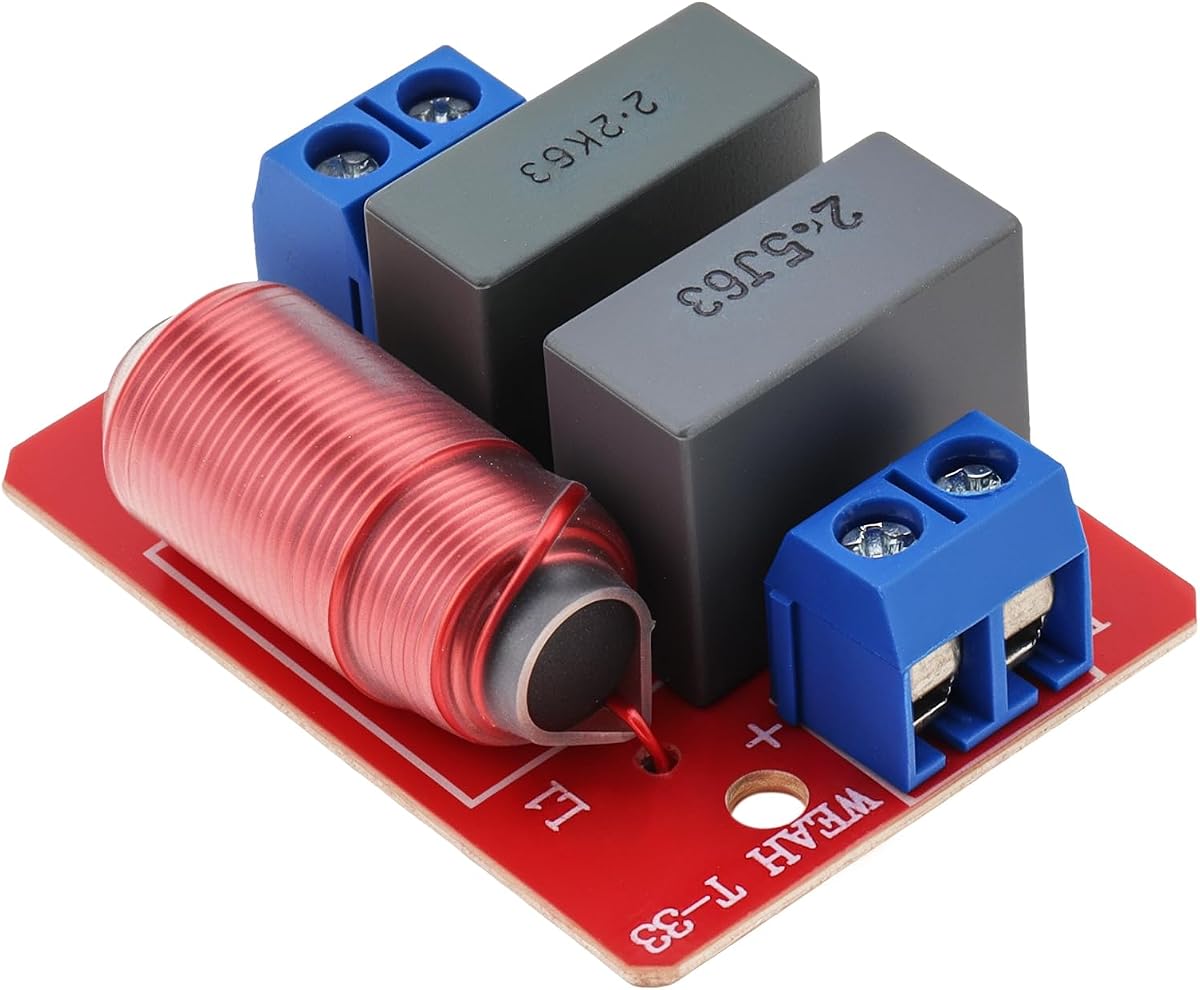
1 Way Crossover, 80W 4-10 Ohm Audiophile High Pass Tweeter Crossover
5.0Editor score
Precision 2200Hz to 20kHz range
Includes premium capacitors
Pre wired with high purity copper
This guide compares the top audiophile active crossover options for 2026, evaluating performance, features, and compatibility for high-fidelity audio systems.
Active crossovers are essential components for audiophiles seeking precise frequency separation and optimized speaker performance. They allow independent control over drivers, ensuring each amplifier handles only the frequencies it is best suited for, which reduces distortion and enhances clarity across the entire audible spectrum.
We evaluated ten top-rated active crossover units based on build quality, filtering accuracy, connectivity options, and user feedback. Our analysis covers analog and digital designs, ranging from compact car audio processors to high-end stereo components suitable for dedicated listening rooms and professional installations.
Each pick highlights specific strengths such as slope flexibility, phase control, and durability. While we provide detailed specifications and performance insights, remember that product availability and pricing can fluctuate over time. Always verify current details before purchasing to ensure the best fit for your specific audio configuration.
5.0Editor score

5.0Editor score

4.5Editor score
This table provides a side-by-side comparison of all ten active crossover options, highlighting key specifications and unique features to help you identify the best unit for your specific audio needs.




The Marchand XM66 stands out as a top choice for audiophiles seeking uncompromising analog signal processing. With a perfect rating, it delivers precise frequency separation tailored for high-end home audio setups.
We may earn a commission when you buy through this link, at no additional cost to you.
Its 24dB/oct crossover filter slopes ensure clean transitions between drivers, while the digital display offers exact frequency setting visibility. Balanced inputs and outputs provide noise rejection for longer cable runs.
While limited to 2-way configurations, this model excels in stereo separation and driver protection. The custom USA manufacturing ensures consistent quality and minimal production variations.
Enthusiasts aiming for pure analog sound will find this unit delivers exceptional results. It is best suited for users prioritizing signal integrity over multi-way flexibility.
The XM66 avoids digital conversion, ensuring signal paths remain purely analog to preserve original audio fidelity.
Crafted in the USA with a short lead time, this crossover offers consistent quality and reliable customer support.
We may earn a commission when you buy through this link, at no additional cost to you.
This professional crossover offers selectable 2/3-way stereo and 4-way mono modes, ideal for live sound or installed audio systems. Users appreciate the independent gain and phase controls.
We may earn a commission when you buy through this link, at no additional cost to you.
Balanced XLR inputs and outputs ensure clean signal transfer across long cable runs. The rugged construction handles touring and outdoor event demands reliably.
While the feature set is robust, beginners might find the array of switches intimidating. However, the flexibility allows for precise tuning across different speaker configurations.
For DJs and installers needing flexibility in PA setups, this unit provides essential tools. It balances professional features with straightforward operation.
Switching between stereo and mono modes allows seamless adaptation from studio monitors to subwoofer control.
Balanced XLR connectors eliminate interference and ensure reliable transmission in noisy environments.
We may earn a commission when you buy through this link, at no additional cost to you.
This unit provides three distinct operation modes with individual output gain controls for precise band tuning. Users find it improves clarity in PA systems by reducing distortion.
We may earn a commission when you buy through this link, at no additional cost to you.
Independent phase reverse switches address polarity issues effectively, while the dedicated low-cut filter protects speakers from unnecessary bass. The LED matrix clearly indicates the active mode.
While it lacks digital programmability, the robust analog design ensures reliability in high-pressure environments. It fits well in both mobile and fixed installations.
For those seeking better sound quality without complex DSP, this crossover delivers. Its durability and intuitive controls make it a strong contender.
Separate gain controls per band allow precise volume balancing between woofers and tweeters.
A dedicated 40 Hz switch provides essential protection against infrasonic energy and distortion.
We may earn a commission when you buy through this link, at no additional cost to you.
This budget-friendly crossover isolates treble frequencies effectively, blocking mid/low interference for clearer vocals. It handles 80W RMS power and uses premium capacitors for smooth roll off.
We may earn a commission when you buy through this link, at no additional cost to you.
Heavy-duty inductors and thick copper traces ensure durability and minimal signal loss. Pre-wired leads simplify installation for users with minimal technical experience.
While it is not adjustable like active units, it delivers significant improvements over passive setups. It is ideal for small upgrades in car or home speakers.
Buyers seeking an inexpensive yet effective high-pass filter will find this unit delivers. It balances cost with audiophile-grade component choices.
Incorporating 2.2µF and 2.5µF capacitors ensures natural high-frequency roll-off and reduced harshness.
Pre-wired leads and screw connectors allow for quick setup without soldering expertise.
We may earn a commission when you buy through this link, at no additional cost to you.
Engineered for car audio, this processor allows fine-tuning of subwoofer systems through adjustable levels and phase shifts. The included remote bass control adds convenience for drivers.
We may earn a commission when you buy through this link, at no additional cost to you.
Phase shifts of 180 degrees help align subwoofer output with front and rear signals. This improves overall cohesion and reduces boominess in small vehicle cabins.
While it lacks advanced DSP capabilities, it covers essential needs for system integration. Users appreciate the ability to adjust levels without complex menus.
For DIY car audio enthusiasts, this processor offers essential tuning tools. It is a solid choice for optimizing vehicle sound systems.
The 180-degree phase shift switch helps align subwoofer timing with other speakers for tighter bass.
A dedicated remote bass knob allows dynamic control from the dashboard during playback.
We may earn a commission when you buy through this link, at no additional cost to you.
This 6-way active crossover delivers advanced audio processing for multi-speaker setups. It provides separate inputs for front, rear, and subwoofer channels, ensuring precise signal distribution.
We may earn a commission when you buy through this link, at no additional cost to you.
Features include a non-fade low pass output and adjustable low pass gain. The ground loop isolation circuit prevents interference, while the bass boost enhances dynamic range.
Although installation requires careful planning due to multiple channels, the results are worth the effort. The signal-to-noise ratio exceeds 105dB for clean output.
Car audio enthusiasts building complex systems will appreciate its flexibility. It supports custom installation with dedicated mounting holes and trim rings.
Splitting audio into six bands ensures each driver receives an optimized frequency range.
A dedicated bass boost control adds punch and power to the subwoofer channel.
We may earn a commission when you buy through this link, at no additional cost to you.
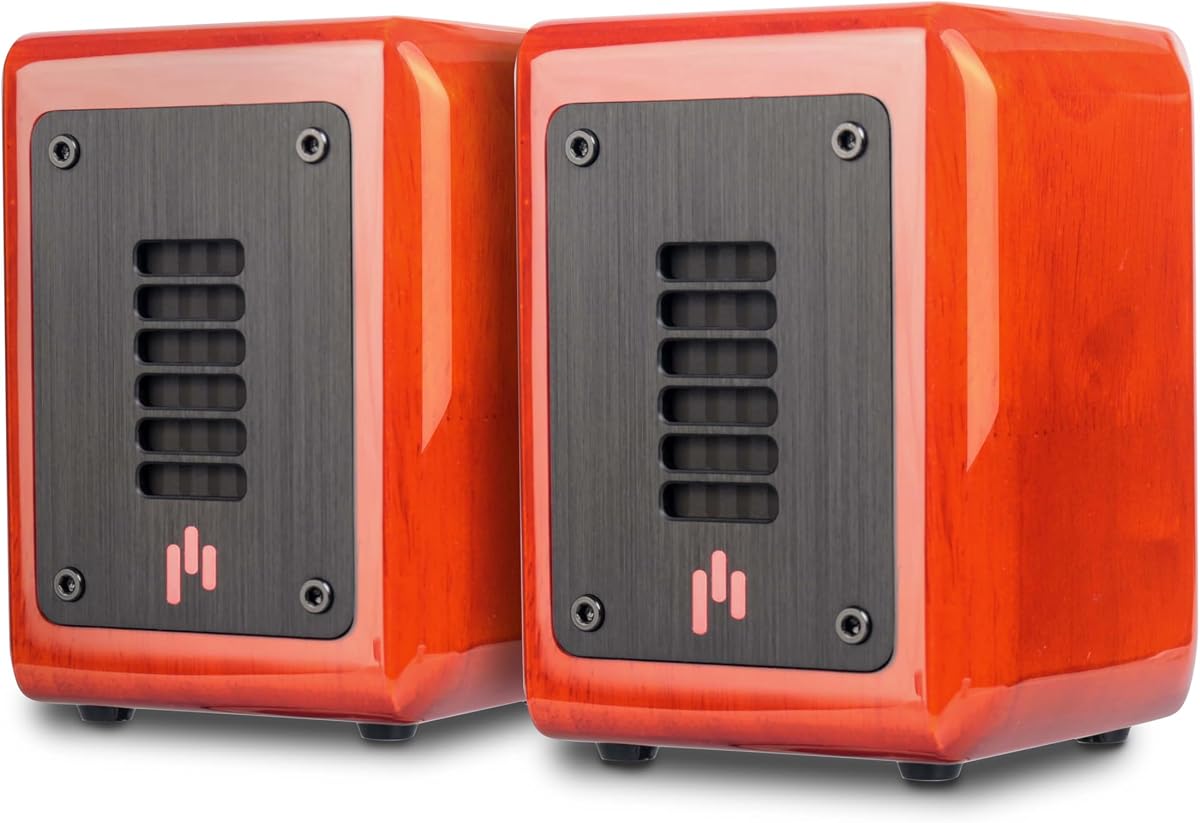
This super tweeter adds subtle high-frequency details to existing speaker systems. It utilizes a planar magnetic design that blends well with various brands without overpowering mids.
We may earn a commission when you buy through this link, at no additional cost to you.
Five preset crossover points allow easy matching to different systems. While designed to boost the upper register, it requires speakers with 85 to 93 dB efficiency.
The glossy cherry finish adds a premium look to any setup. However, it is not a full crossover but rather a complementary high-frequency enhancer.
For audiophiles seeking air and detail, this tweeter is a valuable addition. It is best used with compatible speakers that lack extreme high-frequency output.
Adding frequencies up to 40kHz enhances the sense of space and realism in recordings.
Designed to sit atop existing speakers, these units blend frequencies naturally without harshness.
We may earn a commission when you buy through this link, at no additional cost to you.
This passive crossover splits audio into four bands for detailed frequency separation. Its 400W power handling makes it suitable for powerful home theater setups.
We may earn a commission when you buy through this link, at no additional cost to you.
Features include oxygen-free copper components and high-temperature inductors for stable performance. The 10-pin solderless terminals simplify installation for DIYers.
While it offers robust build quality, the crossover points are not adjustable. This limits tuning flexibility compared to active units.
For users upgrading speakers with fixed impedance, this model provides a solid upgrade. It is best suited for those needing a straightforward frequency divider.
Quick plug-in connections allow easy setup without complex soldering tools or expertise.
Supporting up to 400W ensures durability in high-volume listening environments.
We may earn a commission when you buy through this link, at no additional cost to you.
The Taramps Crx4 offers a compact solution for multi-way audio setups. With four channels and customizable adjustments, it is great for optimizing low and high frequencies.
We may earn a commission when you buy through this link, at no additional cost to you.
Weighing just 560 grams, this unit is easy to mount in tight vehicle spaces. The bass boost feature enhances subwoofer impact effectively.
Its small size might make adjustments difficult in bright lighting, but the functionality is sound. Users appreciate the simple controls and sturdy build.
For car audio setups needing a small crossover, this model fits well. It balances size with essential audio processing tools.
Measuring 190 x 145 x 40mm, this unit fits easily in tight audio compartments.
Adjustable knobs allow users to tweak crossover points to fit their specific speakers.
We may earn a commission when you buy through this link, at no additional cost to you.
This crossover uses 24 dB/octave Linkwitz-Riley filters for precise frequency separation. It ensures absolutely flat summed amplitude response and zero phase difference across outputs.
We may earn a commission when you buy through this link, at no additional cost to you.
Individual limiters protect drivers from clipping, while the subsonic filter safeguards low-frequency drivers. Switchable equalization supports constant directivity horns.
While it is a classic studio tool, newer models may offer more flexibility. Its analog design remains reliable for traditional applications.
For users seeking standard Linkwitz-Riley filters, this unit delivers. It is best suited for setups requiring flat amplitude responses.
These filters ensure phase coherence and flat summed responses for accurate stereo imaging.
Individual limiters and subsonic filters prevent damage to speakers during high-volume playback.
We may earn a commission when you buy through this link, at no additional cost to you.
Choosing the right active crossover involves evaluating your system architecture, frequency needs, and desired control features. This guide breaks down the key factors to help you make an informed decision.
Analog crossovers maintain a pure signal path without digital conversion artifacts, often favored for their transparency. Digital units offer advanced programmability and presets but may introduce latency or processing noise if not implemented well.
For pure audiophile setups, analog processing is typically preferred to preserve signal integrity.
Filter slopes like 24dB/octave provide steep separation between drivers, reducing overlap and distortion. Look for models that offer adjustable slopes or fixed options that match your speaker requirements.
Steeper slopes ensure drivers receive only their target frequencies for optimal performance.
Balanced inputs like XLR minimize noise during transmission, which is vital in professional settings. Ensure the unit has sufficient outputs to match your speaker configuration, such as separate bands for woofers, midranges, and tweeters.
Balanced connectivity protects signal quality in noisy or long-run environments.
Phase invert switches allow you to correct polarity issues between drivers, ensuring coherent sound waves. Independent gain controls for each band help balance volume levels across the frequency spectrum without affecting overall master volume.
Phase and gain controls are essential for fine-tuning speaker alignment.
Confirm that the crossover matches your amplifier and speaker impedance. For example, some active crossovers require line-level inputs before amplification, which must align with your receiver or preamp outputs.
Matching impedance and signal types ensures the crossover integrates smoothly.
High-quality components like oxygen-free copper and flame-retardant PCBs contribute to long-term reliability. Look for units with sturdy chassis construction if you plan to transport or mount the device in a rack.
Robust components ensure consistent performance over years of daily use.
Check the crossover frequency range to ensure it covers your drivers' needs. Models with adjustable settings allow you to shift cutoff points as your system configuration evolves or when changing speakers.
Adjustable frequency ranges provide future-proofing for system upgrades.
Extra features like bass boost, remote control, or subsonic filters enhance usability. Determine which features add value to your specific application versus those that may go unused.
Evaluate extra features based on actual needs rather than marketing appeal.
Connect the crossover's input to your preamp or receiver and route outputs to amplifiers. Ensure all ground connections are secure to prevent hum or noise.
Set crossover frequencies based on your speaker specifications, typically using manufacturer recommendations for tweeters and woofers. Start with flat settings and adjust gradually.
Regularly inspect connections and clean dust from vents. Keep firmware updated if applicable, and avoid placing the unit in direct sunlight or damp environments.
Active crossovers split audio signals before amplification, allowing precise control and protection for each speaker driver. Passive crossovers operate after amplification and are typically simpler but offer less flexibility and control over frequency distribution.
Yes, active crossovers output low-level signals that must be amplified before reaching speakers. Each frequency band typically needs a dedicated amplifier channel, which increases overall system complexity.
Slopes like 12dB or 24dB per octave determine how sharply frequencies are separated. Steeper slopes protect drivers more effectively but require precise phase alignment. Match the slope to your speaker design recommendations.
Absolutely. Many active crossovers are designed for car systems, offering features like remote bass control and compact size. Ensure the voltage matches your vehicle's electrical system.
A subsonic filter cuts extremely low frequencies below human hearing, protecting subwoofers from unnecessary strain. This prevents distortion and damage during high-volume bass reproduction.
Balanced inputs like XLR reduce electromagnetic interference during signal transmission. This ensures cleaner audio, especially when cables run long distances in complex installations.
Our top picks include the Marchand XM66 for pure analog precision, the Professional 2/3-Way for versatile PA use, and the Audiopipe 6-Way for complex multi-way systems. Each addresses specific needs ranging from home stereo to car audio.
Prioritize features like slope flexibility, balanced inputs, and build quality when selecting a model. Ensure the unit aligns with your amplifier setup and speaker configuration to avoid compatibility issues.
Remember that specifications may change as manufacturers update products. Always check current pricing and availability before purchasing to confirm the model meets your exact needs.