
Original Prusa XL
3.5Editor score
Multi-material dual tool system
Large-format CoreXY precision
Segmented heated bed
This guide compares the top 3D printer for engineering prototypes, evaluating speed, precision, material compatibility, and reliability for professional teams.
Finding the right 3D printer for engineering prototypes requires balancing speed, precision, and material versatility. Modern industrial machines now support complex multi-material workflows and high-temperature filaments essential for functional testing.
We evaluated ten leading models based on build volume, motion systems, calibration tools, and software ecosystems. Each pick excels in specific areas like speed, large-format output, or ease of use for professional environments.
Every selection below highlights unique strengths for engineering teams and makers. Prices and availability shift frequently, so verify current details before purchasing to ensure you get the best value for your workflow needs.
3.5Editor score

4.5Editor score
4.5Editor score
This side-by-side comparison highlights key specifications and capabilities across all ten selected models to help engineering teams identify the best fit for their specific prototyping workflows.


The Original Prusa XL stands out as a premium solution for large-format engineering needs. With a rating of 3.5, it offers a robust dual tool system ideal for complex prototypes requiring soluble supports or multi-material parts.
We may earn a commission when you buy through this link, at no additional cost to you.
Its large-scale professional output ensures teams can produce industrial-grade parts at scale. The segmented heated bed system improves energy efficiency and reduces warping, while the CoreXY precision system maintains accuracy during multi-material operations.
While the initial investment is high, the reduced material waste workflow and integrated Prusa ecosystem provide long-term value. Some users note careful assembly is required for fragile parts, but the process is straightforward.
This printer is best suited for engineering teams needing reliable industrial-grade performance. It delivers high-quality transitions between materials, making it a top choice for advanced prototyping projects.
The dual tool system enables switching between materials for complex prints and functional prototypes without manual intervention.
Intelligent heating zones improve energy efficiency and reduce warping on large prints for reliable first-layer adhesion.
We may earn a commission when you buy through this link, at no additional cost to you.
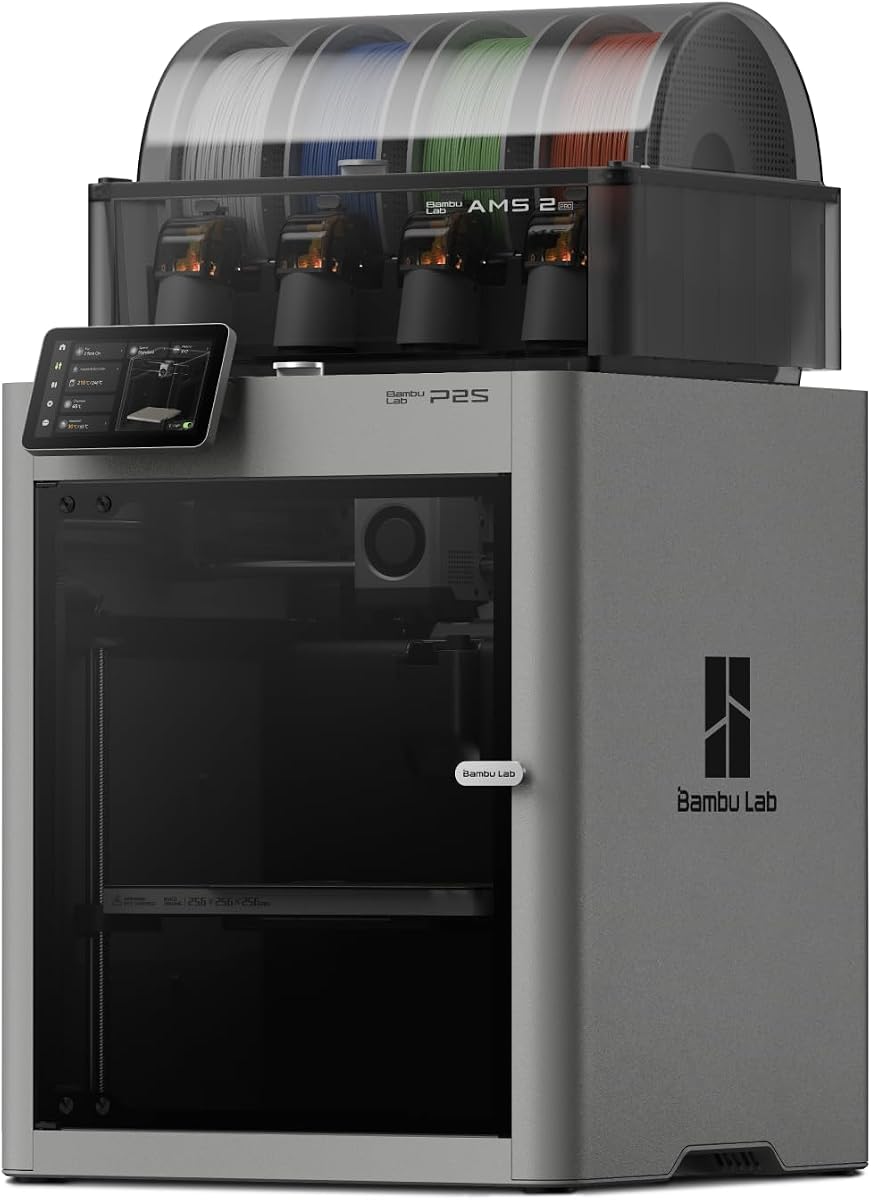
The Bambu Lab P2S offers high-speed precision with speeds up to 600 mm/s while maintaining exceptional accuracy. Its rating of 4.7 reflects strong user satisfaction with the PMSM Servo Extruder and Active Flowrate Compensation.
We may earn a commission when you buy through this link, at no additional cost to you.
The AMS 2 Pro enables seamless multi-color printing with built-in filament drying at up to 65 C, ensuring spools remain ready for flawless prints. Adaptive Airflow System balances cooling and heat retention for various materials.
While setup is quick at 15 minutes, the combo version is necessary for multi-color capabilities. The system includes AI failure detection and quick-swap nozzles for professional-grade printing even for beginners.
Ideal for teams needing speed and creativity, this printer supports over one million models on MakerWorld. It delivers sharp layers and consistent results for engineering prototypes requiring detailed color work.
Prints up to 600 mm/s while maintaining exceptional accuracy with PMSM Servo Extruder and Active Flowrate Compensation.
The AMS 2 Pro enables seamless multi-color printing with built-in filament drying at up to 65 degrees Celsius.
We may earn a commission when you buy through this link, at no additional cost to you.
The QIDI Max4 Combo provides an ultra-large build volume, 55% larger than its predecessor, enabling large industrial parts in one go. Its rating of 4.4 highlights strong performance with closed-loop motors and high acceleration.
We may earn a commission when you buy through this link, at no additional cost to you.
The 65C active heated chamber supports high-temperature materials like ABS-CF, PC, and PPS-CF. A 40mm3/s high-flow hotend with hardened steel nozzle handles standard and industrial-grade abrasive materials with ease.
Smart monitoring via built-in AI camera detects abnormalities instantly. While the Polar Cooler is sold separately, the system offers smooth operation via a large touch screen for both professionals and enthusiasts.
For engineers needing to print complex molds or custom prototypes without splitting, this printer delivers. The expandable multi-color printing via QIDI BOX adds versatility for production workflows.
A 390x390x340mm printing area enables printing large industrial parts and custom prototypes in one go.
Supports standard materials and industrial-grade abrasive materials with a 65C active heated chamber.
We may earn a commission when you buy through this link, at no additional cost to you.
The Snapmaker U1 delivers true multi-material printing with four independent toolheads and a five-second tool changer. Its rating of 4.5 reflects exceptional performance in reducing waste and increasing speed for functional parts.
We may earn a commission when you buy through this link, at no additional cost to you.
Unlike traditional systems, swapping toolheads minimizes wasted material by up to five times. It combines rigid and flexible materials, water-soluble supports, and engineering materials in a single print for greater design freedom.
Smart calibration including toolhead offset and vibration compensation ensures reliable print quality with minimal manual adjustment. The system is user-friendly with built-in model library and remote app control.
For workshops needing less waste and higher productivity, this model is ideal. It simplifies every step from setup to finished print, making it a top choice for professional creators.
Powered by SnapSwap, the tool changer reduces tool change time from around two minutes to just five seconds.
Combine rigid and flexible materials and water-soluble supports in a single print for complex prototypes.
We may earn a commission when you buy through this link, at no additional cost to you.
The Bambu Lab A1 offers high-speed precision with acceleration up to 10,000 mm/s² while maintaining exceptional accuracy. Its rating of 4.7 highlights strong user satisfaction with automatic calibration and ease of use.
We may earn a commission when you buy through this link, at no additional cost to you.
Full-auto calibration handles Z-offset and bed-leveling automatically for optimal performance. Active Flow Rate Compensation ensures consistently smooth prints, and the motor noise canceling keeps the environment quiet.
While the AMS lite is required for multi-color printing, the base printer is ready-to-use out of the box. The simplified touchscreen and 1-Clip quick swap nozzle make maintenance convenient.
Ideal for beginners needing professional results, this printer simplifies the workflow. It is a great choice for those prioritizing speed and ease of setup for smaller prototypes.
The A1 takes care of all calibration processes automatically to ensure optimal performance for every print.
Delivers blazing-fast printing with acceleration up to 10,000 mm/s² while maintaining exceptional accuracy.
We may earn a commission when you buy through this link, at no additional cost to you.
The Flashforge Creator 5 Pro features four independent toolheads and a seven-second FlashSwap changer to eliminate purge waste. Its rating of 4.0 reflects strong performance in industrial engineering with a heated chamber.
We may earn a commission when you buy through this link, at no additional cost to you.
The fully enclosed frame includes an active heated chamber up to 65C to prevent warping in advanced filaments like ABS, PC, and PA. The rigid CoreXY motion structure delivers speeds up to 600mm/s without sacrificing accuracy.
Dual HEPA 13 and activated carbon system traps ultrafine particles for a safe workspace. Real-time monitoring via built-in HD camera allows for time-lapse videos and remote control via Flash Studio.
Designed for industrial engineering, this printer offers design versatility and robust production. It is best suited for workshops prioritizing waste reduction and safety alongside high-speed printing.
Features four independent toolheads that switch nozzles without flushing filament to eliminate purge waste.
Design for industrial engineering with an active heated chamber to prevent warping in advanced filaments.
We may earn a commission when you buy through this link, at no additional cost to you.
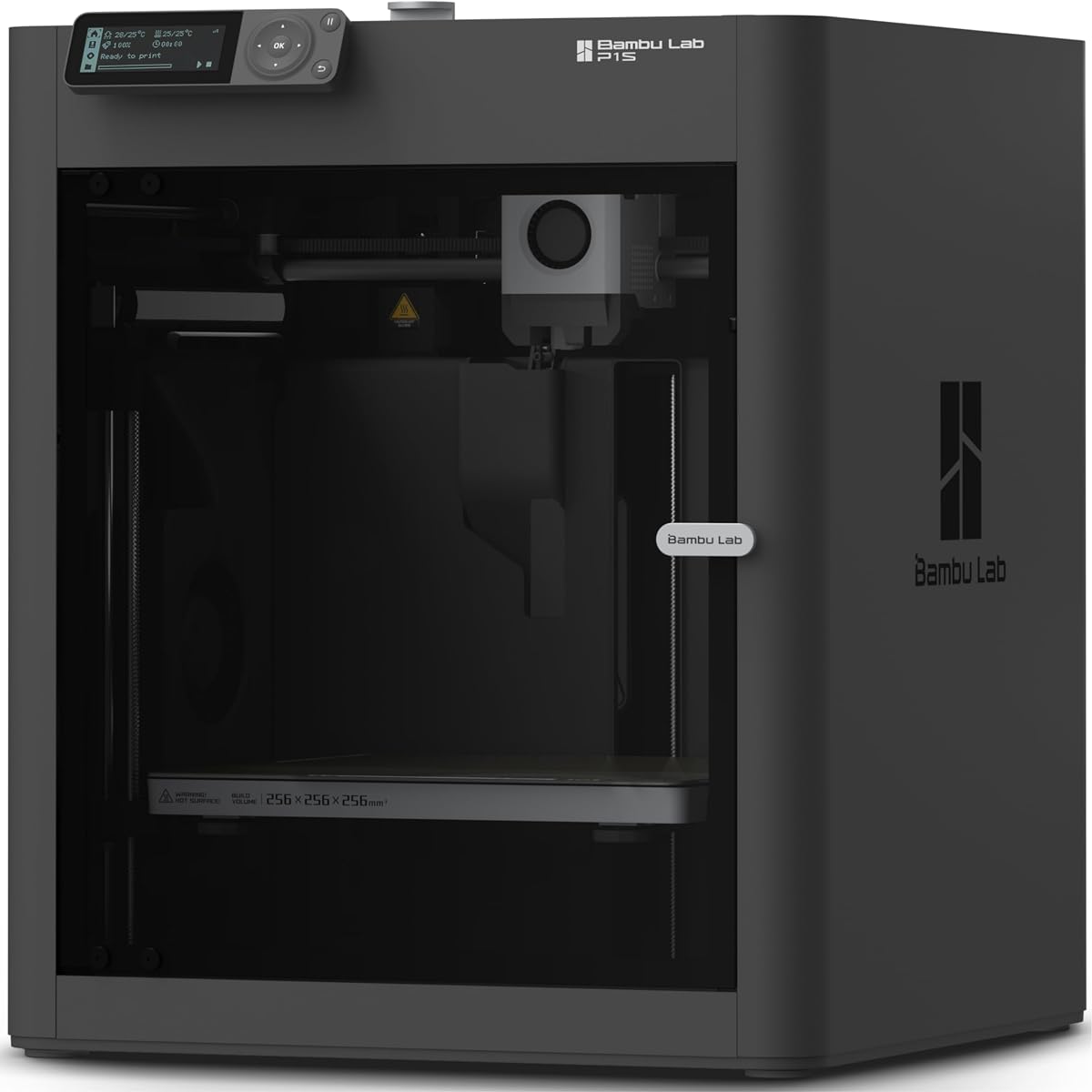
The Bambu Lab P1S delivers up to 500mm/s speed and acceleration up to 20000 mm/s² for true high speed. Its rating of 4.5 highlights strong performance in enclosed printing and rapid prototyping workflows.
We may earn a commission when you buy through this link, at no additional cost to you.
The fully enclosed body improves print performance for advanced filaments. Auto bed leveling ensures high-quality successful prints, and the user-friendly design ensures a hassle-free assembly experience for all skill levels.
While AMS is required for multi-color printing, the base model supports a wide range of filaments including PLA, PETG, and ABS. Setup is quick at 15 minutes for immediate use.
Ideal for those focusing on speed and reliability, this printer avoids carbon fiber options. It is a strong choice for teams needing fast turnaround on standard engineering prototypes.
Up to 500mm/s and 20000 mm/s² acceleration for lightning-fast printing speeds to focus on creating.
A fully enclosed body improves print performance for advanced filaments and prevents warping issues.
We may earn a commission when you buy through this link, at no additional cost to you.
The Flashforge Adventurer 5M Pro offers 600mm/s speed and CoreXY structure with 20,000mm/s² acceleration for fast printing. Its rating of 4.0 highlights strong performance with vibration compensation for smooth surface finishes.
We may earn a commission when you buy through this link, at no additional cost to you.
The tool-free quick-release nozzle mechanism allows effortless three-second replacements. One-click full auto-leveling ensures precise bed calibration. It features a built-in camera for real-time monitoring and mobile control via Flash Studio.
While it supports high-temp extrusion up to 280C, it is ideal for ABS and PETG-CF. The quiet operation under 50dB makes it suitable for classroom or office environments.
Ideal for engineers needing fast workflows and easy maintenance, this printer balances speed and precision. The 1 Click Auto Printing System simplifies setup for consistent results.
Powered by an all-metal CoreXY frame reaching speeds up to 600mm/s with vibration compensation.
Features a tool-free quick-release nozzle mechanism for effortless three-second replacements across sizes.
We may earn a commission when you buy through this link, at no additional cost to you.
The Anycubic Kobra 3 Max delivers professional-grade precision at 600mm/s speeds with 20,000mm/s² acceleration. Its rating of 4.0 highlights strong performance with G-sensor vibration compensation for complex models.
We may earn a commission when you buy through this link, at no additional cost to you.
The 420x420x500mm build volume allows printing life-size prototypes or multiple parts simultaneously. Filament runout sensor pauses automatically when filament ends, and built-in resume function handles power outages for reliability.
While setup is basic, the Dual-Sided PEI Spring Steel Plate ensures effortless print removal and 100% adhesion reliability. The all-metal hotend supports up to 300C for high-temp filaments.
Ideal for engineers needing extra-large builds, this printer supports furniture components or multiple parts. It is a practical choice for teams focused on volume and speed.
Print life-size prototypes or multiple parts simultaneously on this extra-large 3D printer.
Achieve professional-grade precision even at blazing 600mm/s speeds with G-sensor compensation.
We may earn a commission when you buy through this link, at no additional cost to you.
The Flashforge Creator 5 Pro Industrial offers active chamber heating to 65C for consistent interlayer adhesion. Its rating of 4.4 highlights strong performance in stable printing for high-performance materials like ABS and PC.
We may earn a commission when you buy through this link, at no additional cost to you.
Adaptive Air Circulation System and HEPA13 filtration ensure a cleaner and safer environment. Four independent extruders allow efficient multi-color printing without purging. Rigid all-metal frame ensures vibration-free precision.
Comprehensive safety monitoring tracks filament run-out and tangles. The 4-inch touchscreen offers an intuitive UI and tool-less nozzle changes. It is ideal for office or educational settings.
Designed for stable environments, this printer handles high-throughput projects. It provides total peace of mind with reliable operations and minimal failure risks.
The Creator 5 Pro features an active chamber heating system that maintains a stable temperature up to 65C.
Experience a cleaner, safer environment with an advanced air system and HEPA13 internal recirculation filter.
We may earn a commission when you buy through this link, at no additional cost to you.
Selecting the right 3D printer requires understanding key factors like build volume, material support, and calibration systems to match your prototyping demands.
Build volume determines the maximum size of parts you can print in one piece. Engineering teams often need larger formats for full-scale prototypes. Ensure the machine supports your typical part dimensions without splitting.
Prioritize models with ample X Y Z dimensions if you work on large industrial parts. A larger volume provides flexibility and reduces post-processing needs.
Check if the printer supports engineering-grade materials like ABS, PC, and carbon fiber-reinforced nylon. Industrial prototypes require durability and heat resistance that standard plastics may lack.
Look for heated chambers up to 65C and high-temperature nozzles to handle these materials effectively. This ensures reliable printing for functional testing.
High-speed printing is essential for rapid iteration and reducing downtime. Look for machines with speeds over 500mm/s and high acceleration rates for faster results.
Ensure stability at high speeds with CoreXY motion or rigid frames to maintain precision. This balance improves workflow efficiency.
Automatic calibration reduces setup time and human error. Tools like auto bed leveling and flow compensation ensure consistent first layers.
Choose printers with full-auto systems to streamline production and maintain quality over long print runs.
Multi-material capabilities allow combining rigid and flexible parts in one print. Dual or multi-toolhead systems support soluble supports and complex geometries.
Evaluate tool change speed and waste reduction to determine efficiency. This feature is critical for advanced prototypes.
Enclosed designs with air filtration systems improve safety by trapping fumes and particles. This is vital for indoor office environments.
Look for HEPA filters and activated carbon systems to ensure clean air. Safety features protect both users and equipment.
A robust software ecosystem simplifies slicing monitoring and management. Integrated tools like slicers and cloud apps streamline workflows.
Ensure compatibility with your existing design tools. Good software reduces learning curves and production errors.
Touchscreen interfaces and remote monitoring via cameras or apps improve usability. Real-time alerts prevent failed prints and material loss.
Choose models with clear displays and intuitive controls for easier operation. Monitoring tools add convenience and reliability.
First ensure the machine is level and placed on a stable surface to prevent vibration issues. Calibrate all settings using automatic tools before starting your first engineering print.
Regularly clean the nozzle and print bed to avoid clogs and adhesion problems. Replace consumables like filters and sheets as recommended to maintain performance.
Monitor prints via remote tools to catch errors early. Use recommended filaments and maintain consistent humidity and temperature for best results.
The best printer depends on your needs. For large parts, the Original Prusa XL is ideal. For multi-material, Snapmaker U1. For speed and ease, Bambu Lab P1S offers excellent value.
Yes, all listed models support engineering-grade materials like ABS, PC, and Nylon. High-temperature chambers ensure parts meet functional requirements for testing.
Yes, they reduce waste and simplify complex prints. Toolhead systems allow combining materials without purging, saving time and cost for detailed prototypes.
Clean the nozzle and bed regularly. Check belts and motors. Replace filters and keep firmware updated. Proper care ensures consistent performance and longevity.
Yes, ABS requires a heated chamber to prevent warping. Enclosed models with active heating up to 65C provide stable environments for these materials.
Modern industrial printers can reach up to 600mm/s. High acceleration ensures fast prints without sacrificing detail for engineering applications.
Depends on part size. Large models like Anycubic Kobra 3 Max offer over 400mm volume. Standard sizes suit smaller prototypes. Consider your typical part dimensions.
The Original Prusa XL Snapmaker U1 and Bambu Lab P1S lead the field with distinct strengths for professional teams.
Prioritize build volume and material support to match your engineering goals. Speed and automation reduce downtime significantly.
Check current availability and pricing before purchasing. These models provide excellent returns for prototyping projects.