
WOSPORTS Mini Trail Camera
4.2Editor score
Low power 4 AA battery design
Compact lightweight camouflage body
Simple plug and play setup
Compare the top Battery Life Trail Camera models for 2026 featuring solar options and efficient power to ensure reliable wildlife monitoring all year round.
Finding a trail camera with exceptional battery life is crucial for remote monitoring. You need devices that last months without frequent changes to capture consistent wildlife activity data.
We evaluated ten top models focusing on power efficiency, solar compatibility, and overall runtime. This guide compares non-cellular and cellular options to help you choose the right tool.
Each pick highlights unique strengths and weaknesses regarding energy consumption and durability. Prices and availability change often so check current listings before purchasing your next wildlife camera.
4.2Editor score

4.2Editor score

4.3Editor score
This side by side comparison highlights key power specifications and features across all ten models to help you determine which camera offers the longest runtime for your needs.




The MAXDONE Solar Trail Camera stands out as the top choice for users prioritizing uninterrupted power. With a built in 6000mAh rechargeable lithium battery and integrated solar charging panel it offers a maintenance free experience for wildlife monitoring.
We may earn a commission when you buy through this link, at no additional cost to you.
This model combines efficiency with modern connectivity features like WiFi and Bluetooth allowing you to view and download photos directly through a free app. The high efficiency solar charging ensures that even during extended periods of outdoor deployment the camera remains operational without manual battery swaps.
While the solar panel depends on adequate sunlight exposure for optimal performance the camera still maintains functionality during cloudy days due to its internal battery capacity. The setup process requires placing your phone close to the camera initially but this ensures a secure connection for ongoing access.
For landowners or hunters who want to minimize trips to remote sites the MAXDONE Solar Trail Camera is an excellent investment. It balances high resolution imaging with sustainable power solutions making it a top recommendation for long term surveillance projects.
The integrated solar charging system works alongside the 6000mAh battery to provide continuous power in suitable outdoor environments reducing the need for manual intervention.
WiFi and Bluetooth connectivity allow you to check footage remotely via the app without needing to retrieve the SD card saving time during site visits.
We may earn a commission when you buy through this link, at no additional cost to you.
The Moultrie Edge 3 Cellular Trail Camera offers advanced remote monitoring capabilities that can significantly extend your operational efficiency. By sending real time alerts to your phone it reduces the need for frequent physical checks which in turn conserves your battery life over time.
We may earn a commission when you buy through this link, at no additional cost to you.
This model supports rechargeable lithium battery packs and is compatible with external solar panels providing flexible power options for extended deployments. The ability to monitor battery levels directly through the app ensures you never get caught off guard by a low power situation in the field.
While the cellular data subscription adds a recurring cost the convenience of instant notifications often outweighs the expense for serious hunters. The auto connect feature with major carriers simplifies installation allowing you to focus on placement rather than network configuration.
If you value convenience and want to stay informed without visiting your property the Moultrie Edge 3 Cellular is a top tier choice. Its combination of smart power management and real time connectivity makes it ideal for high priority surveillance.
The app allows you to check battery status remotely ensuring you can plan maintenance trips efficiently without wasting energy on unnecessary site visits.
Automatic connection to major networks without SIM cards simplifies setup and ensures reliable photo delivery even in remote locations.
We may earn a commission when you buy through this link, at no additional cost to you.
The WOSPORTS Mini Trail Camera delivers efficient performance for users seeking an affordable entry into wildlife monitoring. Its low power design allows it to run effectively on just 4 AA batteries making it easy to maintain without high energy consumption.
We may earn a commission when you buy through this link, at no additional cost to you.
Despite its small size and budget friendly price this camera captures clear 1080P HD video and 30MP photos. The compact camouflage design helps it blend into outdoor environments while its lightweight build makes it simple to carry and mount in various locations.
While it does not match the resolution of higher end models it provides reliable performance for basic scouting and home security needs. The straightforward interface ensures that users of all experience levels can set it up quickly without technical hurdles.
For those who need multiple cameras or want to test the waters without a large investment this mini camera is an excellent option. Its balance of power efficiency and cost makes it a standout value in the budget category.
The small form factor uses less energy than larger units allowing the 4 AA batteries to last longer during typical usage cycles.
Plug and play functionality means you can start monitoring immediately after inserting batteries and an SD card saving time on configuration.
We may earn a commission when you buy through this link, at no additional cost to you.
The WOSPORTS Trail Camera is designed for users who prefer non cellular operation with robust power options. Its ability to support 8 AA batteries provides a significant boost to runtime compared to models using only 4 AA cells.
We may earn a commission when you buy through this link, at no additional cost to you.
When paired with a compatible solar panel this camera offers virtually unlimited power for outdoor monitoring tasks. The no glow night vision LEDs ensure that wildlife remains undisturbed while conserving energy during low light recording sessions.
The inclusion of a 2.0 inch LCD screen allows for convenient on device playback without needing to remove the SD card. This feature saves time during checks and helps users verify image quality quickly before leaving the site.
For those needing high resolution imaging without monthly data fees this model strikes a great balance. Its flexible power architecture ensures that whether you use standard or rechargeable batteries the camera remains ready for extended monitoring periods.
Support for both 8 AA batteries and solar panels ensures you can adapt the power source to your specific deployment conditions.
The built in LCD screen lets you preview footage immediately reducing the need to return to the computer for review.
We may earn a commission when you buy through this link, at no additional cost to you.
The Meidase P70 Trail Camera utilizes H.264 video compression to optimize file sizes which directly contributes to better battery life and storage efficiency. This technical advantage allows the camera to record more footage on the same power charge.
We may earn a commission when you buy through this link, at no additional cost to you.
Designed with solar readiness it can be paired with a compatible solar panel to ensure continuous operation during long deployments. The 8 AA battery backup provides a reliable safety net when solar input is insufficient due to weather or shading.
Its fast trigger speed ensures that moving wildlife is captured instantly without wasting power on slow processing. The 100ft no glow night vision capability delivers clear images without spooking animals which reduces unnecessary repeat triggers.
If you are looking for a camera that balances high image quality with energy efficiency the Meidase P70 is a strong contender. Its design prioritizes practical outdoor performance with features that support long term reliability.
H.264 video compression reduces file sizes allowing for more efficient storage and less power consumption during recording and playback.
The camera is designed to work seamlessly with external solar panels providing an eco friendly power solution for extended remote monitoring.
We may earn a commission when you buy through this link, at no additional cost to you.
The GardePro E5S Non Cellular Trail Camera is built to withstand harsh outdoor conditions while maintaining efficient power usage. Its IP66 waterproof rating ensures that internal components are protected from rain and dust which helps preserve battery performance over time.
We may earn a commission when you buy through this link, at no additional cost to you.
Powered by 8 AA batteries this camera offers substantial energy storage for long term deployments. The non cellular and non WiFi design minimizes power drain allowing the batteries to last significantly longer than connected alternatives.
When paired with a compatible solar panel the E5S can operate almost indefinitely in sunny locations. The three PIR sensors enable a lightning fast trigger speed which ensures accurate detection without unnecessary energy waste.
For rugged outdoor use where reliability is paramount this camera is an excellent choice. Its combination of durable construction and flexible power options makes it suitable for remote sites that require minimal maintenance.
The IP66 waterproof rating protects the camera from the elements ensuring consistent operation and battery health even in wet conditions.
Support for 8 AA batteries and optional solar panels gives you control over how you power the camera based on your specific location.
We may earn a commission when you buy through this link, at no additional cost to you.
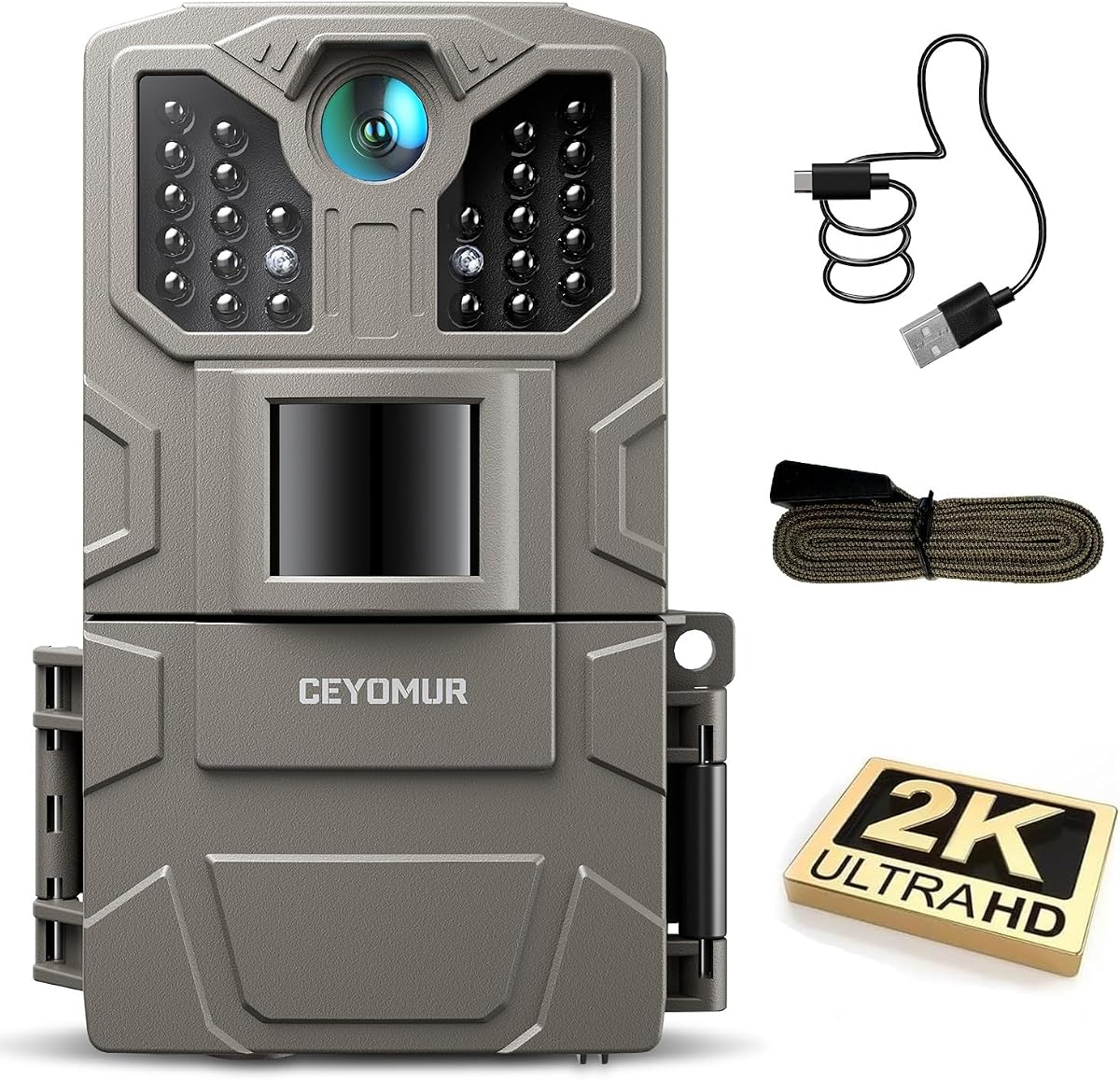
The CEYOMUR Trail Camera is designed for first time users who need reliable performance without complex settings. Its integrated design places all controls on one side making it easy to adjust angles and preview shots without moving the unit.
We may earn a commission when you buy through this link, at no additional cost to you.
This model runs on 8 AA batteries providing a solid power capacity for typical scouting needs. The simple control scheme ensures that you spend less time configuring the device and more time monitoring wildlife activity.
While it may not have the advanced connectivity of higher end models it delivers consistent 2K video and 36MP photos. The rugged IP66 waterproof design ensures that it can withstand rain and snow without compromising operation.
For budget conscious users or those new to trail cameras this is a practical choice. It offers essential features that support long term outdoor use while keeping energy management straightforward and accessible.
The all in one side design simplifies setup allowing you to adjust settings quickly without repositioning the camera for every change.
Built for tough environments the camera maintains consistent performance across different weather conditions ensuring you capture footage when it matters.
We may earn a commission when you buy through this link, at no additional cost to you.
The WOSPORTS Mini Trail Camera 2 Pack Kit allows you to monitor multiple locations with efficient power usage. Each camera operates on 4 AA batteries making maintenance manageable even when covering different areas simultaneously.
We may earn a commission when you buy through this link, at no additional cost to you.
This kit is ideal for users who need broader coverage without sacrificing battery life. The low power consumption ensures that each unit runs for an extended period before needing a battery change which reduces the frequency of field visits.
Included 16GB SD cards mean you can start using the cameras right away without purchasing additional accessories. The compact design helps each camera blend into the environment while remaining easy to mount and conceal.
For property owners or hunters needing to track movement patterns across several spots this 2 pack is a smart investment. It balances affordability with functional reliability for extended outdoor monitoring.
With two cameras in the kit you can track wildlife movement across multiple locations ensuring you do not miss activity in different areas.
Inclusion of SD cards in the package allows for immediate setup saving time and ensuring you capture data from day one.
We may earn a commission when you buy through this link, at no additional cost to you.
The WOSODA Mini Trail Camera 4 Pack Kit provides a complete solution for extensive property monitoring. With four cameras and 16 AA batteries included you can cover multiple areas immediately without additional purchases.
We may earn a commission when you buy through this link, at no additional cost to you.
Each unit runs on 4 AA batteries which supports a compact design that consumes less power than larger models. The low power consumption ensures that each camera remains operational for a long time between battery changes.
The fast trigger speed ensures that moving animals are captured quickly without missing details. The camouflage appearance helps the cameras blend naturally into the environment making them less likely to be detected by wildlife or intruders.
For large properties or those needing comprehensive security this 4 pack is a practical choice. Its value and coverage capabilities make it a strong option for users requiring broad surveillance with manageable energy use.
Four cameras allow you to monitor large properties effectively capturing wildlife movement from multiple angles without gaps in coverage.
The inclusion of batteries and SD cards in the package ensures you can deploy the cameras immediately after opening the box.
We may earn a commission when you buy through this link, at no additional cost to you.
The GardePro E5S 2 Pack Non Cellular Trail Camera offers a powerful dual camera setup with efficient power management. Each unit supports 8 AA batteries and is compatible with external solar panels for extended deployment periods.
We may earn a commission when you buy through this link, at no additional cost to you.
This model prioritizes non cellular operation to minimize power usage. By avoiding constant data transmission the cameras conserve energy significantly which is ideal for remote areas where changing batteries is difficult.
The IP66 weather resistant rating ensures that both cameras can withstand rain and dust without performance issues. The high resolution 64MP photos provide detailed imagery while maintaining the energy efficiency of a standard camera.
For users needing to monitor two key points simultaneously this 2 pack is a smart investment. It delivers the reliability of the single unit model with the added benefit of wider surveillance coverage.
Two cameras allow you to focus on high traffic areas or different properties ensuring you capture activity from multiple vantage points.
The ability to use 8 AA batteries or add a solar panel ensures you can choose the power source that fits your specific location needs.
We may earn a commission when you buy through this link, at no additional cost to you.
Selecting a trail camera with optimal battery life requires understanding key factors that influence power consumption and runtime efficiency.
Trail cameras generally run on AA batteries rechargeable lithium packs or solar power. AA batteries are the most common and affordable option but require periodic replacement. Rechargeable lithium packs offer longer life and reduced waste but may cost more upfront. Solar power provides continuous energy in sunny locations but depends on weather conditions.
Choose a power source that matches your location and willingness to perform maintenance. Solar is ideal for remote areas while AA batteries are sufficient for regular checks.
Some cameras use 4 AA batteries while others use 8. The higher count offers more energy storage which extends the interval between replacements. Models with 8 AA batteries often last longer but may consume more power per session if not optimized.
Prioritize models with higher battery capacity if you plan long term deployments without frequent site visits.
Higher resolution video like 4K consumes more battery than standard 1080P. While 4K offers better clarity it reduces the overall runtime of the camera. If battery life is your priority consider lowering the resolution settings to balance quality and power.
Select a resolution that meets your needs without unnecessarily draining the battery when high detail is not required.
Fast trigger speeds ensure quick capture but can impact battery life if the camera is overly sensitive to motion. A camera with adjustable PIR sensors helps minimize false triggers which saves energy. Look for models with configurable detection settings.
Adjusting trigger sensitivity prevents the camera from wasting power on irrelevant movement like swaying trees.
Cellular and WiFi enabled cameras transmit data wirelessly which significantly increases battery usage compared to non connected models. If you need remote access be prepared for more frequent battery changes or use rechargeable packs. Non cellular models generally last much longer.
Disable wireless features if you do not need remote viewing to conserve battery life effectively.
Infrared LEDs used for night vision consume power but some types are more efficient than others. No glow LEDs are less intrusive to wildlife but may draw more power than standard glow options. Consider the trade-off between stealth and energy consumption.
Choose night vision that balances stealth with energy efficiency to maintain long term functionality.
Technologies like H.264 compress video files to save space and processing power. This reduces the energy required for writing to the memory card and playback. Cameras with efficient compression can record more footage on the same battery charge.
Look for cameras that support modern compression standards to maximize both storage and battery efficiency.
A waterproof and rugged build ensures the camera remains operational in harsh weather which indirectly supports battery life by preventing power failures. A unit with IP66 ratings protects internal components from moisture and dust.
Invest in a durable camera that maintains consistent power delivery even in rain or snow conditions.
To maximize battery life ensure all contacts are clean and free of corrosion before inserting batteries. Use fresh alkaline or lithium batteries for better performance in cold temperatures.
Adjust the sensitivity settings to reduce false triggers from wind or small animals which drain power unnecessarily. Use a secure mount to prevent the camera from moving and taking unwanted photos.
Regularly check the camera for debris or dirt on the lens and sensor. Clean with a soft cloth and store in a dry place when not in use to preserve battery health.
Battery life varies based on settings and usage but typically ranges from 2 to 6 months. Factors like video resolution and trigger sensitivity influence this duration significantly.
Solar panels are highly effective in sunny locations providing continuous power without battery replacements. They are ideal for remote areas but depend on sunlight exposure.
Yes lithium batteries generally last longer and perform better in cold weather compared to standard alkaline options. They are also more rechargeable which reduces waste.
Quick battery drain is often caused by high resolution settings frequent triggers or cold temperatures. Reducing video resolution and adjusting sensitivity can help extend runtime.
Many cameras support rechargeable AA batteries but ensure the voltage is compatible with your model. Check the manual to confirm supported battery types.
Night vision consumes significant power especially in complete darkness. Using efficient LED settings or reducing night mode duration can help conserve energy.
Check the camera monthly to download photos and inspect battery levels. Frequent visits reduce battery life as opening the case exposes the unit to elements.
Cellular cameras offer real time updates but use more power. Choose them if remote access is a priority or use a solar panel to manage battery needs.
The MAXDONE Solar Trail Camera stands out for its continuous power capabilities while the WOSPORTS Mini offers excellent budget efficiency. For remote access the Moultrie Edge 3 provides unmatched convenience despite higher energy use.
Prioritize models that align with your specific needs such as solar compatibility or non cellular operation. Balancing features with power consumption ensures you get the most out of your device.
Remember that prices and availability change frequently so verify current listings before purchasing. Selecting the right camera will help you maintain reliable monitoring over time.