
AKASO EK7000 4K30FPS 20MP WiFi Action Camera
4.4Editor score
4K video resolution
Waterproof to 131 feet
Built-in Wi-Fi connectivity
Kayak fishing demands gear that stays secure and performs well in wet conditions. A dedicated camera helps you spot fish, navigate structure, and document your adventure without bulky setups.
We evaluated ten top-rated models based on waterproof depth, screen quality, battery life, and ease of use. Our selection includes underwater finders and action cams suited for small craft.
Each pick shows real-world performance, key strengths, and honest trade-offs for kayak anglers. Prices and availability change frequently, so check current listings before purchasing your next fishing camera.
4.4Editor score

4.6Editor score

4.6Editor score
As an Amazon Associate we earn from qualifying purchases.
This side-by-side comparison highlights key specs across all ten models to help you choose the right tool for your kayak fishing style and budget.


This underwater camera system stands out for its clarity and depth capability. With a 200 degree wide-angle lens and high-brightness OLED screen, it delivers crisp images even in direct sunlight or murky lakes.
We may earn a commission when you buy through this link, at no additional cost to you.
Its triple-panel sun visor and eight infrared LEDs ensure visibility in almost any condition. The 25-meter cable allows you to explore deep structures while the 10,000mAh battery supports over 12 hours of continuous operation.
While it offers more features than basic finders, the setup may be complex for some users. The weight of the case and cable could be a consideration for solo kayak anglers prioritizing minimalism.
This pick is ideal for anglers who need reliable, detailed underwater viewing without relying on sonar. It excels in challenging light and deep-water scenarios where precision matters most.
The 1080P OLED display with 2000 nits brightness ensures you never lose sight of fish even under harsh glare or overcast skies.
With a 25-meter cable and heavy-duty strength, you can reach deep drop-offs and submerged structures that other cameras cannot access easily.
We may earn a commission when you buy through this link, at no additional cost to you.
The AKASO EK7000 offers an accessible entry point into capturing your kayak adventures. It records 4K video and stabilizes footage electronically, making it perfect for mounted action shots on moving water.
We may earn a commission when you buy through this link, at no additional cost to you.
Its 131ft waterproof rating means you can submerge it directly for unique angles without an extra housing. Wi-Fi connectivity lets you review and share clips instantly via the companion app.
However, the remote control is not waterproof so you must keep it dry while recording. Battery endurance is modest, so spares are recommended for longer day trips without charging access.
For those wanting a compact camera for both fishing and general recreation this model delivers high value. It balances performance and price well for casual users who prioritize video quality over specialized depth tools.
Capture every splash and strike in four times the detail of standard HD, ensuring your footage looks sharp on modern screens and social media.
Built-in EIS reduces wobble and jitter caused by waves and boat movement so your action videos stay watchable and professional-looking.
We may earn a commission when you buy through this link, at no additional cost to you.
The FishPRO 2026 Upgrade stands out as a premium solution for serious anglers. Its 7-inch full-color IPS monitor offers exceptional viewing from any angle while the battery supports over 20 hours of nonstop use.
We may earn a commission when you buy through this link, at no additional cost to you.
You can switch between LED color and IR black-and-white modes instantly to suit water clarity. The magnetic spool system allows flexible control whether you attach monitor and camera or operate them separately.
While it lacks HDMI output and costs more than basic units its build quality justifies the investment. The 1.8mm Aramid cable resists damage and ensures signal clarity even under tension or rough handling.
This model suits anglers who demand reliability and clarity for extended sessions. It bridges the gap between portable convenience and professional-grade performance without requiring complex setups.
With 10,000mAh capacity and USB-C passthrough charging you can fish from sunrise to sunset without worrying about power loss during peak activity.
Unlike cheap TN panels this monitor maintains accuracy and brightness across wide angles so you spot fish and details clearly from any viewing position.
We may earn a commission when you buy through this link, at no additional cost to you.
This camera delivers reliable visibility for anglers focused on real-time monitoring. Its 4.3-inch IPS screen stays readable in sunlight thanks to the included sun visor and adjustable mounting options.
We may earn a commission when you buy through this link, at no additional cost to you.
The 50ft tangle-free cable deploys smoothly and supports heavy loads for deep drops. With 6000mAh power you get over eight hours of continuous use which covers most weekend trips effectively.
It lacks recording and streaming features so it is strictly a viewing device. Infrared range drops in murky water limiting night performance but still adequate for shallow structure checks.
Choose this model if you want a simple, bright monitor without extra complexity. It balances portability and durability well for casual users who prioritize live feedback over media capture.
The IPS screen and visor combo ensures you see fish clearly even under direct noon sun so glare never hides a strike or structure.
A smooth-spooling cable avoids knots and tangles so you can focus on fishing instead of untangling gear during critical moments.
We may earn a commission when you buy through this link, at no additional cost to you.
The TMACTIME camera offers a solid middle ground between performance and portability. Its 30-meter cable reaches significant depths while the IP68 rating ensures protection against mud and cold conditions.
We may earn a commission when you buy through this link, at no additional cost to you.
Six IR lights enhance night visibility and the battery lasts around 10 hours per charge. The interface is simple and intuitive requiring minimal setup before you start monitoring fish activity.
It lacks video recording so footage is limited to live observation. The LCD screen is functional but lacks the brightness and color fidelity of higher-end IPS displays found in premium models.
This is a practical choice for anglers who want reliable depth and battery performance without high cost. It fits well in kayak packs and handles basic freshwater and ice scenarios efficiently.
Fully sealed against water and dust so you can operate confidently in rainy or splashy kayak environments without fearing electronics damage.
No complicated settings or drivers needed just connect and view. This ease of use saves time so you focus on catching instead of configuring.
We may earn a commission when you buy through this link, at no additional cost to you.
This system shines in low-light environments thanks to its 12 infrared LEDs and wide-angle lens. It reveals fish silhouettes in dark or murky water making it ideal for night kayak fishing or deep holes.
We may earn a commission when you buy through this link, at no additional cost to you.
The 50FT cable resists abrasion and supports significant tension ensuring reliable deployment in rough terrain. An IP68 rating guarantees performance even in cold or muddy freshwater conditions.
Its LCD resolution is standard and brightness varies under direct sun. The 5000mAh battery provides decent endurance but may not match the runtime of larger premium models.
For anglers who fish in shadows or overcast spots this camera delivers strong performance. It balances affordability and durability while delivering clear visuals when you need them most.
Twelve infrared LEDs illuminate dark water effectively so you see fish and structure clearly even without sunlight or ambient moonlight.
A 200 degree lens captures more than just what is directly below helping you spot approaching fish from multiple angles around the kayak.
We may earn a commission when you buy through this link, at no additional cost to you.
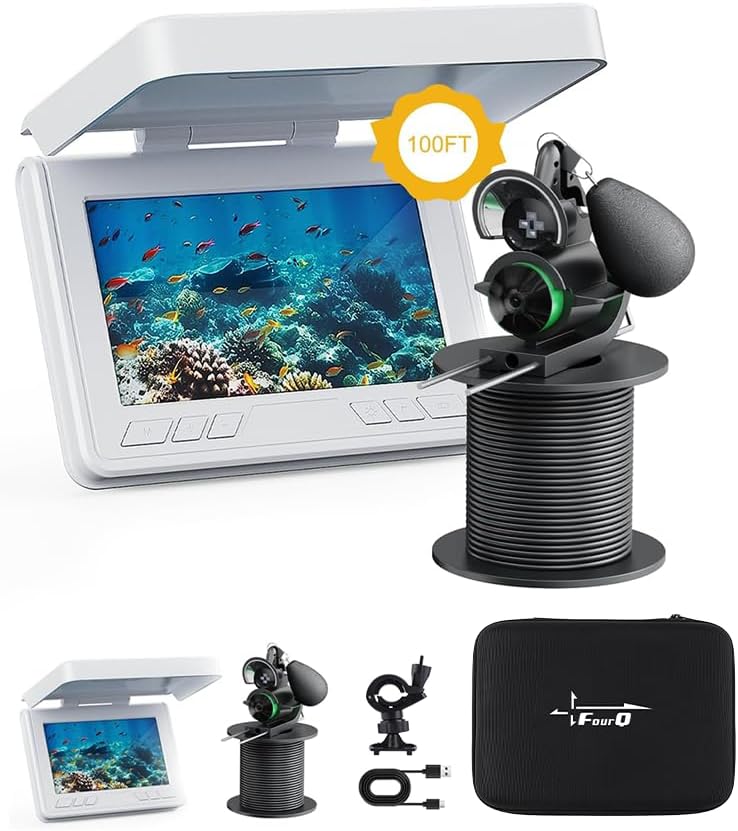
This model offers one of the largest screens in its price range making underwater details easy to spot. The 5-inch IPS panel delivers stable viewing and the 100ft cable lets you explore deep water from kayak decks.
We may earn a commission when you buy through this link, at no additional cost to you.
Battery endurance reaches up to nine hours which suits most extended fishing sessions. The 220 degree lens ensures a broad view helping you monitor multiple fish or bait positions simultaneously.
The monitor adds weight and bulk to your setup so storage space must be considered. Like most finders this unit supports real-time viewing only without capturing stills or video clips.
If you prioritize screen size and cable reach this is a strong contender. It delivers solid reliability for anglers who want to see more without spending premium prices.
A 5-inch IPS display offers crisp detail and wide viewing angles so spotting small fish or structure is easier than on smaller screens.
With 100 feet of cable you can reach drop-offs and deep holes without moving your kayak helping you find productive spots quickly.
We may earn a commission when you buy through this link, at no additional cost to you.
This finder delivers exceptional battery endurance allowing over 15 hours of continuous operation. That capacity suits multi-day kayak trips or ice fishing outings where charging access is limited.
We may earn a commission when you buy through this link, at no additional cost to you.
Its 5-inch screen includes a foldable sunshade keeping views clear in bright conditions. The 220 degree lens provides broad coverage helping you monitor fish behavior and structure efficiently.
Though it lacks recording features the focus is on reliable live viewing. The cable is reinforced and durable but setup requires care to avoid tangles during deployment from small boats.
For anglers who need long runtime without extra power packs this model excels. It balances portability and visibility well for those prioritizing sustained observation over media capture.
With 8000mAh capacity the unit runs over 15 hours per charge so you can fish multiple days without recharging or power concerns.
A built-in foldable sunshade reduces glare on the display so you maintain clear visibility during sunny midday sessions on open water.
We may earn a commission when you buy through this link, at no additional cost to you.
This model offers a practical entry point for anglers who need basic underwater visibility. It includes a 100ft cable and provides ten hours of battery life which covers most casual fishing days.
We may earn a commission when you buy through this link, at no additional cost to you.
Twelve IR lights improve low-light performance and the IPX6 rating protects against splashes and light rain. Setup is straightforward making it suitable for users who want simplicity over advanced features.
The screen is functional but not bright in direct sunlight. Also the water rating means submersion beyond splashes may not be covered so caution is needed in rough water.
For occasional users who want reliable performance without overspending this unit fits well. It provides essential visibility and endurance for those starting with kayak fishing cameras.
At an affordable price this camera includes core features like long cable and decent battery life so beginners can experiment without financial risk.
Plug-and-play setup means no complex settings or manuals needed. You can start fishing quickly and focus on the catch instead of setup details.
We may earn a commission when you buy through this link, at no additional cost to you.
The EK7000 kit offers everything needed to start recording underwater action. It includes a durable waterproof case for submersion up to 131 feet plus mounting accessories for secure kayak deployment.
We may earn a commission when you buy through this link, at no additional cost to you.
4K video at 30fps provides sharp detail and four times the resolution of HD. Wrist remote control makes it easy to start and stop recording without handling the camera directly.
Note the remote is not waterproof so keep it dry during use. Battery life remains limited compared to dedicated fish finders so spare packs are advisable for long trips.
This kit suits anglers who want versatile recording for multiple sports beyond fishing. It delivers strong video performance and practical accessories for capturing dynamic moments on the water.
Includes mounts straps and waterproof case so you can mount to kayak rods or rails immediately without buying extra gear separately.
4K resolution captures clear footage even when cropping or editing later ensuring your clips look sharp on all modern screens.
We may earn a commission when you buy through this link, at no additional cost to you.
Choosing the right camera for kayak fishing depends on your priorities such as depth visibility, screen clarity, and portability. This guide breaks down key factors to help you make an informed decision.
Waterproof rating determines how deep your camera can safely go. Models marked IP68 can withstand full submersion while others may need external cases. For kayak fishing, choose a camera that reaches typical lake or river depths where you fish.
Ensure the camera can handle the conditions you fish in. A higher rating protects against accidental drops and submersion.
Larger screens make it easier to spot fish and structure. IPS panels provide better color accuracy and viewing angles than basic LCDs. Sunshades or built-in visors are crucial for direct sunlight use.
Select a screen that stays readable in bright conditions. A larger display reduces eye strain during long sessions.
Cable length determines how deep you can deploy your camera. Look for reinforced cables that resist tangling and abrasion. A tangle-free system saves time and frustration on the water.
Choose a cable that matches your typical fishing depth. A durable line ensures reliability in rocky or weedy bottoms.
Battery endurance affects how long you can fish without recharging. Look for capacities above 5000mAh for full-day use. USB-C charging adds convenience for powering from banks or chargers.
Consider runtime when selecting your model. Longer battery life means uninterrupted fishing trips.
Infrared LEDs help you see fish in dark or murky water. More LEDs generally mean better visibility at depth. Some models offer both IR and LED light modes for color or monochrome viewing.
Check IR range and switch options. Good night vision expands your fishing window into evening hours.
Kayak anglers need gear that fits in storage compartments easily. Compact designs with carrying cases help organize components quickly. Plug-and-play systems reduce setup time before launching.
Choose a system that fits your kayak space well. Ease of setup ensures you spend more time fishing and less gear.
Some cameras offer video recording while others focus on live viewing. If capturing footage matters, ensure the model includes SD card support and resolution specs. Wi-Fi connectivity helps edit clips on the go.
Decide if you need playback features. Recording adds value if you want to review strikes later.
Budget models offer basic viewing while premium units add features like larger screens and longer battery life. Compare specs to see what you gain for extra cost. Accessories and warranty support also influence value.
Balance cost with your needs. A higher price isn't always better if the features aren't relevant.
Before each trip, inspect your cable and housing for signs of wear or damage. Ensure the seal is clean and dry to maintain waterproof integrity. Mount the camera securely using included brackets to prevent shifting during paddling.
After every use, rinse the camera and cable with fresh water to remove salt or debris. Dry all components thoroughly before storing them to prevent mold or corrosion. Store the system in its case to avoid accidental drops or scratches.
Keep battery contacts clean and recharge fully before long outings. Test the display and light settings before deploying the camera so you catch the start of each session. Regular maintenance extends the life and accuracy of your underwater gear.
Yes, waterproof action cameras work well for capturing video above and below water. They excel at recording surface activity and scenic shots but lack real-time underwater viewing needed to spot fish directly.
Most modern cameras are designed to minimize fish disturbance. Clear housings and low-light LEDs reduce glare or movement that may alert fish, allowing for natural behavior observation in most scenarios.
Use the included brackets to attach the monitor to a rod holder or rail. For underwater deployment, secure the camera near the hull or on a transducer mount so it stays stable while paddling.
Aim for at least 8 to 10 hours of continuous runtime. For long day trips, models with USB-C passthrough charging or larger capacities give you flexibility without needing extra packs.
Most cameras support saltwater if rinsed thoroughly after each trip. Check the waterproof rating and seal regularly to prevent corrosion or water intrusion from salt exposure.
They perform best in clearer conditions but infrared night vision can still show silhouettes in murky water. Contrast and clarity drop as sediment increases, so adjust angles to get the clearest view possible.
Not essential but helpful for review. Recording allows you to see exactly how fish interacted with bait. If you only need live feedback, finders without recording are cheaper and simpler to manage.
Depends on the model. Basic units go around 50 feet while advanced ones reach 100 feet or more. Always check the rated depth before deployment to avoid damaging your gear.
The top picks for 2026 range from budget action cams to premium underwater finders with large screens. Each offers distinct advantages for visibility, endurance, and ease of use on the water.
Prioritize screen brightness, battery life, and waterproof depth based on your typical conditions. A model that handles sunlight and deep drops will serve you better across varied fishing trips.
Check current prices and availability before purchasing to get the best value. As technology improves, newer updates may offer better features for similar costs in the near future.