
AAwipes 8-in-1 Aquarium Test Kit for Fish Tanks
4.3Editor score
Tests eight parameters quickly
Includes ammonia nitrogen testing
Extended shelf life packaging
Compare the top aquarium pH testers of 2026 including digital meters, test kits, and strips to maintain safe water conditions for your aquatic pets.
Keeping your aquarium water balanced is essential for fish health and long-term tank stability. A reliable pH tester helps you monitor acidity levels and prevent sudden shifts that could harm your aquatic life. Whether you use strips or meters, choosing the right tool simplifies maintenance.
We evaluated ten highly rated pH testers based on accuracy, ease of use, and durability. Our selection includes digital pens, liquid test kits, and continuous monitors suitable for freshwater and saltwater setups. Each option was reviewed to ensure it meets the needs of hobbyists at any experience level.
Every pick highlights specific strengths like precision calibration or broad testing ranges. You will find detailed pros and cons to help you decide based on your tank type and budget. Keep in mind that prices and availability may change, so verify current details before purchasing.
4.3Editor score

4.6Editor score

4.4Editor score
This table provides a side-by-side comparison of all ten selected pH testers to help you quickly identify which model fits your specific aquarium needs and budget constraints.



This API test kit stands out as the most reliable choice for freshwater aquarium keepers seeking consistent pH monitoring. With a 4.6 rating from hundreds of users, it offers a straightforward way to track water chemistry without complex equipment.
We may earn a commission when you buy through this link, at no additional cost to you.
The kit provides 250 tests in one bottle, ensuring you can monitor your tank for months without restocking. It accurately reads pH between 6.0 and 7.6, the sweet spot for most freshwater species. The included color card makes comparisons quick and easy during weekly checks.
While it is limited to freshwater and requires good lighting to match colors accurately, these trade-offs are minor for most hobbyists. The liquid test method is more precise than strips, giving you confidence that your fish live in safe conditions.
If you want a proven tool that balances cost and performance, this is the top pick. It helps detect pH fluctuations caused by waste or food, allowing you to act before issues arise. We recommend it for any freshwater setup requiring steady monitoring.
With 250 tests, this kit supports years of weekly monitoring for typical household aquariums, reducing the need for frequent repurchasing.
Regular use helps catch pH swings early caused by fish waste or tap water additions, keeping your tank environment stable for your fish.
We may earn a commission when you buy through this link, at no additional cost to you.
The AAwipes kit offers exceptional value for hobbyists wanting to test more than just pH. It includes 50 strips that measure eight parameters including ammonia and alkalinity, making it a comprehensive budget option for monitoring overall water quality.
We may earn a commission when you buy through this link, at no additional cost to you.
You get results quickly by dipping the strip for two seconds and comparing colors after 30 seconds. The kit uses high-quality paper that resists color bleeding, ensuring readable results even in less-than-ideal lighting. The sealed bottle keeps strips fresh for extended periods.
The main trade-off is that the ammonia pad requires a separate five-second dip and three-minute wait, which can be tedious. Also, strip accuracy depends on consistent dipping time and lighting, but it remains a solid choice for regular checks.
Ideal for beginners or large tanks, this kit helps you catch hidden water issues like ammonia spikes before they harm fish. Its versatility for both ponds and aquariums adds to its appeal, making it a smart buy for cost-conscious keepers.
Testing eight parameters including pH and ammonia provides a complete picture of water health without buying multiple separate test kits.
The well-sealed bottle protects strips from moisture and air, ensuring they remain effective over time for reliable testing when needed.
We may earn a commission when you buy through this link, at no additional cost to you.
The APERA PH20 is a premium digital meter designed for accuracy and durability. It features waterproof construction and auto temperature compensation, making it reliable for various tank setups where consistent pH readings are critical for fish health.
We may earn a commission when you buy through this link, at no additional cost to you.
This meter offers high response rates and auto-recognition of stable values, which removes guesswork during testing. The included rugged case and buffers ensure you have everything needed for immediate use. Its long battery life supports months of testing without frequent changes.
Though it comes at a higher cost than simple strips, the precision and build quality justify the investment for serious hobbyists. It requires some maintenance like sensor care to ensure longevity, but the effort pays off in reliable results.
If you prioritize accuracy and want a tool that handles water splashes or humid environments, this meter is unmatched. It simplifies monitoring while giving you confidence in your readings, making it a top choice for advanced aquarium management.
The meter recognizes when pH values stabilize, so you do not need to guess when to record the reading, improving consistency every time.
A waterproof design means accidental drops into tank water will not ruin the device, extending its useful life significantly in busy aquarium settings.
We may earn a commission when you buy through this link, at no additional cost to you.
This VIVOSUN meter combines pH and TDS testing in one handheld device, offering versatility for monitoring both acidity and dissolved solids. It is a practical tool for keepers who want more detailed water insights beyond pH alone.
We may earn a commission when you buy through this link, at no additional cost to you.
The meter provides quick readings with 0.01 accuracy and includes three calibration buffers for setup. Its lightweight design makes it easy to carry around the tank for spot checks. The included case protects it when not in use, ensuring durability.
However, it cannot test seawater, limiting its use to freshwater and hydroponics. While compact, the unit is slightly bulkier than simple pen meters, which may be less convenient for small tanks. Still, the dual functionality adds significant value.
Ideal for hobbyists who track nutrient levels alongside pH, this meter simplifies water testing into one step. It delivers consistent results for freshwater aquariums and helps maintain optimal conditions for sensitive aquatic plants and fish.
Measuring both pH and TDS helps you understand overall water quality and dissolved solids, providing a deeper view into your tank environment.
The lightweight design with a protective case ensures you can safely carry the meter for testing anywhere without risk of damage.
We may earn a commission when you buy through this link, at no additional cost to you.
Designed for marine and African cichlid tanks, this API kit targets the higher pH range needed for those species. It offers 160 tests per bottle, providing ample supply for regular weekly monitoring to ensure stability in saltwater environments.
We may earn a commission when you buy through this link, at no additional cost to you.
Like its freshwater counterpart, it uses a simple liquid test method with a color card for comparison. The range accurately reads between 7.4 and 8.8, covering most marine setups. It helps detect waste-induced shifts before they harm fish or invertebrates.
It is limited to the high range so it cannot test lower pH freshwater systems, but that is its intended focus. The liquid method remains precise and easy, making it a dependable choice for reef and marine tank owners.
If you keep saltwater fish that require alkaline conditions, this kit is essential for routine maintenance. It ensures you stay within the safe zone, preventing costly fish loss due to pH drift in your marine ecosystem.
Testing the 7.4 to 8.8 range ensures marine tanks stay in the alkaline zone required for coral and fish health without overshooting.
With 160 tests, one bottle lasts a year of weekly checks, offering an affordable way to maintain safe water chemistry for marine life.
We may earn a commission when you buy through this link, at no additional cost to you.
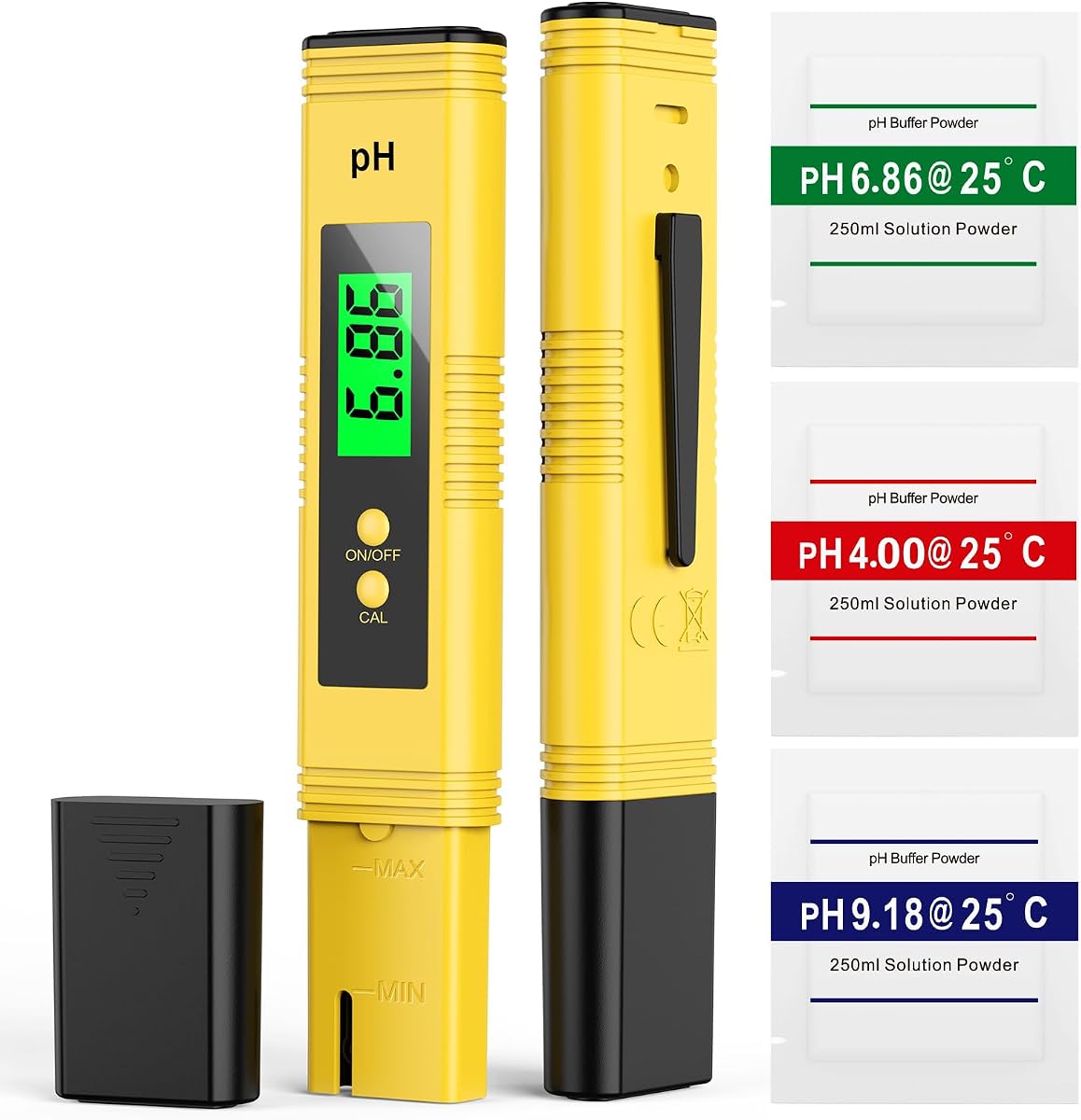
This yellow digital pH pen offers a convenient way to test water acidity with a 0.01 accuracy rating. It ships pre-calibrated so you can use it right away, and its pocket size makes it easy to transport for different testing locations.
We may earn a commission when you buy through this link, at no additional cost to you.
To operate, simply immerse the probe and stir gently until the reading stabilizes. It covers the full 0 to 14 pH range, making it versatile for various water types. The device is lightweight and designed for quick daily checks in home aquariums.
While pre-calibrated, readings may vary slightly depending on water conditions so occasional checks are wise. The LCD screen is basic but functional for viewing numbers clearly. It balances portability with decent accuracy for casual hobbyists.
Best for those who want a quick handheld solution for pH checks, this pen simplifies monitoring without the need for liquid kits. It is an affordable way to keep an eye on water balance across different tanks or outdoor setups.
Pre-calibrated from the factory means you can start testing immediately without waiting for setup or buying extra calibration solutions first.
Testing from 0 to 14 pH allows you to use the same device for various tanks without needing different meters for different water conditions.
We may earn a commission when you buy through this link, at no additional cost to you.
This VIVOSUN digital meter brings automatic temperature compensation to affordable pH testing, which helps ensure accuracy regardless of water temperature. It features a backlit screen for clear readings even in dimly lit aquarium areas.
We may earn a commission when you buy through this link, at no additional cost to you.
The meter is designed for quick and accurate results using advanced technology that stabilizes readings fast. It includes three pH buffer powders for calibration to maintain accuracy over time. The pocket-size design makes it easy to store and retrieve for checks.
While the build is lightweight and basic, it performs well for routine freshwater monitoring. The main drawback is that batteries are not pre-installed, so you may need to add them before first use, which adds a small step.
For hobbyists who want a digital readout without spending a lot, this is a solid entry point. It provides consistent pH data that helps you adjust water conditions proactively without relying on color-matching strips or kits.
Automatic Temperature Compensation ensures pH readings stay accurate even if your tank water is warmer or cooler than room temperature.
A backlit screen allows you to read pH values clearly even in low light, making testing easier at any time of day.
We may earn a commission when you buy through this link, at no additional cost to you.
This mini digital pH meter uses automatic temperature compensation to adjust readings based on water conditions. It is ready for use out of the box and covers the full 0 to 14 pH range for various testing scenarios including aquariums.
We may earn a commission when you buy through this link, at no additional cost to you.
You simply turn it on, immerse the probe, and wait for the value to stabilize before reading. The compact size allows you to carry it easily in a pocket for travel or quick checks around different tanks. It helps you make decisions based on accurate data.
While convenient, the probe requires careful handling and stabilization time which can be slow if water temperature varies. Still, for most users the accuracy is sufficient for maintaining safe aquarium conditions without complex setups.
Ideal for hobbyists who test water in multiple locations, this meter balances portability and function. It provides reliable pH data quickly so you can manage water quality efficiently even when away from a permanent testing station.
Automatic Temperature Compensation adjusts pH results based on water heat, so you do not need to worry about temperature affecting accuracy.
The small size lets you slip the meter into a pocket for easy carrying, making water checks convenient anywhere you travel.
We may earn a commission when you buy through this link, at no additional cost to you.
The 2025 All-New pH meter from MEXYBE prioritizes safety with UL certification while delivering 0.01 precision for aquarium water checks. It ships factory calibrated with three pH buffer powders included to support setup and long-term accuracy.
We may earn a commission when you buy through this link, at no additional cost to you.
Using it requires soaking the electrode for thirty minutes before first use to activate it properly. Once active, it provides consistent readings with a simple interface. The brand also offers dedicated customer support to help troubleshoot any issues you may encounter.
The initial electrode soak and stabilization time can delay first use but ensure better long-term reliability. It is a practical tool for those who value certified safety and support when testing drinking water and aquariums.
If safety and after-sales support are priorities for you, this meter delivers reliable performance. It helps ensure water quality meets standards without complicating the testing process, making it a trustworthy choice for home aquariums.
UL certification ensures the meter meets safety standards for electrical devices, giving peace of mind during regular water testing.
Dedicated customer service is available via chat and email to assist you with any questions about using or calibrating the meter.
We may earn a commission when you buy through this link, at no additional cost to you.
The Seachem pH Alert uses sensor technology to provide continuous pH monitoring without manual testing. It lasts up to six months and offers a visual indicator that helps you track trends in your freshwater aquarium over time.
We may earn a commission when you buy through this link, at no additional cost to you.
Unlike kits or meters, it requires no dips or strips. The device floats in the tank and changes color based on pH levels, alerting you to shifts quickly. This passive monitoring reduces the need for weekly testing and saves effort.
It only gives a general range and does not show exact pH values, which may limit precision for sensitive setups. However, for spotting trends and avoiding sudden drops, it is an excellent low-maintenance option for many freshwater tanks.
If you want a tool that works in the background to protect your fish, this sensor is ideal. It helps you detect problems before they become critical while letting you focus on other aspects of aquarium care without frequent testing.
Continuous monitoring ensures pH changes are caught quickly even when you are not around to test manually, reducing risk to fish.
No tests or strips are needed with this sensor, simplifying water monitoring significantly for busy aquarium keepers.
We may earn a commission when you buy through this link, at no additional cost to you.
Choosing the right pH tester depends on your tank type, accuracy needs, and budget. Consider these factors to find a tool that fits your maintenance routine and supports fish health.
Testers come in strips, liquid kits, digital pens, and continuous sensors. Strips are easy and cheap but less accurate. Liquid kits offer precise results with color comparison. Digital pens provide exact numbers but need calibration. Continuous sensors monitor trends without testing effort.
Choose liquid kits for accuracy, strips for quick checks, and pens for daily digital readings. Sensors suit hobbyists who want passive monitoring.
Freshwater tanks usually need testing between 6.0 and 7.5 while saltwater tanks require higher ranges like 7.4 to 8.8. Some meters cover 0 to 14 so they work for all water types. Ensure the tester covers your tank's required pH range for meaningful results.
Always verify that the tester's range matches your aquarium species needs to avoid inaccurate readings that could harm your fish.
Accuracy determines how close the reading is to actual pH. Digital pens offer 0.01 precision while kits might round to 0.2 or 0.4 units. Higher accuracy is vital for sensitive species like cichlids or coral reef setups.
For general freshwater tanks standard accuracy is fine. For specialized setups invest in high-precision digital meters to avoid subtle harmful pH shifts.
Digital meters require periodic calibration using buffer powders to stay accurate. Some come pre-calibrated for immediate use. Liquid kits and strips do not need calibration but may degrade over time. Check if calibration tools are included in the box.
Factor in the time and cost to buy buffers if calibrating. Pre-calibrated pens save effort but check expiry dates.
Digital meters should be waterproof or splash-resistant since they will be near water. Look for protective cases to store probes safely. Strips and kits come in sealed bottles but should be kept away from humidity. Sensors should float well and not damage tank decor.
Choose durable materials that can handle regular use and storage. Waterproof pens last longer in humid aquarium environments.
Kits list total tests included such as 160 or 250 while strips come in packs of 50 or 100. Continuous sensors last months. Consider how often you test to pick a kit that lasts a year without refill needs.
More tests mean lower long-term cost. Calculate expected testing frequency to decide between bulk kits or smaller packs.
Strips and kits are simple but require color matching in good light. Digital pens are quick but need probe care. Sensors need no effort once installed. Pick a method you will use consistently since regular testing matters most.
Choose the simplest method that gives reliable results. Consistency is key to catching pH problems early.
Digital meters cost more upfront but save money over time compared to buying strips repeatedly. Kits offer high value per test. Consider long-term cost rather than just the sticker price. Budget-friendly pens might need frequent replacement.
Invest in a tool that balances cost with durability. Cheap pens may lack accuracy while kits offer lasting value per test.
For liquid kits fill the test tube with tank water add drops of solution mix gently and compare the resulting color to the provided card under bright light. Record the pH value and repeat weekly to track trends.
Digital pens should be calibrated using buffer powders before use. Rinse the probe with distilled water, immerse it in the tank, stir gently and wait for the reading to stabilize before recording. Always rinse and dry the probe after testing.
Store test strips and kits in a cool dry place away from direct sunlight to prevent degradation. Calibrate digital meters regularly and keep sensors clean. Replace consumables like buffers or strips according to manufacturer guidelines to ensure accuracy.
Test your aquarium pH at least once a week to catch gradual changes before they harm your fish. Increase testing during new tank setups, after adding new fish, or if water appears cloudy or cloudy. Regular checks help you maintain stable water conditions.
Liquid test kits are generally more accurate than pH strips because they allow for color comparison in a test tube. Strips can be affected by lighting and user perception. For precise readings kits are recommended especially for sensitive fish tanks.
Digital pH meters drift over time due to electrode aging or environmental factors. Calibration using known buffer solutions ensures the meter reads correctly. Calibrate regularly to maintain accuracy and avoid false pH readings that could lead to tank problems.
Most digital meters work for both salt and freshwater but some test kits are formulated for specific ranges. Verify the tester covers your desired pH range. Using a high-range saltwater kit for acidic freshwater may result in inaccurate low readings.
pH shifts can be caused by fish waste, uneaten food, tap water changes, and biological filtration. Accumulated organics lower pH over time. Test your tap water and buffer it if necessary. Regular partial water changes help stabilize pH levels.
Continuous sensors are worth it if you want to monitor pH without manual testing. They alert you to sudden drops or spikes quickly. However they lack exact numerical precision so combine them with periodic kit testing for complete accuracy.
pH test strips typically last a few months if stored properly in a sealed container away from moisture. Check the expiration date on the bottle. Exposure to humidity or air can degrade the chemicals on the strips and reduce accuracy.
Most freshwater fish thrive in a pH range of 6.5 to 7.5. Some species like African cichlids prefer higher pH while tetras prefer lower. Research your specific fish to set the right target and test regularly to maintain that range.
Our top picks include the API PH TEST KIT for overall value, the AAwipes 8-in-1 Kit for budget-friendly multi-parameter testing, and the APERA PH20 for premium accuracy. Each option balances precision and ease of use to support healthy aquarium conditions.
When choosing a tester prioritize accuracy and reliability that matches your tank type. Regular monitoring prevents pH swings that stress fish. Consider how much effort you want to spend on testing to pick between strips kits or digital meters.
Prices and availability change frequently so check current product details before making a purchase. Using a reliable pH tester consistently will help you maintain safe water quality for your fish and enjoy a thriving aquarium ecosystem long term.