
MT-92H Light Meter
4.6Editor score
Split sensor design
Fast 500ms refresh
Bright backlight display
This guide compares the top analog light meter options for photographers and filmmakers, highlighting accuracy, durability, and ease of use for precise
Finding the right analog light meter is crucial for photographers who value tactile control and reliable exposure readings without relying on digital screens or complex menus.
We evaluated ten top-rated models based on their build quality, measurement accuracy, and user-friendly features to help you choose the perfect tool for your workflow.
Each selection below showcases unique strengths for different needs, from budget-friendly options to professional studio gear, keeping in mind that prices can change over time.
4.6Editor score

4.6Editor score
5.0Editor score
This side-by-side comparison highlights key specifications and features across all ten selected light meters to help you make an informed decision for your specific photography needs.

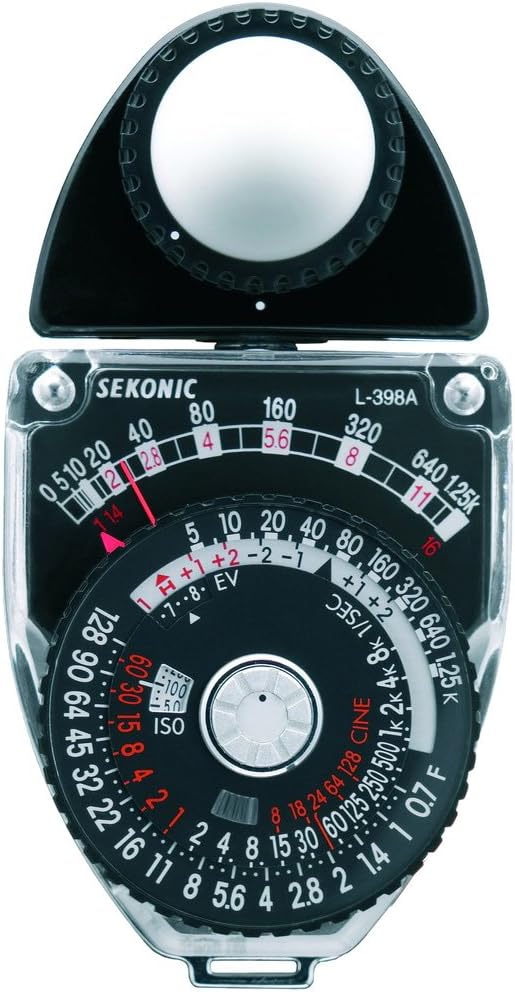


The Sekonic L-398A Studio Deluxe III stands out as the premier choice for photographers seeking a reliable analog light meter. With a robust rating of 4.6, it combines traditional design with modern precision.
We may earn a commission when you buy through this link, at no additional cost to you.
Its battery-free amorphous photocell ensures you never miss a shot due to dead power. The full dial readout allows for quick adjustments of aperture and shutter speed without scrolling through digital menus.
While the analog interface might take time to master for those used to digital screens, the tactile feedback is unmatched. The swivel head design enhances usability during complex lighting setups.
Professional photographers and cinematographers should prioritize this model for its consistency and durability. It is a long-term investment that pays off in every exposure you capture.
The integrated amorphous photocell generates power from ambient light, eliminating the need for batteries.
The full aperture and shutter dial readout speeds up exposure decisions significantly.
We may earn a commission when you buy through this link, at no additional cost to you.
The MT-92H Light Meter offers exceptional value for those needing accurate measurements without breaking the bank. It delivers high precision with a fast refresh rate that captures subtle light changes effectively.
We may earn a commission when you buy through this link, at no additional cost to you.
Its split sensor design allows for simultaneous measurement and monitoring, keeping the probe steady while you adjust settings. The dual measurement units support both Lux and Foot Candles for versatility.
Though it lacks the classic feel of an analog dial, the high-visibility backlight ensures readability in any lighting condition. This makes it a strong contender for set design or home use.
Budget-conscious photographers and studio assistants will find this tool practical and efficient. It provides essential data without the cost associated with higher-end professional models.
A 500ms refresh rate ensures you catch even the smallest shifts in light levels instantly.
The split sensor lets you measure from a distance while viewing the display comfortably.
We may earn a commission when you buy through this link, at no additional cost to you.
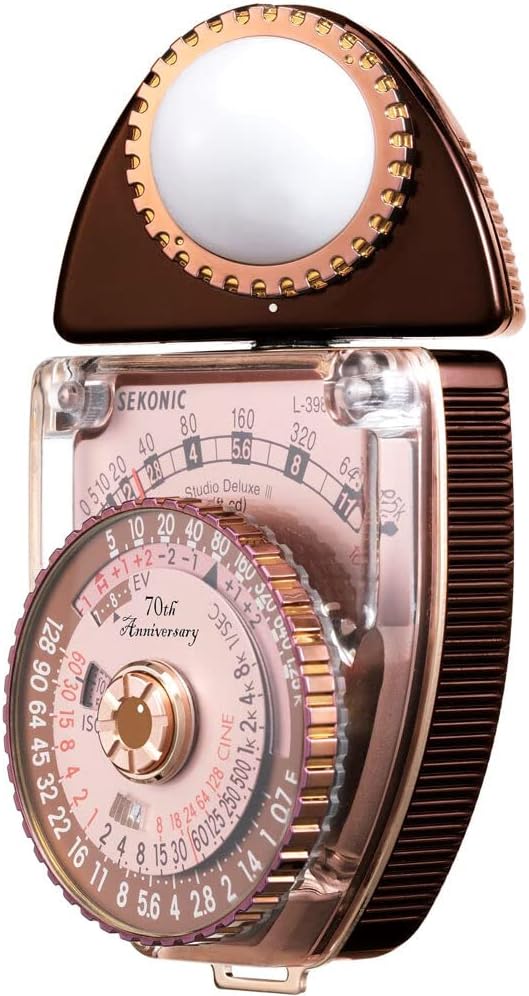
This limited edition anniversary model represents the pinnacle of analog light meter design. With a perfect 5.0 rating, it offers instant readouts of a full range of aperture and shutter combinations.
We may earn a commission when you buy through this link, at no additional cost to you.
The build quality reflects its status as a premium tool, designed for professionals who demand precision and style. Every detail is crafted to enhance the shooting experience for both stills and video.
While the price is high and availability may be limited, the performance justifies the investment for serious enthusiasts. It serves as both a functional tool and a tribute to photographic history.
Collectors and professional cinematographers should consider this piece for its unique features and superior performance. It ensures your exposure readings are accurate and your workflow remains uninterrupted.
The meter provides immediate access to the full range of aperture and shutter combinations.
As a 70th Anniversary edition, it honors the legacy of Sekonic with iconic styling.
We may earn a commission when you buy through this link, at no additional cost to you.
This digital illuminance meter provides a practical solution for measuring light levels in various environments. Its 200,000 Lux range covers everything from dark rooms to bright sunlight effortlessly.
We may earn a commission when you buy through this link, at no additional cost to you.
The 4-digit color LCD screen makes readings easy to view, while the added temperature feature offers environmental context. It is ideal for office, factory, or home use where precise exposure is secondary.
While it may not suit professional photography needs compared to dedicated meters, it serves general lighting checks well. The warranty adds peace of mind for casual users or facility managers.
Users needing simple, reliable light monitoring should find this device sufficient. It balances cost and function effectively for non-specialized applications.
The wide range allows for accurate readings in both low and high light conditions.
Including ambient temperature measurement makes this a dual-purpose environmental tool.
We may earn a commission when you buy through this link, at no additional cost to you.
Renowned among cinematographers, this version of the Studio Deluxe III delivers precise incident and reflected readings. Its compact design makes it easy to carry around the set daily.
We may earn a commission when you buy through this link, at no additional cost to you.
The 180-degree Lumisphere ensures general readings of 3D objects are accurate. Additionally, the swivel head allows you to walk the set while checking light levels without losing sight of the display.
While it is a traditional analog tool, its reliability is why professionals trust it on major productions. It simplifies exposure control in a world increasingly dominated by digital interfaces.
Film directors and lighting technicians will appreciate the workflow improvements this meter offers. It is a classic tool that remains relevant in modern filmmaking.
This model is widely praised by film professionals for its consistent and accurate readings.
The swivel head design allows for easy monitoring while moving across different locations.
We may earn a commission when you buy through this link, at no additional cost to you.
This high-precision illuminance meter is perfect for creating ideal growing environments for plants. It delivers lightning-fast readings twice per second, ensuring you get accurate light intensity data instantly.
We may earn a commission when you buy through this link, at no additional cost to you.
The ability to toggle between FC and LUX allows you to choose the unit that suits your gardening needs. The PEAK button helps capture brief high-intensity sources like sunlight bursts.
Its versatility extends beyond plants to homes and offices where light levels need monitoring. The low battery alert keeps you prepared for continuous use without unexpected interruptions.
Homeowners and gardeners looking for a reliable light monitoring tool will find this meter effective. It provides the necessary data to optimize plant growth and energy efficiency.
The fast response time helps you adjust light exposure for plants quickly and accurately.
The PEAK data recording feature locks in high pulse values for reference.
We may earn a commission when you buy through this link, at no additional cost to you.
The Extech LT300 offers reliable Lux and foot-candle readings up to 40,000 lux with precision. This makes it perfect for ensuring safe, efficient lighting in workplaces and labs.
We may earn a commission when you buy through this link, at no additional cost to you.
Its cosine and color-corrected sensor provides accurate measurements in all lighting conditions, from natural daylight to industrial fixtures. The large backlit LCD display ensures easy viewing in dim areas.
Advanced functions like Min/Max and data hold let you log and compare readings with ease. This functionality supports smart lighting decisions for facility managers and safety inspectors.
Professionals responsible for energy management or facility safety should consider this tool. It balances portability with robust performance for industrial environments.
The sensor is corrected for color and angle, ensuring precise readings across diverse light sources.
Support for a remote sensor allows you to measure hard-to-reach light sources easily.
We may earn a commission when you buy through this link, at no additional cost to you.
This Gossen meter offers a unique blend of analog and digital functionality with incident and reflected light reading modes. The digital readout in EV is easily transferred to a setting ring for quick adjustments.
We may earn a commission when you buy through this link, at no additional cost to you.
It includes additional features like a clock, alarm, and temperature readout, making it more than just a light meter. These extras add utility for fieldwork or scheduling shoots.
While user ratings are lower than newer models, its classic design appeals to those who value established brand heritage. It is a solid choice for photographers who need both light and time tracking.
Shooting professionals who prefer multi-functional tools will appreciate the added features. It provides versatility that goes beyond simple exposure measurements.
The digital readout in EV simplifies transferring exposure data directly to camera settings.
Built-in clock and temperature features add value for field photographers managing schedules.
We may earn a commission when you buy through this link, at no additional cost to you.
Fluke products are known for their robustness and accuracy, and this light meter is no exception. As an illuminance meter tester, it is built to withstand demanding professional environments.
We may earn a commission when you buy through this link, at no additional cost to you.
The digital display provides clear readings, and the device maintains a simple, straightforward design that focuses on performance. It is ideal for situations where precision and durability are paramount.
While it may not offer the range of features found in specialized photography tools, its reliability makes it a strong choice for safety checks. You can trust the data it provides for critical decisions.
Facility managers and safety inspectors should consider this tool for its proven track record. It ensures that your light level measurements are always accurate and dependable.
Fluke is synonymous with reliable electrical and environmental testing equipment in the industry.
The design focuses on accurate illuminance testing without unnecessary complications.
We may earn a commission when you buy through this link, at no additional cost to you.
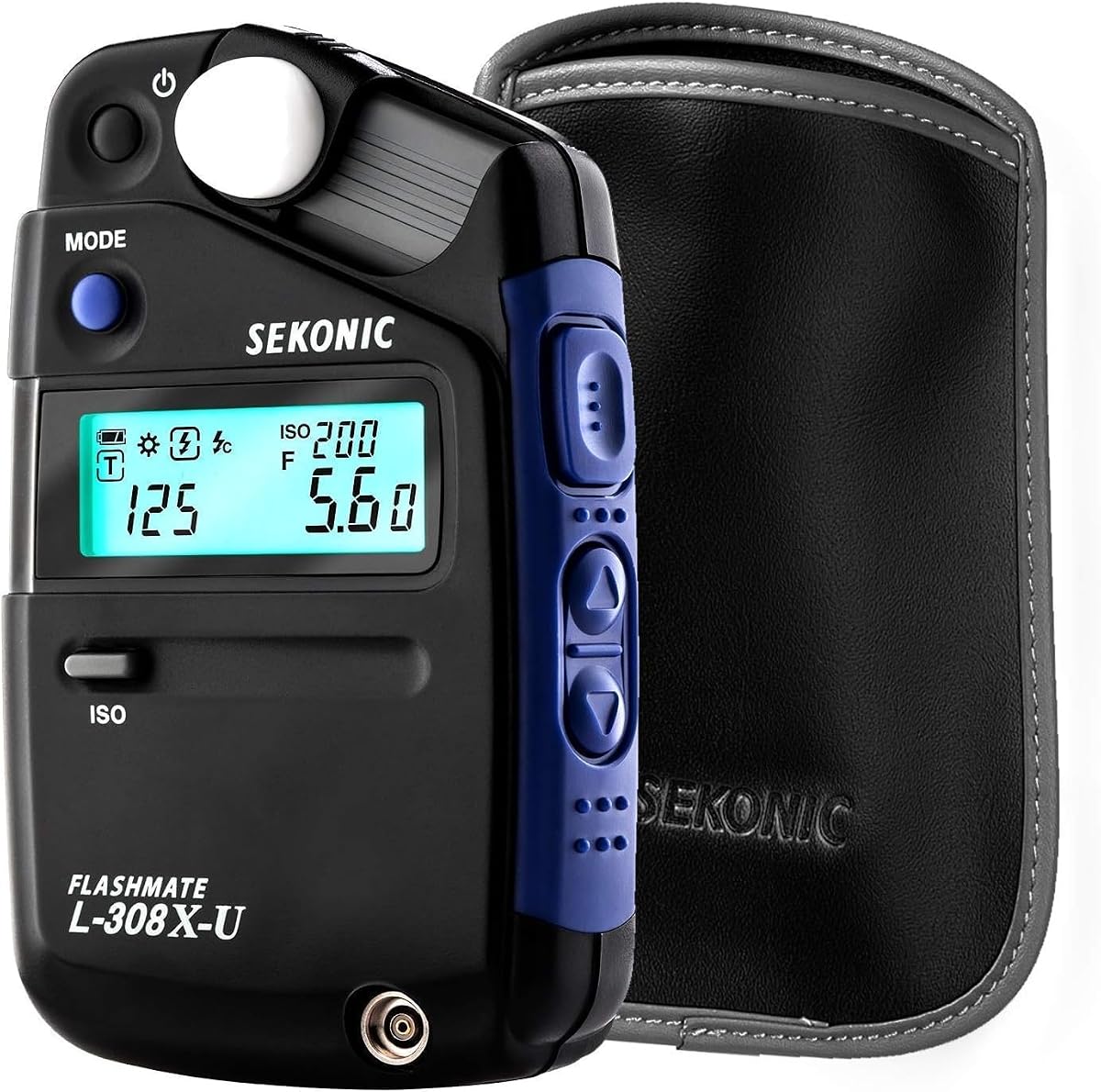
This compact digital meter offers exposure accuracy down to a tenth-of-a-stop for both ambient and electronic flash readings. It fits easily in your pocket, making it ideal for travel photography.
We may earn a commission when you buy through this link, at no additional cost to you.
With specific modes for Photo, Cine, and HD Cine, it caters to both photographers and videographers. The LCD auto backlight ensures visibility in varying lighting conditions without manual adjustment.
While it lacks the battery-free option of analog models, the convenience of digital readouts often outweighs this for many users. It balances portability with professional-grade performance.
Travel photographers and hybrid shooters will appreciate the versatility of this device. It provides the precision needed for complex setups while remaining easy to carry.
The pocket-sized design ensures this meter is always with you when you need it.
Distinct modes for photo and video allow for tailored exposure settings.
We may earn a commission when you buy through this link, at no additional cost to you.
Selecting the right light meter depends on your specific workflow and whether you prefer tactile analog interfaces or modern digital readouts.
Consider whether you need incident or reflected light capabilities. Incident light meters measure light falling on the subject, which is ideal for portrait and studio work. Reflected meters measure light bouncing off the subject, better for landscape photography.
Most professional analog meters like the Sekonic L-398A support both, giving you flexibility across different shooting scenarios.
Battery-free operation is a significant advantage in analog meters, ensuring you never get caught without power. The Sekonic L-398A uses an amorphous photocell to generate energy from ambient light.
If you choose a digital model, check battery life and low battery alerts to avoid interruptions during critical shoots.
Look for meters that provide accurate readings across the lighting conditions you encounter. High Lux ranges are useful for bright environments, while sensitive sensors are needed for low light.
Professional models often offer accuracy down to one-tenth of a stop, ensuring precise exposure control for film and digital.
Analog dials allow for quick, intuitive reading of aperture and shutter combinations without navigating menus. Digital screens provide numerical precision but may require more interaction.
Your comfort with the interface will determine how efficiently you can work in fast-paced environments like film sets.
Durability is essential for field use. A sturdy construction protects the sensor and internal mechanisms from drops or harsh weather.
Check for protective covers or cases included in the package to extend the life of your light meter.
Ensure the meter supports your camera settings and film formats. Cine modes are critical for videographers dealing with specific frame rates.
Compatibility with accessories like lumispheres and lumidiscs expands the tool's utility for varied measurement scenarios.
User-friendly features like swivel heads and large displays help you read values quickly without obstructing your view. Ergonomics matter during long sessions.
Test the device in hand if possible to ensure buttons and dials feel natural for your shooting style.
Analog meters can be a significant investment, but they often offer a lifespan that outweighs the cost. Budget options exist for general lighting checks.
Prioritize models that match your professional needs to ensure you get reliable performance without overspending on unnecessary features.
To take an incident reading, place the meter at the subject's position and point the dome toward the camera. Press the button to capture the light value and adjust your settings based on the readout.
For reflected readings, point the meter directly at the subject from the camera position. Ensure no shadows fall on the sensor during measurement to maintain accuracy.
Store your meter in a dry, cool place when not in use. Clean the sensor gently with a soft cloth to remove dust, and avoid exposing the device to extreme temperatures.
Incident metering measures light falling on the subject, providing consistent exposure regardless of subject tone. Reflected metering measures light bouncing off the subject, which can be fooled by very light or dark objects.
Not all analog meters require batteries. Models like the Sekonic L-398A use a photosensitive cell to generate power from ambient light, eliminating the need for external batteries entirely.
Yes, digital light meters are designed to provide accurate readings that translate seamlessly to manual camera settings. They often offer precise fractions of stops for better control.
Keep the sensor clean by wiping it gently with a soft, lint-free cloth. Avoid touching the sensor with your fingers, and store the meter in a protective case to prevent scratches.
Inconsistent readings may be caused by uneven lighting, sensor obstruction, or low battery in digital units. Check that the sensor is clean and unobstructed during measurement.
Analog meters are often preferred for film because they match the medium's classic workflow and lack electronic dependencies. They provide a tactile experience that many film photographers find intuitive.
The Sekonic L-398A Studio Deluxe III leads our list for its battery-free reliability and classic analog workflow. For budget-conscious users, the MT-92H offers fast digital performance without a high cost.
Choose a meter that aligns with your shooting style, whether you value the tactile feel of a dial or the precision of a digital readout. Professional features like Cine modes are essential for filmmakers.
Remember to check current prices and availability before purchasing to ensure you get the best value. Your right tool will simplify your exposure control and improve your final output.