
Zoom H1 XLR 2-Channel Recorder for Filmmakers, Musicians & Podcasters
4.5Editor score
32-bit recording
Two XLR inputs
OLED waveform display
This guide compares the top audio field recorders for film to help you choose the best device for capturing professional quality sound on set.
Capturing high quality audio is essential for any film project regardless of budget or scale. Professional field recorders provide the reliability and flexibility needed to record clear dialogue and ambient sound in challenging environments.
We evaluated ten top rated devices based on features like dynamic range, input options, and build quality. Our analysis focuses on tools that deliver consistent performance for filmmakers working in unpredictable locations.
Each review highlights key strengths and weaknesses to help you find the right tool for your workflow. Please note that product specifications and pricing may change over time so verify details before purchasing.
4.5Editor score

4.7Editor score
4.6Editor score
This table provides a side-by-side comparison of all ten models including their core specifications and key capabilities for film production use.



The Zoom F6 stands out as a top tier choice for filmmakers needing reliable field recording. It earns a high rating thanks to its 32-bit float technology which prevents clipping during loud sounds.
We may earn a commission when you buy through this link, at no additional cost to you.
Its six XLR inputs allow you to connect multiple microphones simultaneously making it ideal for complex setups. The built-in timecode I/O ensures your audio stays perfectly synced with your video footage throughout production.
While the menu system can seem complex at first the flexibility it offers is unmatched. The ability to record up to fourteen tracks provides ample room for future editing and mixing without losing fidelity.
Professional sound recordists should consider this unit for its balance of features and portability. It delivers studio quality sound in a compact chassis that fits easily into field bags.
32-bit float recording ensures you never clip audio even during unexpected loud noises.
Frame accurate synchronization saves hours of manual alignment during post-production workflows.
We may earn a commission when you buy through this link, at no additional cost to you.
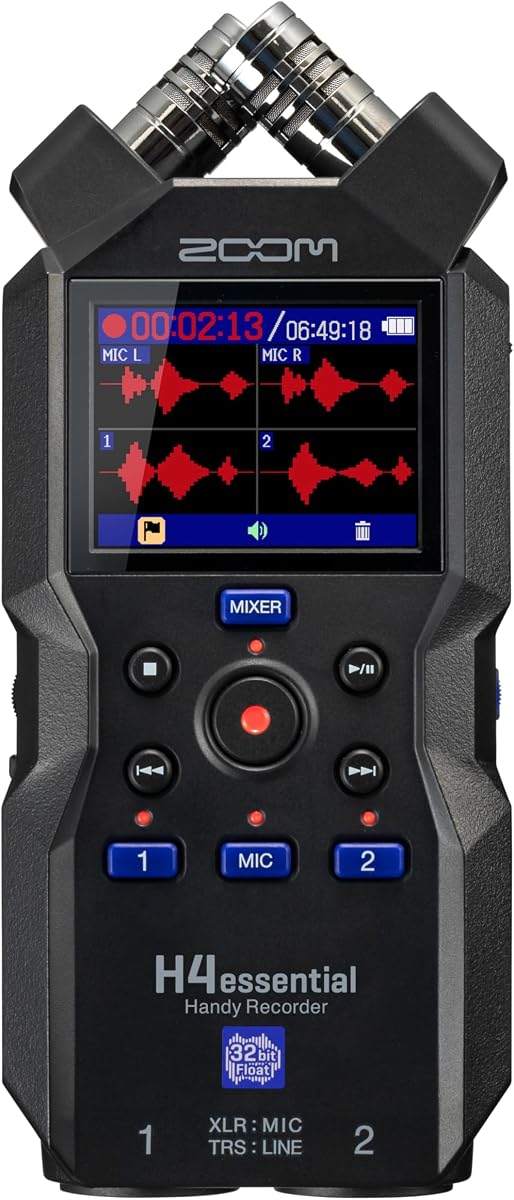
The Zoom H4 Essential offers a powerful combination of ease of use and versatility for filmmakers on a budget. Its four-track recording capability allows you to capture separate audio sources without needing extra gear.
We may earn a commission when you buy through this link, at no additional cost to you.
You can plug in external microphones or use the built-in stereo microphones for quick setups. The USB-C connection lets you record directly to your computer or stream audio for live interviews or remote setups.
While it lacks the ruggedness of higher end models it remains a solid choice for controlled environments. The spoken menu guidance makes it accessible for users who prefer a guided navigation experience.
Creators looking for a flexible tool that grows with their skills will appreciate its design. It balances affordability with professional features that support serious content creation needs.
Connect instruments or mixers via XLR/TRS inputs for flexible recording scenarios.
Direct USB recording eliminates the need for additional interfaces in your setup.
We may earn a commission when you buy through this link, at no additional cost to you.
Revisiting the Zoom F6 in this section highlights its robust build for professional film work. It remains the top choice for those needing frame accurate sync and high track counts simultaneously.
We may earn a commission when you buy through this link, at no additional cost to you.
The dual AD converters ensure pristine audio quality even in noisy environments. Timecode I/O is a critical feature for post-production teams needing to sync audio with video quickly and accurately.
Its design supports both standalone recording and use as a USB interface. This dual functionality makes it a versatile tool for sound recordists who also mix audio on computers.
Investing in this recorder pays off through reliability and superior sound quality on set. It is built to withstand the demands of professional production environments consistently.
Dual AD converters deliver exceptional clarity and detail for all audio sources.
Built for location work with options that suit various power and workflow needs.
We may earn a commission when you buy through this link, at no additional cost to you.
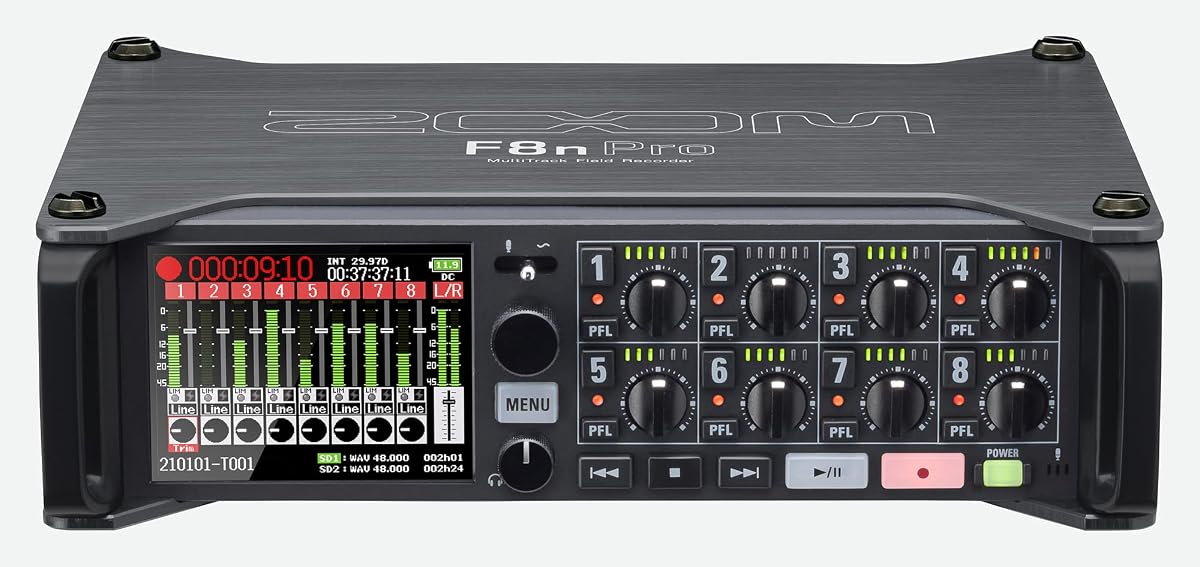
The Zoom F8n Pro delivers top-tier performance for large scale productions requiring many audio inputs. It supports eight inputs and ten tracks allowing for complex microphone setups without compromise.
We may earn a commission when you buy through this link, at no additional cost to you.
Dual SD card slots with redundant recording provide peace of mind during critical takes. The high gain preamps ensure clean audio even with low output microphones in remote locations.
Timecode accuracy down to 0.2ppm keeps your audio aligned with picture perfectly. This level of precision is essential for professional workflows where sync errors cannot be tolerated.
Sound professionals working on feature films or documentaries will find this unit indispensable. Its comprehensive feature set supports everything from recording to monitoring in one device.
Duplicate recordings on dual cards prevent data loss during important scenes.
TCXO ensures minimal drift keeping audio locked to video frame for frame.
We may earn a commission when you buy through this link, at no additional cost to you.
The Zoom H1 XLR brings professional features to a very affordable price point. It offers 32-bit recording that captures quiet dialogue and loud peaks without distortion easily.
We may earn a commission when you buy through this link, at no additional cost to you.
Two XLR/TRS combo inputs let you connect mics or instruments for versatile setups. The OLED waveform display makes it easy to monitor levels at a glance without deep menus.
Support for SDXC cards up to one terabyte means you can record long sessions continuously. This storage capacity is ideal for long days on set where changing cards is impractical.
Aspiring filmmakers and indie creators will appreciate the balance of quality and cost. It delivers professional results without the weight of a high-end multi-channel unit.
OLED display provides immediate feedback on audio levels during recording.
32-bit float technology ensures high dynamic range at a fraction of the cost.
We may earn a commission when you buy through this link, at no additional cost to you.
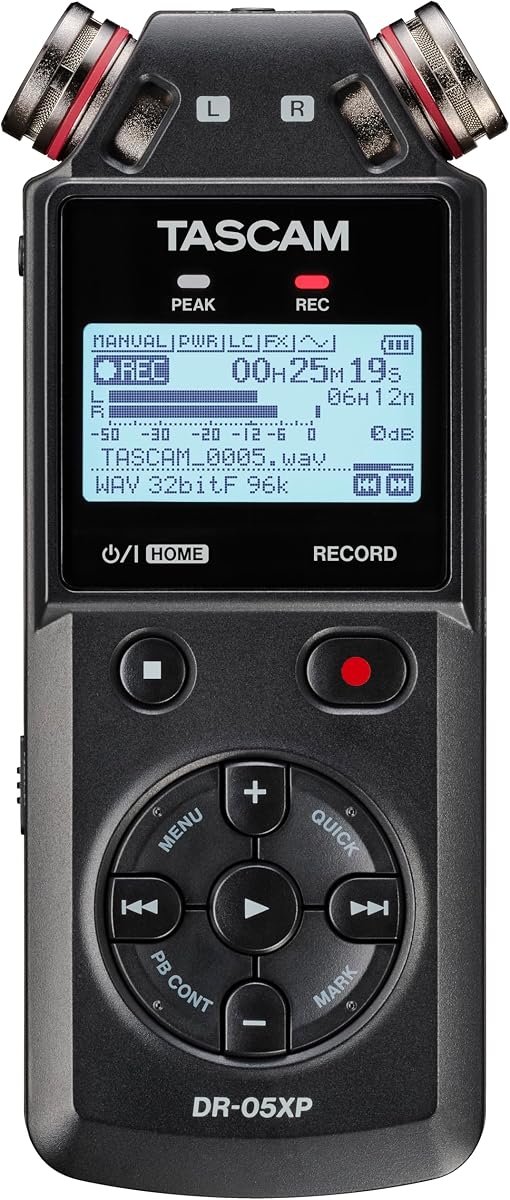
The TASCAM DR-05XP is a compact solution for capturing audio on the go. Its handheld design makes it easy to carry and deploy quickly for interviews or field recordings.
We may earn a commission when you buy through this link, at no additional cost to you.
Flexible recording modes allow you to choose bit depth and sample rate as needed. Omnidirectional microphones handle loud environments well making it versatile for sound sources.
Battery life of up to seventeen hours ensures you can record long sessions without interruption. This endurance is valuable for field work where power access is limited.
It is best suited for projects needing simple setups without external microphones. While it lacks XLR inputs its USB-C interface connects directly to computers for ease.
AA batteries provide hours of operation without needing external power.
USB-C connection allows direct recording to your computer interface.
We may earn a commission when you buy through this link, at no additional cost to you.
The Zoom H5 offers unique versatility through its interchangeable input capsule system. You can swap capsules to change microphone patterns without needing additional equipment.
We may earn a commission when you buy through this link, at no additional cost to you.
Four-track simultaneous recording allows you to capture multiple audio sources at once. Two combo inputs provide phantom power for condenser mics used in field work.
While storage is limited to 32GB this can be managed with card swaps. The USB interface supports loop back for streaming and remote meetings easily.
Creators who need adaptable mics for different environments will find this model useful. Its established reliability makes it a trusted choice for various projects.
Swap capsules to match stereo or directional recording needs instantly.
Loop back function supports remote interviews and podcast production easily.
We may earn a commission when you buy through this link, at no additional cost to you.
The TASCAM DR-10L Pro focuses on high quality personal audio with a lavalier mic. It captures sound from whispers to screams without distortion thanks to float recording.
We may earn a commission when you buy through this link, at no additional cost to you.
Firmware updates now support LTC Jam Sync for seamless timecode synchronization. This makes it ideal for multi-device setups and streamlined post workflows in film.
Support for high capacity microSDXC cards allows for practically limitless storage. You can record long shoots without worrying about running out of space.
Content creators needing discrete audio solutions will appreciate this unit. Its small size and included mic make it ready to use right out of the box.
LTC Jam Sync allows for professional multi-camera audio alignment.
Small profile ensures it stays out of frame during interviews.
We may earn a commission when you buy through this link, at no additional cost to you.
The Zoom H1 Essential is designed for quick content capture without hassle. It captures clear stereo audio for videos and tutorials better than phone mics.
We may earn a commission when you buy through this link, at no additional cost to you.
It records songwriting sessions and rehearsals with detailed sound for the moment. The USB-C connection allows it to act as a microphone for calls and streams.
While it lacks advanced features it excels at simplicity. Ambience and nature sounds are captured well making it suitable for travel audio.
Casual creators looking to upgrade their audio quickly will find it useful. It balances portability with decent sound quality for everyday content needs.
Capture ideas quickly without complex setup or configuration.
USB-C interface allows direct connection for live audio input.
We may earn a commission when you buy through this link, at no additional cost to you.
The Zoom F2 is the smallest 32-bit float recorder available for wearable use. It captures clip-free audio at any volume level without needing gain adjustments.
We may earn a commission when you buy through this link, at no additional cost to you.
Included lavalier microphone provides secure placement for discreet interviews or vlogs. Battery life of fifteen hours ensures extended coverage without frequent changes.
Support for microSD cards up to 512GB offers ample storage for long shoots. The REC Hold switch prevents accidental stops during critical recordings effectively.
Journalists and videographers needing portable personal audio will find it efficient. Its focus on simplicity ensures you can focus on content creation.
Smallest size ensures it can be worn comfortably during long shoots.
REC Hold switch prevents accidental stops during critical moments.
We may earn a commission when you buy through this link, at no additional cost to you.
Selecting the right field recorder requires weighing several factors to match your production needs.
Determine how many microphones you need to record simultaneously. Single channel units work for personal audio but multi-channel units are essential for complex setups.
Choose at least two inputs for basic setups and four or more for professional productions.
Modern recorders support 32-bit float formats which prevent clipping during loud sounds. This feature is vital for field work where levels can change unexpectedly.
Always prioritize models with float support to ensure clean audio capture.
Look for XLR inputs to connect professional microphones. USB-C connectivity allows direct connection to computers for streaming or file transfers.
Ensure the unit supports the connectors you currently use in your workflow.
For professional video production timecode synchronization is essential to align audio with picture. Look for units with TCXO or built-in timecode I/O.
Timecode capable devices save hours during post-production editing.
Check supported card types such as SDXC or microSDXC for high capacity storage. Large capacity cards reduce the need to swap media during long shoots.
Select a model that supports at least 512GB cards for extended use.
Long recording sessions demand reliable power sources. AA batteries are convenient but some units offer DC input for extended use.
Choose units with at least ten hours of operation for field work.
Field recorders must withstand outdoor conditions and rough handling. Look for rugged construction and secure input connections.
A durable device ensures reliability when working in unpredictable environments.
Prices vary significantly based on features. Set a realistic budget that balances your needs with what you can afford.
Entry-level units often suffice for indie projects while pros may need premium models.
Start by configuring your recorder settings before heading to the shoot. Set your sample rate to 48kHz and bit depth to 24 or 32-bit float to ensure compatibility.
Always monitor audio levels through headphones to avoid clipping. If using float recording adjust levels to avoid overloading the preamps even if distortion is less likely.
Store your device in a protective case to avoid damage from dust or moisture. Clean inputs regularly to ensure reliable connections for microphones.
32-bit float recording captures audio with a high dynamic range that prevents clipping. It allows you to adjust levels in post-production without losing quality.
Timecode is essential for professional post-production to sync audio with video. It saves significant editing time and ensures frame accurate alignment.
You need at least two inputs for basic setups. Professional productions may require six or more inputs for complex microphone configurations.
AA batteries are convenient but limited for very long sessions. Some units support DC power adapters for continuous recording.
SDXC cards offer high capacity and reliability for field use. Ensure your recorder supports at least 512GB for large files.
Many units can connect via USB to your computer as an interface. This feature is useful for remote work and streaming.
The Zoom F6 leads our list for its balance of features and performance in professional settings. It offers timecode and high input counts that support complex workflows.
Budget-conscious filmmakers may prefer the Zoom H1 XLR for its affordability and solid features. It provides 32-bit float without the higher price tag.
Always check current pricing and availability before purchasing as these details can change quickly.