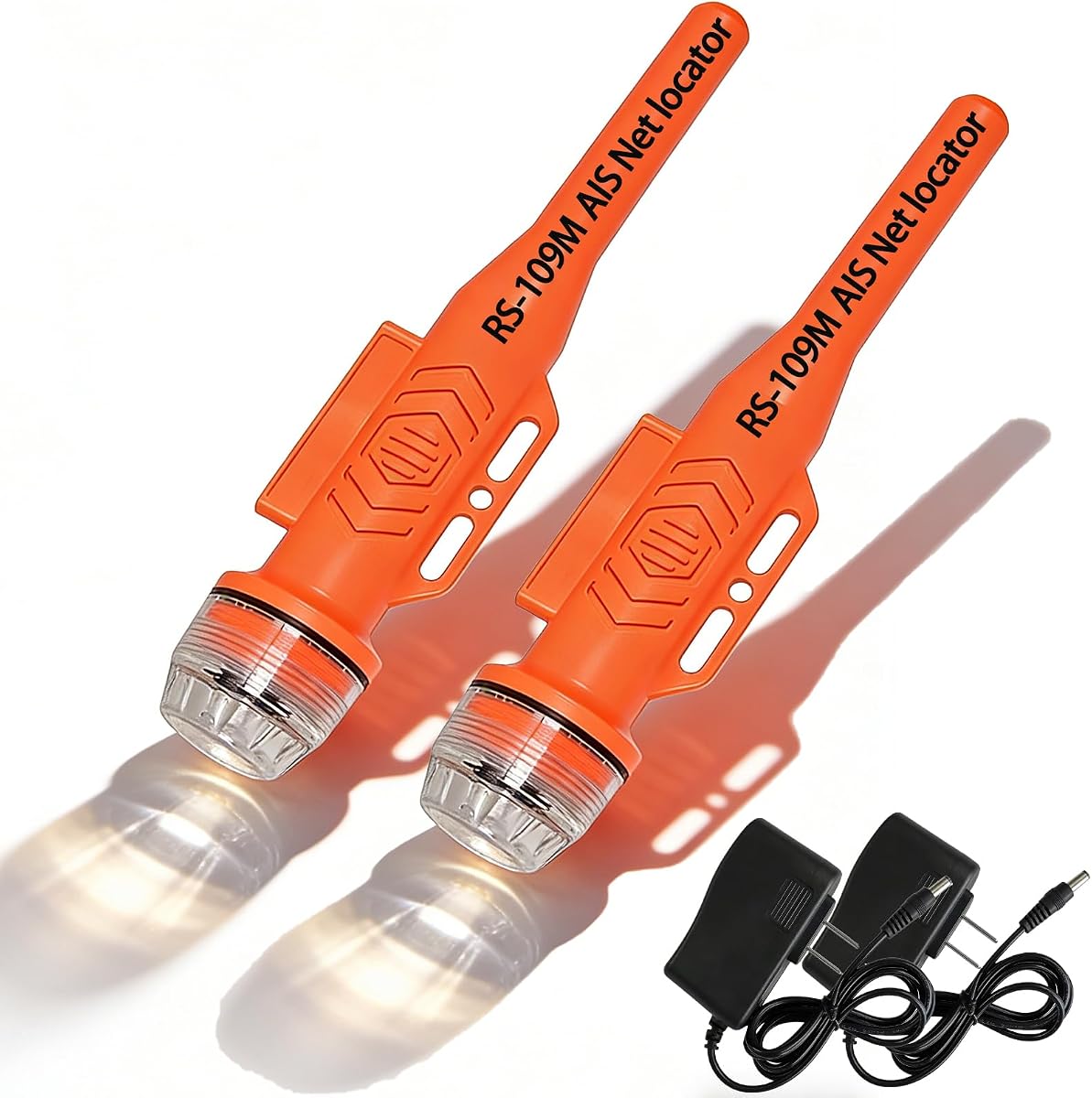
RS-109M Marine Net Locator
4.5Editor score
IPX7 waterproof rating
Ten nautical mile range
Extended battery life
Navigating open waters requires reliable communication and safety tools. Ais Transponders play a crucial role in modern maritime operations by broadcasting vessel identity and position to nearby ships and shore stations.
We have analyzed ten leading models ranging from compact personal beacons to full Class A systems. Our evaluation focuses on transmission range, battery life, integration capabilities, and user interface design to ensure you find the right fit.
Each selection below highlights specific strengths such as rugged construction or advanced data logging. Keep in mind that prices and availability fluctuate frequently, so verify current details before making your final purchasing decision today.
4.5Editor score

4.4Editor score
4.8Editor score
As an Amazon Associate we earn from qualifying purchases.
The following table provides a side-by-side comparison of all ten selected Ais Transponders to help you quickly identify key specifications and features.




The Icom MA-510TR stands out as a robust solution for vessels needing detailed tracking. It features a vibrant 4.3 inch color display that remains readable in bright sunlight conditions.
We may earn a commission when you buy through this link, at no additional cost to you.
This unit integrates GPS navigation directly into the interface while supporting DSC calling with compatible radios. You can configure user details and ship information easily through its multilingual interface.
While it is a powerful tool, the higher price point may be a consideration for smaller boats. However, the inclusion of silent mode and anchor watch alarms justifies the investment for serious mariners.
If you prioritize a clear visual interface and need seamless integration with your existing communication setup, this model offers a reliable and high-quality performance for safety.
The vibrant 4.3 inch color display ensures that critical data is visible even under direct sunlight or high glare conditions.
Users can configure MMSI numbers and ship details while accessing silent modes for discreet operations when necessary.
We may earn a commission when you buy through this link, at no additional cost to you.
The NF-189 B921 offers a straightforward approach to Class B AIS functionality for various marine applications. It supports a versatile voltage range allowing installation on most standard boat electrical systems.
We may earn a commission when you buy through this link, at no additional cost to you.
This unit is designed as a standard communication solution providing essential tracking capabilities without unnecessary complexity. The multicoloured design indicates a versatile build suitable for different mounting needs.
While detailed feature lists are sparse in available data, the core function remains clear. It serves as a reliable backup or primary unit for boats requiring basic transponder capabilities.
Consider this model if you need a compatible Class B unit that integrates well with standard 12 or 24 volt power supplies without demanding specialized configurations.
Support for both 12 and 24 volt power inputs ensures this unit fits a wide range of marine electrical setups.
The standard unit size allows for easy integration into existing electronics bays or small dedicated enclosures.
We may earn a commission when you buy through this link, at no additional cost to you.
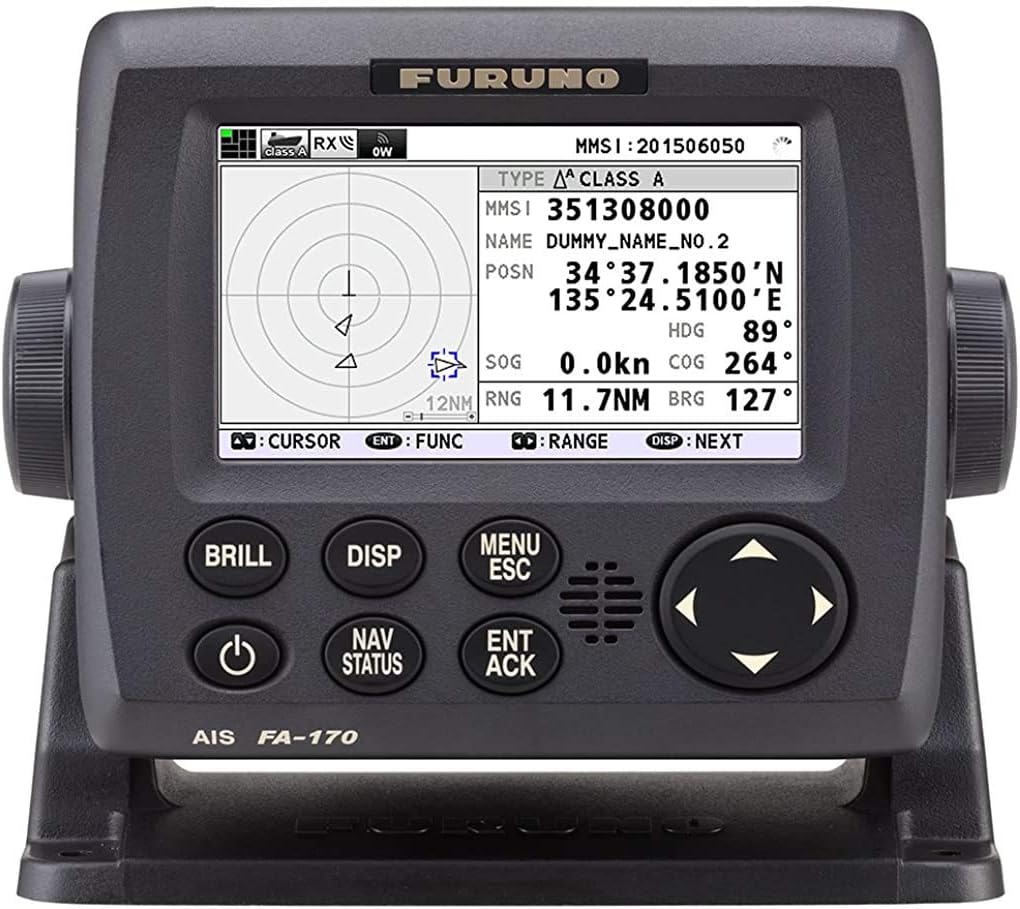
The Furuno FA170 represents the pinnacle of Class A AIS technology designed for professional vessels requiring maximum safety and range. It stores up to 2048 targets ensuring comprehensive situational awareness at all times.
We may earn a commission when you buy through this link, at no additional cost to you.
With six input and output ports plus a dedicated LAN port this unit offers unparalleled connectivity options. The dangerous target list feature alerts crews immediately when high-risk vessels are detected nearby.
The primary drawback is the high cost which reflects its advanced industrial-grade capabilities. For commercial operations or large yachts the investment in Class A reliability is often a regulatory requirement.
Choose this unit when you need top-tier performance and extensive data integration capabilities that match demanding commercial maritime standards and requirements.
Store up to 2048 AIS targets and receive specific dangerous target alerts to maintain critical safety awareness.
Multiple ports and LAN connectivity allow for seamless integration with complex onboard navigation systems.
We may earn a commission when you buy through this link, at no additional cost to you.
The RS-109M Marine Net Locator offers excellent value for tracking nets or buoys with a reliable AIS signal. It features a fully sealed housing meeting IPX7 standards ensuring performance even when submerged in marine conditions.
We may earn a commission when you buy through this link, at no additional cost to you.
Equipped with a high sensitivity GPS module this device delivers precise location updates quickly. The 3000mAh lithium battery supports continuous transmission for up to two weeks reducing maintenance frequency significantly.
While designed specifically for net buoys its range and battery life are impressive for the price. The two pack option further increases cost effectiveness for larger operations requiring multiple tracking points.
This is an ideal choice for anglers and commercial fishers who need to monitor equipment locations without investing in expensive full ship systems.
The IPX7 waterproof design ensures the device remains functional even during heavy submersion or storm conditions.
A 3000mAh battery allows for up to two weeks of continuous signal transmission for reliable long-term tracking.
We may earn a commission when you buy through this link, at no additional cost to you.
The Raymarine T70424 bundle combines a VHF radio and AIS system to streamline installation on your vessel. This approach reduces cabling needs and ensures compatibility between communication and safety systems.
We may earn a commission when you buy through this link, at no additional cost to you.
Including the Ray90 VHF fixed mount this package offers a ready-to-use solution. The high user rating suggests strong satisfaction with the reliability and interface design of the included components.
While the total cost is significant you gain a cohesive system from a reputable manufacturer. This is particularly useful for boat owners upgrading older setups to modern integrated standards.
Consider this bundle if you need both radio and AIS capabilities and prefer a matched set to avoid compatibility headaches.
Purchasing VHF and AIS together simplifies wiring and ensures seamless communication between safety devices.
The five-star rating reflects strong user confidence in the system performance and ease of use.
We may earn a commission when you buy through this link, at no additional cost to you.
The ACR RESQLINK is a personal safety device designed to alert nearby vessels and rescue services when activated. It sends a distress alert on VHF frequencies which is received by AIS equipped vessels within a five mile radius.
We may earn a commission when you buy through this link, at no additional cost to you.
A key feature is the Return Link Service which confirms that rescue teams have received the signal. NFC technology allows you to check battery life and test status easily using a mobile app.
This unit is compact and integrates with inflatable PFDs for easy attachment. However it is meant for personal use rather than vessel-wide coverage so it complements shipboard systems rather than replacing them.
For crew safety and individual emergencies this beacon provides a critical layer of protection with global satellite support.
Receive confirmation that your distress signal has been received by search and rescue teams to reduce anxiety.
Use NFC technology to quickly check battery status and run diagnostic tests directly from your phone.
We may earn a commission when you buy through this link, at no additional cost to you.
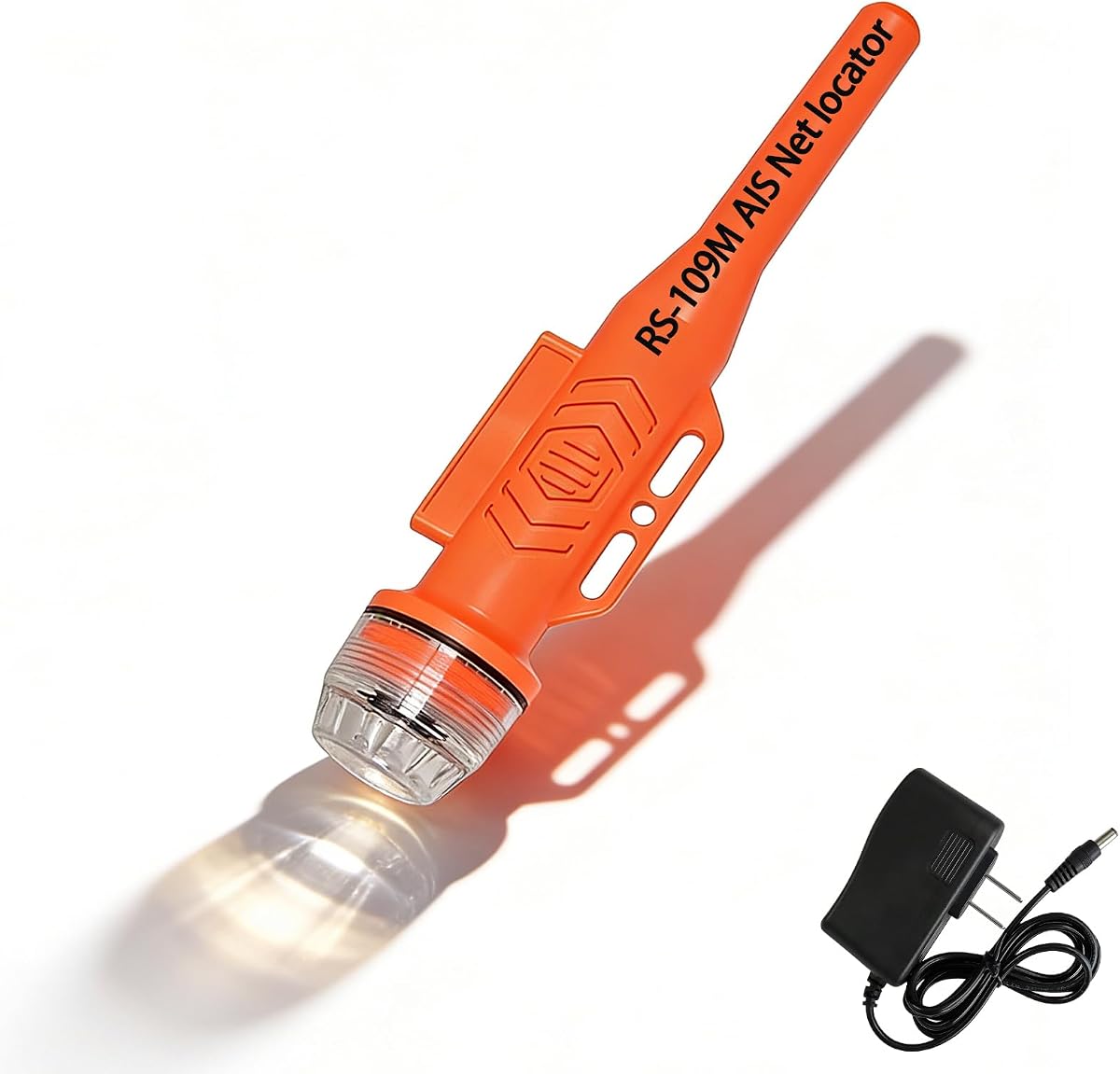
The single unit version of the RS-109M offers the same tracking capabilities as the two pack. It is ideal for anglers who need to locate a single key buoy or piece of equipment reliably.
We may earn a commission when you buy through this link, at no additional cost to you.
This device delivers precise location updates using a high sensitivity GPS module. The 3000mAh battery ensures continuous signal transmission for up to two weeks which minimizes maintenance needs.
While the waterproof rating is robust the unit is somewhat bulky. It is best suited for larger net buoys or fixed markers where size is not a primary constraint.
Choose this option if you need a standalone tracker for a specific fishing spot or equipment without the need for multiple units.
High sensitivity GPS ensures quick and accurate location updates for reliable retrieval of equipment.
Instant awareness of buoy status and remaining power is provided via data sync transmission to onboard receivers.
We may earn a commission when you buy through this link, at no additional cost to you.
The Icom M94D combines a handheld VHF radio with a built-in AIS receiver providing dual functionality in one device. It allows you to see nearby vessel traffic on the screen without needing extra hardware.
We may earn a commission when you buy through this link, at no additional cost to you.
With 1500 mW audio output calls remain clear even in noisy environments like engine rooms. The radio floats and flashes if dropped overboard adding a safety layer for handheld use.
Since it is a receiver only it does not broadcast your own AIS signal but shows others. This makes it an affordable safety add-on for boats that already have a dedicated AIS transponder system.
Ideal for captains who want enhanced situational awareness without mounting a full fixed AIS unit on the main console.
The built-in AIS receiver displays nearby vessel traffic and supports DSC individual calls for distress alerts.
1500 mW speaker delivers powerful and clear audio for intelligible communication in noisy conditions.
We may earn a commission when you buy through this link, at no additional cost to you.
The Icom M510 EVO brings modern connectivity to VHF communications with NMEA 2000 support. It is designed to integrate smoothly with newer navigation displays and data systems.
We may earn a commission when you buy through this link, at no additional cost to you.
Its compact design allows for flexible mounting options while retaining all essential VHF and AIS features. The high user rating suggests strong performance and reliability in daily marine conditions.
While detailed specifications are not listed in all sources the core capabilities indicate a focus on ease of use. This model is suitable for boats upgrading from older non-digital communication systems.
Consider this unit if you need a modern communication hub that speaks the latest data language on your boat.
NMEA 2000 compatibility ensures seamless data sharing with other onboard digital displays and sensors.
The compact form factor saves space on the helm while maintaining full functionality.
We may earn a commission when you buy through this link, at no additional cost to you.
The FLIR RAYMARINE E70476 is a dedicated Class B AIS transceiver designed for multifunction navigation displays. It features a built-in antenna splitter simplifying installation with existing VHF radio antennas.
We may earn a commission when you buy through this link, at no additional cost to you.
With SO-TDMA networking this unit offers longer range and faster performance compared to older models. It is compatible with NMEA2000 allowing for direct connection to modern display systems.
The user rating is slightly lower which may indicate setup complexity. However for Raymarine system users this transceiver provides a dedicated data path that reduces interference on your network.
Select this model if you already own a Raymarine display and need a standalone AIS unit to enhance navigation safety.
The built-in antenna splitter means you do not need a separate external device to share your VHF antenna.
NMEA2000 and SeaTalkng compatibility ensure it works well with existing navigation displays and data sources.
We may earn a commission when you buy through this link, at no additional cost to you.
Selecting the right Ais Transponder requires understanding your specific safety needs and vessel equipment.
Class A transponders are mandatory for commercial vessels and offer higher update rates and priority on the AIS network. Class B units are more affordable and suitable for recreational boats but may have slower update speeds.
Ensure the unit matches your boat electrical voltage typically 12 or 24 volts. Most units draw power directly from the boat battery and require a dedicated circuit or shared fuse.
Check if the transponder includes a built-in antenna splitter or requires a separate antenna. Proper antenna placement at the highest point of the vessel ensures maximum signal range.
Consider whether you need a standalone unit with its own screen or one that integrates with your existing multifunction display. Integrated systems reduce clutter on the helm.
Modern transponders often support NMEA 2000 or NMEA 0183 protocols. Ensure compatibility with your navigation chartplotter and autopilot systems to allow data sharing.
If the unit is mounted outdoors check for IPX7 or higher waterproof ratings. This protection ensures the device can survive splashes or accidental immersion in rough weather.
For portable or buoy trackers look for high capacity lithium batteries that last for weeks. Integrated units draw from the boat battery so standby power consumption should be low.
Advanced models offer features like dangerous target lists or anchor watch alarms. These tools provide proactive safety alerts rather than just passive display of surrounding traffic.
Install the antenna at the highest point on your vessel to maximize signal transmission range. Ensure the coaxial cable is secure and free of damage to maintain signal integrity.
Regularly test the unit according to the manufacturer guidelines to confirm it is broadcasting correctly. Check that the MMSI number and ship details are updated accurately in the system.
Keep the display screen clean and free of salt spray to ensure visibility. Inspect all connectors and cables periodically for signs of corrosion or wear due to marine exposure.
An AIS receiver only displays information from other ships while a transponder both sends and receives data. A transponder allows other vessels to see your position which is critical for collision avoidance.
Many units include a built-in splitter allowing you to share your VHF antenna. However dedicated antennas are often recommended for better performance and to reduce potential interference with voice signals.
Most standalone AIS transponders operate without a monthly subscription as they use public VHF frequencies. However some satellite-based personal beacons may require service plans for long-range global coverage.
NMEA 2000 is a standard network protocol allowing devices to exchange data easily. If your transponder supports it can it connect directly to modern displays without complex wiring or signal converters.
Update rates vary by vessel speed and Class type. Class A units typically update every few seconds at high speeds while Class B units may update every 30 seconds to minutes depending on movement.
No personal beacons like the ACR RESQLINK are designed for individual use and typically transmit a distress signal. Ship transponders broadcast vessel identity and position continuously for navigation safety.
We have reviewed ten options ranging from dedicated Class A systems to portable buoys. The Icom MA-510TR and Furuno FA170 offer robust performance for serious vessels needing maximum reliability.
For budget conscious users the RS-109M buoy tracker provides excellent value while the Icom M94D handheld radio adds convenient safety features to your existing setup.
Prices and stock availability change frequently so verify the latest details before purchasing. Always match the device capabilities to your specific navigation needs and vessel size.