
Bambu Lab A1
4.7Editor score
High-speed precision printing
Full-auto calibration
Quiet operation
This guide compares the top 3D printers for Dnd miniatures evaluating resolution speed and ease of use to help you choose the perfect machine for your tabletop
Finding the right 3D printer for Dnd miniatures requires balancing detail resolution with printing speed and ease of use. Hobbyists need machines capable of capturing intricate facial features and armor textures without excessive post-processing work.
We evaluated ten top models based on print quality speed reliability and user feedback to create this comprehensive list. Our analysis covers both resin and FDM technologies to help you decide which approach fits your workflow and budget best.
Each pick highlights key strengths ideal use cases and notable limitations so you can make an informed decision. Remember that prices and availability change frequently so check current listings before purchasing your next printing solution.
4.7Editor score

4.4Editor score

4.5Editor score
This side-by-side comparison highlights key specifications and features across all ten models to help you quickly identify which printer matches your specific Dnd miniature printing requirements and workflow preferences.






The Phrozen Sonic Mini 8K S stands out as a top choice for printing Dnd miniatures requiring ultra fine detail. Its 22 micron XY resolution ensures that facial features and armor textures come out crisp and lifelike every single time.
We may earn a commission when you buy through this link, at no additional cost to you.
This printer excels in precision thanks to its monochrome LCD technology which delivers consistent light exposure for smooth surface finishes. Beginners appreciate its simple setup and compatibility with popular slicers like Lychee and Chitubox for seamless workflow.
While resin printers require more post-processing than FDM models the detail quality justifies the extra effort for miniature enthusiasts. The compact design fits easily on most desks though you should plan for proper ventilation when curing resin parts.
If your priority is capturing intricate details for tabletop gaming characters this model offers exceptional value. It balances performance and ease of use better than many competitors in its price range making it an ideal first resin printer.
The 22 micron resolution captures minute details like facial expressions and armor etchings that other printers might miss entirely during the printing process.
Its user-friendly design and wide software compatibility allow new users to start printing high-quality miniatures without needing extensive technical knowledge or training.
We may earn a commission when you buy through this link, at no additional cost to you.
The Bambu Lab A1 offers exceptional value for beginners entering the world of 3D printed miniatures. Its high speed precision and automatic calibration remove many traditional barriers to successful prints making it accessible even for novices.
We may earn a commission when you buy through this link, at no additional cost to you.
This printer maintains excellent accuracy while printing quickly which means you can produce multiple miniatures in less time than slower models. The active flow rate compensation ensures smooth lines and consistent extrusion throughout your print jobs.
While it lacks built-in multi-color capabilities without the AMS lite add-on its core performance is solid for single color parts that can be painted later. The quiet operation also makes it suitable for home offices or shared spaces.
For budget conscious buyers who want reliability and speed this model delivers impressive results. It strikes a strong balance between performance features and cost making it a top recommendation for entry-level miniature printing projects.
With acceleration up to 10000 mm/s² this printer finishes miniatures quickly without sacrificing the fine detail needed for tabletop gaming characters and accessories.
Full auto calibration handles Z-offset and bed leveling automatically so you can focus on designing rather than troubleshooting setup issues before every print.
We may earn a commission when you buy through this link, at no additional cost to you.
The Snapmaker U1 represents the pinnacle of FDM technology for advanced miniature printing with its four independent toolhead system. This allows seamless switching between materials without manual filament changes saving time and reducing waste significantly.
We may earn a commission when you buy through this link, at no additional cost to you.
Its five second tool changer enables true multi-color prints with minimal purging which is ideal for detailed miniatures needing different colored parts or flexible supports. The smart calibration system ensures consistent quality across all toolheads and print jobs.
While the higher investment may deter casual users the productivity gains and design freedom justify the cost for serious hobbyists or small businesses. The large build volume also accommodates multiple miniatures in a single print batch efficiently.
If you need to print complex multi-part miniatures with mixed materials or colors this machine delivers unmatched versatility. It streamlines the entire production workflow from design to finished painted miniature with professional grade reliability and control.
Independent toolheads switch between rigid and flexible materials automatically allowing complex miniature assemblies with soluble supports or colored joints in one print job.
The automated tool changing reduces waste and time between material swaps so you can produce more miniatures faster while lowering overall material costs over time.
We may earn a commission when you buy through this link, at no additional cost to you.
The Bambu Lab P2S Combo combines high-speed FDM printing with seamless multi-color capabilities through its AMS 2 Pro system. This setup is ideal for creating Dnd miniatures with distinct colored parts like armor or flags without manual painting.
We may earn a commission when you buy through this link, at no additional cost to you.
Its adaptive airflow system maintains optimal temperatures for different materials ensuring crisp overhangs and consistent results across multiple color layers. The built-in filament drying keeps spools ready for use reducing failures caused by moisture absorption during long print sessions.
While the combo price is higher than base models the convenience of multi-color printing often saves hours of post-processing work. The speed of up to 600mm/s means you can produce multiple miniatures quickly without sacrificing surface quality or detail.
For hobbyists wanting multi-colored prints with minimal effort this printer delivers excellent results. It balances advanced features with user-friendly operation making it a powerful choice for serious miniature enthusiasts who need versatility and speed.
The AMS 2 Pro system manages up to 16 colors automatically so you can print detailed miniatures with distinct color zones without manual intervention or filament swaps.
Adaptive airflow and servo extruder ensure sharp corners and smooth surfaces even at high speeds so your miniatures look professional straight off the print bed.
We may earn a commission when you buy through this link, at no additional cost to you.
The Bambu Lab P1S features a fully enclosed body that improves performance with advanced filaments while maintaining the speed and automation of the A1 series. This makes it reliable for printing sturdy miniatures using materials like ABS or ASA without warping issues.
We may earn a commission when you buy through this link, at no additional cost to you.
Its automatic bed leveling and fast setup time get you printing within minutes while the high-speed motor produces parts in less time than standard printers. The support for multi-color printing through AMS adds flexibility for future expansion as your needs grow.
While it requires an AMS module for multi-color work the core build quality and material compatibility are superior for functional miniatures or props. The enclosed design also reduces noise and contains fumes better than open frame printers for safer home use.
For those needing robust performance and material versatility this model stands out as a top contender. It offers professional results with user-friendly automation making it suitable for both beginners and experienced users alike.
The enclosed chamber maintains stable temperatures enabling reliable printing of engineering-grade filaments that would warp on open frame printers ensuring durable miniatures every time.
Auto bed leveling and quick setup mean you spend less time preparing and more time printing so your production workflow stays efficient and uninterrupted.
We may earn a commission when you buy through this link, at no additional cost to you.
The FLASHFORGE Adventurer 5M Pro uses an all-metal CoreXY structure combined with vibration compensation algorithms to deliver smooth surfaces even at high speeds. This ensures miniatures come out clean and detailed without ghosting or ringing artifacts common on cheaper printers.
We may earn a commission when you buy through this link, at no additional cost to you.
Its one-click auto-leveling and quick-swap nozzle system simplify maintenance allowing you to switch from standard to fine nozzles in seconds for different detail levels. The built-in camera lets you monitor prints remotely via mobile app so you catch issues early.
While the touchscreen interface is basic the printer performs reliably for both standard and engineering filaments. The dual filtration system keeps air clean which is helpful when printing longer miniatures or multiple layers without needing ventilation adjustments.
For users prioritizing print quality and quiet operation this model offers solid performance. It balances speed with precision and includes smart features that enhance convenience for everyday miniature printing tasks.
Integrated vibration compensation eliminates ghosting and ringing so your miniatures have clean smooth surfaces that require less sanding before painting.
Three-second nozzle swaps let you switch between standard and micro nozzles to adjust detail levels for different miniature parts without lengthy downtime.
We may earn a commission when you buy through this link, at no additional cost to you.
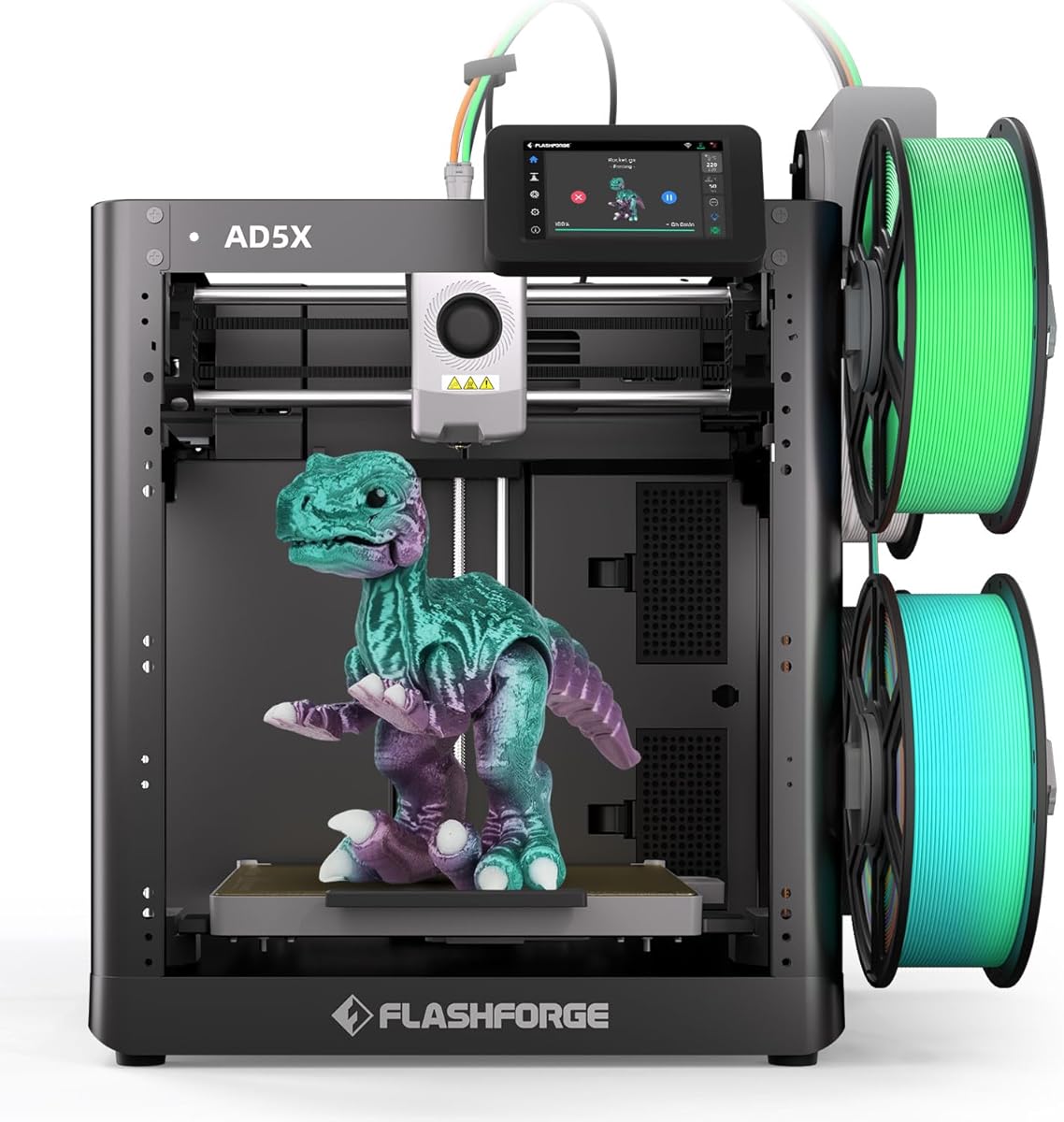
The FLASHFORGE AD5X brings multi-color printing to a more accessible price point with its four-color Intelligent Filament System. This allows you to create vibrant Dnd miniatures without manual painting or complex post-processing steps for each print.
We may earn a commission when you buy through this link, at no additional cost to you.
Its high-speed performance combined with CoreXY structure ensures smooth prints even when switching between colors. The auto filament detection and refill system minimizes interruptions keeping your print jobs running longer without monitoring every spool.
While the interface is less polished than premium models the color variety and speed make it a strong option for producing multiple miniatures quickly. The large print volume also lets you batch print several figures in a single job efficiently.
For hobbyists seeking affordable multi-color capabilities this printer delivers value. It balances performance with cost and provides enough flexibility for varied miniature projects without needing expensive upgrades.
Simultaneous four-color printing lets you create miniatures with distinct colored zones directly from the printer reducing post-processing time significantly.
Intelligent Filament System detects and refills automatically so your prints finish without interruptions saving time and reducing the need for constant monitoring.
We may earn a commission when you buy through this link, at no additional cost to you.
The Bambu Lab A1 Mini Combo delivers the same automation and speed as the A1 but in a smaller footprint ideal for limited workspace. It supports multi-color printing out of the box with the AMS lite making it a complete package for beginners.
We may earn a commission when you buy through this link, at no additional cost to you.
Its pre-assembled design reduces setup time to about twenty minutes while maintaining the high precision needed for detailed miniatures. The compact build still fits multiple small figures in one print so you can batch production efficiently.
While the build volume is smaller than full-size models it suits most standard Dnd miniature sizes well. The quiet operation and auto calibration ensure hassle-free printing so you can focus on design rather than troubleshooting issues during production.
For those with desk space constraints this model offers excellent value. It combines portability with advanced features making it an ideal choice for entry-level multi-color miniature printing without sacrificing quality or ease of use.
Its compact size fits easily on small desks while still delivering high speed precision and multi-color capabilities for detailed miniature printing projects.
The combo includes AMS lite for multi-color right away so you don't need additional purchases to start printing colorful miniatures immediately after setup.
We may earn a commission when you buy through this link, at no additional cost to you.
The FLASHFORGE AD5X Pro enhances the original with improved multi-material support through its Intelligent Filament System allowing mixed printing in one job. Its CoreXY design maintains rigidity and precision while keeping the footprint compact for most workspaces.
We may earn a commission when you buy through this link, at no additional cost to you.
Full auto calibration ensures consistent first layers every time reducing failed prints and saving filament. This automation combined with multi-material support makes it suitable for complex miniature parts needing different flexibilities or support structures.
While the software can be less intuitive than premium models the hardware performance remains solid for both standard and engineering materials. The compact layout also frees up space on your desk while still delivering reliable detailed miniatures consistently.
For hobbyists needing multi-material flexibility without large machines this model is a strong option. It balances capability with space efficiency and delivers consistent results when configured properly for detailed miniature projects.
The Intelligent Filament System lets you print flexible supports or multi-color parts in one job saving time on assembly and post-processing for complex miniatures.
Modular compact design saves desk space while still accommodating four spools so you can keep multiple colors or materials ready without clutter.
We may earn a commission when you buy through this link, at no additional cost to you.
The Anycubic Kobra X simplifies multi-color printing with built-in four color capability ready out of the box. Its LeviQ 3.0 leveling system ensures perfect bed calibration within fifteen minutes so you can start printing miniatures almost immediately.
We may earn a commission when you buy through this link, at no additional cost to you.
AI monitoring detects printing issues like spaghetti or foreign objects reducing failed prints and saving material over time. The large model library and remote control via app make it easy to find templates or track progress without staying near the printer.
While filament is not included the multi-color support and smart features provide strong value for newcomers. The hardened nozzle ensures durability for long print jobs while vibration compensation keeps surfaces smooth for detailed miniature work.
For beginners needing fast setup and multi-color readiness this model is highly accessible. It combines automation with user-friendly features that make printing complex miniatures simpler and more enjoyable for all skill levels.
LeviQ 3.0 auto leveling calibrates the bed in minutes so you skip manual adjustments and start printing detailed miniatures much faster than other printers.
AI monitoring catches printing errors early via app alerts saving filament and preventing failed prints so your production stays on schedule efficiently.
We may earn a commission when you buy through this link, at no additional cost to you.
Choosing the right 3D printer for Dnd miniatures depends on balancing detail resolution speed budget and your willingness to handle post-processing steps.
Resolution determines how fine the details on your miniatures will appear. Resin printers typically offer higher resolution around 20-50 microns making them ideal for intricate facial features and textures. FDM printers range from 50 to 200 microns which can still produce great results but may require more sanding.
Look for printers with higher XY resolution if detail is your priority especially for character miniatures where fine features matter most for tabletop play.
Resin printers excel at detail and surface smoothness but require more safety precautions and post-processing. FDM printers are more user-friendly and produce sturdier parts better suited for functional miniatures or props.
Choose resin if detail is paramount or FDM if you value ease of use and durability for your miniature production workflow.
Build volume affects how many miniatures you can print in one batch. Larger volumes save time by allowing multiple figures at once but require more space and filament.
Select a build size that fits your typical project needs while ensuring it fits your available workspace comfortably.
Multi-color printers allow you to print miniatures with distinct colors directly reducing painting time. Look for systems with automatic filament changers if you plan to produce colorful miniatures regularly.
Invest in multi-color features only if you need to produce varied colored figures frequently to avoid unnecessary expense.
Faster printers reduce wait time especially if you produce miniatures in bulk. Look for models with acceleration and calibration features that maintain quality at high speeds.
Prioritize speed if you need quick turnaround for multiple miniatures but ensure it doesn't compromise print quality or reliability.
User-friendly features like auto calibration touchscreen controls and remote monitoring simplify operation for beginners and save time for experienced users.
Choose models with automation tools if you want to minimize setup and troubleshooting to focus more on design and painting.
Open source software support gives flexibility in slicing options and customization. Proprietary software can be easier but may limit advanced settings or community plugins.
Verify the printer supports your preferred slicer software to avoid workflow disruptions when printing complex miniature models.
Consider initial costs along with ongoing expenses like filament resin replacement parts and maintenance. Higher priced models often save money long term through reliability and lower failure rates.
Balance upfront investment with expected maintenance and material costs to ensure long-term affordability for your miniature printing hobby.
Start by calibrating your printer using built-in tools to ensure the print bed is level and nozzle height is correct. Proper calibration reduces failed prints and improves surface quality on your miniatures from the first layer.
Use compatible filaments or resins designed for miniatures and store them properly to avoid moisture damage. Clean the build plate regularly and check for dust or debris that can affect print adhesion and finish quality.
Monitor prints during critical layers to catch issues early and perform maintenance like nozzle cleaning or belt tensioning as needed. Following manufacturer maintenance schedules extends printer life and ensures consistent results for your tabletop gaming miniatures.
Yes FDM printers can produce detailed miniatures especially with smaller nozzles like 0.2mm or 0.25mm. While resin printers generally offer finer detail FDM models with high resolution settings can still deliver excellent results for most gaming purposes.
Resin printers typically need washing curing and support removal after printing which takes more time than FDM. However the higher detail and smooth surfaces often justify the extra steps for intricate miniatures.
Multi-color printing is helpful for miniatures needing distinct colored parts but many hobbyists prefer single color models for painting flexibility. It reduces post-processing time if you want ready to play miniatures without paint.
Most miniatures fit within 150x150x150mm but larger volumes let you batch print multiple figures efficiently. Choose based on your typical production size to balance cost space and productivity.
Auto calibration significantly reduces failed prints and saves time making it valuable for beginners and high-volume printers. The convenience and reliability justify the cost for most users producing miniatures regularly.
Beginners often benefit from fully automated printers like Bambu Lab or Anycubic Kobra models with easy setup and calibration. These reduce technical barriers so you can focus on design and painting rather than troubleshooting.
Choosing the right printer depends on your priorities whether that is resolution speed multi-color capability or ease of use. Resin printers offer unmatched detail while FDM models provide durability and simplicity for varied needs.
Prioritize features like calibration software compatibility and build volume that match your typical production needs and workspace. Investing in automation tools can save significant time and reduce failed prints over the long term.
Prices and availability fluctuate so always check current listings before purchasing to get the best deal. With the right printer you can consistently produce high-quality Dnd miniatures that bring your tabletop games to life.