
Entina Tina2C
4.4Editor score
Starts prints in 8 minutes
AI STEM learning modules
Compact mini footprint design
This guide compares the top 3D printer for educational use to help schools and parents find reliable models with safe features and STEM tools.
Finding the right 3D printer for educational use means balancing safety, ease of use, and strong STEM learning tools that engage students effectively.
We compared leading models based on print quality, safety certifications, software support, and how well they fit classroom or home learning environments.
Each pick shows real strengths and trade-offs to guide your choice, but remember that availability and terms can change over time for buyers.
4.4Editor score

4.7Editor score

4.6Editor score
The following table compares all ten models side by side using key specs and features relevant to schools and learners.





The Bambu Lab A1 earns top marks for its high-speed precision and user-friendly setup that reduces friction for new learners in classrooms.
We may earn a commission when you buy through this link, at no additional cost to you.
Its full-auto calibration removes manual tweaking while active flow rate compensation ensures smooth lines and consistent layers every time you print.
Quiet motor noise canceling keeps the workspace calm and the touchscreen simplifies navigation, but AMS lite is needed for multi-color workflows.
Educators and parents who value reliability and speed will appreciate how quickly students can move from design to finished models on this printer.
Automatic calibration handles Z-offset and bed leveling so students focus on creativity instead of mechanical adjustments or troubleshooting failed starts.
Active motor noise canceling keeps sound levels low which prevents disruption during lessons and creates a comfortable environment for focused learning.
We may earn a commission when you buy through this link, at no additional cost to you.
The Entina Tina2C targets first-time users with a guided setup that lets kids start printing in as fast as eight minutes without frustration.
We may earn a commission when you buy through this link, at no additional cost to you.
AI creativity tools and over 3000 models offer engaging projects while WiFi and offline modes provide flexibility for different school or home workflows.
A small footprint makes it easy to place in tight spaces though the limited volume suits prototypes more than larger engineering assignments or builds.
Budget-conscious buyers seeking a safe quiet starter printer with STEM courses will find this mini model delivers reliable performance for young makers.
Guided setup through the Poloprint Cloud app minimizes wait time so students can begin exploring 3D printing concepts almost immediately after unpacking.
Integrated STEM courses and creative DIY modules turn printing into structured lessons that reinforce spatial reasoning and problem solving skills.
We may earn a commission when you buy through this link, at no additional cost to you.
The Ugee Funbox prioritizes safety with UL GREENGUARD certification and a fully enclosed design that protects fingers and keeps emissions under control.
We may earn a commission when you buy through this link, at no additional cost to you.
AI engines transform text or photos into printable models instantly while a massive library of 12000 toys inspires endless creativity for curious minds.
It runs whisper quiet below 46dB and captures time-lapse videos but limits users to single-color PLA which can increase costs on complex builds.
Schools or homes that value certified safety and instant AI tools will see this as a premium gift that nurtures design thinking through hands-on making.
UL GREENGUARD Gold certification plus HEPA and carbon filters ensure clean air for indoor classrooms and home rooms where safety is critical.
Four AI engines turn voice text and sketches into 3D models removing barriers for students without advanced CAD skills to bring ideas to life.
We may earn a commission when you buy through this link, at no additional cost to you.
The FLASHFORGE Adventurer 5M targets throughput with 600mm/s travel speed and a CoreXY all metal structure that supports rapid prototyping in busy labs.
We may earn a commission when you buy through this link, at no additional cost to you.
One-click automatic leveling ensures consistent adhesion while vibration compensation reduces ghosting to keep prints smooth during high speed printing cycles.
Real time app monitoring lets instructors track progress remotely but the lack of an enclosure limits material choices compared to fully sealed options.
Programs that need fast output for multiple students will appreciate the speed though the lower rating suggests some tuning may be needed.
CoreXY structure with 600mm/s speed and 20000mm/s2 acceleration cuts production cycles so groups can test iterations and learn faster within class time.
Flash Studio mobile control allows staff to view status alerts and adjust settings from anywhere without walking back to the printer constantly.
We may earn a commission when you buy through this link, at no additional cost to you.
The Bambu Lab P1S combines enclosed protection with fast printing to handle advanced filaments that need consistent temperatures inside the build chamber.
We may earn a commission when you buy through this link, at no additional cost to you.
Set up in fifteen minutes and auto bed leveling streamline workflow while 500mm/s speeds keep batches moving when students need many copies for testing.
It supports ABS and ASA but excludes carbon fiber which reduces versatility for structural projects though the AMS upgrade enables vibrant multi-color designs.
Curricula that teach engineering materials will benefit from the enclosed design which maintains stable conditions for reliable and repeatable print outcomes.
Fully enclosed body retains heat to prevent warping on engineering filaments like ABS and ASA ensuring stronger parts for advanced learning tasks.
Connecting the AMS system unlocks up to sixteen colors enabling projects that require visual differentiation or complex multi-material assemblies.
We may earn a commission when you buy through this link, at no additional cost to you.
The FLASHFORGE AD5M simplifies maintenance with a tool-free quick swap nozzle that reduces downtime when clogs occur during active printing sessions.
We may earn a commission when you buy through this link, at no additional cost to you.
CoreXY all-metal motion ensures low noise and reliable precision while auto one-click leveling makes the first layer consistent without manual tinkering.
Orca-flashforge slicer allows batch transmission and network monitoring but the open frame limits environmental control compared to fully enclosed models.
Workshops needing easy upkeep and remote supervision will find this model a practical choice for handling multiple printers across different areas.
Patent quick release nozzles can be changed in seconds so users switch sizes for detail or speed without tools and without waiting for complex resets.
Flash Maker app and Orca slicer enable one-click batch files and device monitoring so staff manage several printers from one central interface.
We may earn a commission when you buy through this link, at no additional cost to you.
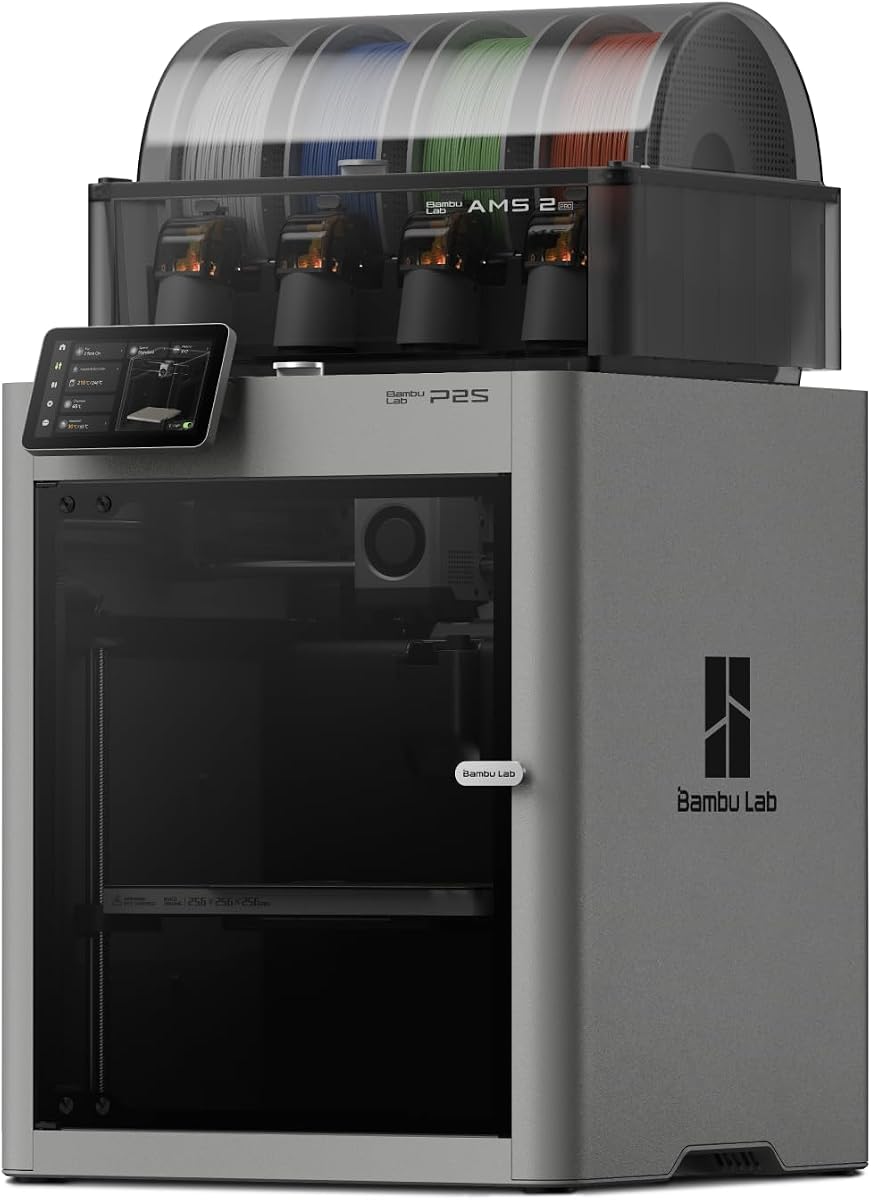
The Bambu Lab P2S Combo brings professional-grade multi-color workflows with the AMS 2 Pro which dries spools and enables seamless filament switching.
We may earn a commission when you buy through this link, at no additional cost to you.
Prints reach 600mm/s while adaptive airflow balances cooling and heat retention to handle diverse materials without manual tuning or risky trial runs.
AI failure detection catches issues early and the included carbon filter keeps air clean though the premium price may exceed basic classroom budgets.
Advanced programs that need vibrant multi-material parts will justify the cost to unlock powerful capabilities for design and engineering learning paths.
Built-in filament drying keeps spools ready for flawless prints which reduces failures caused by moisture and improves quality of final projects.
System automatically balances cooling for overhangs and chamber heat for engineering materials so users do not need to guess settings for success.
We may earn a commission when you buy through this link, at no additional cost to you.
This variant of the Adventurer 5M offers solid throughput with 600mm/s speeds and auto leveling that helps maintain quality without manual adjustments.
We may earn a commission when you buy through this link, at no additional cost to you.
Vibration compensation reduces ghosting and the dual-sided PEI plate supports various materials while filament run-out and power loss features protect prints.
Open frame design suits well-ventilated areas and keeps costs down but users should plan for airflow management when printing sensitive engineering filaments.
Buyers seeking a balance of speed and reliability at moderate cost will appreciate how well it supports everyday classroom projects and prototyping tasks.
Heating power reaches 200C in 35 seconds so users wait less between jobs and can maximize available printing time in busy schedules.
Dual-sided PEI steel plate allows easy removal by bending and provides a reverse side optimized for PETG material to reduce failed releases.
We may earn a commission when you buy through this link, at no additional cost to you.
The Snapmaker U1 stands out with a four-toolhead system that swaps heads in five seconds enabling multi-color and mixed-material prints without purging.
We may earn a commission when you buy through this link, at no additional cost to you.
CoreXY high-speed motion keeps accuracy steady while smart calibration ensures precise offsets and vibration compensation so prints stay dimensionally reliable.
It supports TPU and soluble supports which opens design freedom but the price and setup complexity may exceed beginner needs for simple tasks.
Advanced makers and professional creators will value the speed and material flexibility for complex prototypes that demand functional parts in single runs.
Four independent toolheads switch materials automatically so users combine rigid and flexible plastics without manual intervention or wasted filament purging.
Toolhead swapping instead of filament purging cuts waste by five times lowering operating costs and keeping the classroom or workshop cleaner during runs.
We may earn a commission when you buy through this link, at no additional cost to you.
The Bambu Lab A1 Mini Combo delivers high-speed precision with 10000mm/s2 acceleration and full-auto calibration that simplifies workflow for new learners.
We may earn a commission when you buy through this link, at no additional cost to you.
It pairs with AMS lite for vibrant multi-color prints while active flow compensation maintains smooth lines and consistent accuracy across all project sizes.
The compact footprint fits tight spaces but limits build volume so larger assemblies must be split and printed in sections before final assembly.
Labs needing reliable multi-color output in small areas will appreciate how it balances speed accuracy and convenience for classroom prototyping needs.
A1 Mini handles all calibration automatically so students can focus on design and avoid time-consuming manual tuning before each print session.
Combining the A1 Mini with AMS lite unlocks multi-color capabilities within a small footprint which supports budget constrained but color-rich learning goals.
We may earn a commission when you buy through this link, at no additional cost to you.
Selecting the right machine for educational use depends on safety certifications software ease of setup and the range of materials you need to print.
Look for enclosed designs and certifications like UL GREENGUARD to ensure emissions stay low in classrooms and avoid exposure to airborne particles.
Choose models with filters and cooled exteriors to protect students and staff during long print runs in confined spaces.
Auto leveling and calibration reduce manual adjustments so students can focus on design concepts instead of mechanical setup and troubleshooting.
Simple touch interfaces and guided setup apps help beginners start quickly without needing technical support from staff.
Faster machines reduce wait time between layers which allows more students to iterate designs within a single class or workshop period.
Look for CoreXY structures and high acceleration to maintain accuracy even when printing at elevated speeds.
Multi-color systems let students produce detailed models with color coding for parts which is useful for engineering and biology projects.
Check whether multi-color features are included or sold separately to avoid unexpected costs later.
Cloud apps and remote monitoring allow staff to track prints without leaving their desks and reduce the chance of missed failures.
Built-in model libraries and AI tools can provide ready-made projects that align with curriculum goals.
Quiet motors prevent disruption during lessons and make the machine more welcoming for home use after school hours.
Look for active noise canceling or low dB ratings for quieter operation.
Quick-swap nozzles and filament sensors minimize downtime so printers stay available throughout the school week.
Power loss recovery preserves long prints and saves materials from failed jobs.
Match the build size to your projects since small prints fit compact machines and large assemblies may require bigger beds or sectional printing.
Consider whether the volume supports your most common curriculum projects.
Start by placing the printer on a stable surface in a well-ventilated area and run any pre-print calibration routines before the first job.
Keep nozzles and build plates clean and replace them according to usage logs to maintain consistent print quality and avoid clogs.
Monitor prints through the app or camera and save time-lapse videos to engage students with the creation process and document progress.
Enclosed models with UL GREENGUARD certification and HEPA plus carbon filters are safest because they control emissions and keep surfaces cool. Choose printers with anti-pinch doors and cooled exteriors to protect students.
Many models include AI tools that turn photos or text into printable designs so beginners can start without coding or CAD experience. Learning curves vary but guided apps simplify first projects.
Use filament sensors and recovery features to avoid waste and choose machines with large spool holders or automatic drying to keep material ready. Plan projects by grouping colors to reduce changes.
Enclosed printers with fire safety features and power loss recovery can run longer prints safely but place them in ventilated areas with supervision. Monitor via apps to catch issues early.
Most educational printers range between 220 and 600mm/s with auto calibration to maintain quality. Faster speeds let students test iterations quickly but may require better ventilation for sensitive filaments.
Yes many models offer thousands of curated models and themed courses that align with STEM goals. Some include AI creation tools that let students design from photos or voice prompts.
Top picks include the Bambu Lab A1 for overall speed Entina Tina2C for budget entry and Ugee Funbox for safety certified environments.
Prioritize safety certifications auto calibration and multi-color options if you need advanced features for engineering and design learning goals.
Check current availability and terms before purchasing to ensure the model matches your classroom space and curriculum needs.