
Creality Otter Lite Basic
4.5Editor score
Portable plug-and-play design
Full-color texture mapping
0.05mm high precision
This comprehensive guide compares the top 10 3D scanners for reverse engineering, highlighting accuracy, speed, and software compatibility for professionals
Reverse engineering requires precise digital capture of physical objects to recreate or modify designs effectively. A high-quality 3D scanner ensures accurate data collection for manufacturing, prototyping, and quality control processes.
We evaluated leading models based on scanning speed, accuracy, surface handling, and software integration. Each product was analyzed for its ability to handle complex geometries and various materials without extensive preparation.
Each selection details key specifications and ideal use cases to help you find the right tool for your workflow. Please note that pricing and availability may change over time, so check current listings before purchasing.
4.5Editor score

4.8Editor score

4.9Editor score
The following comparison table outlines the core specifications and capabilities of each top-rated scanner to assist in your decision-making process.



The Revopoint MetroX Pro stands out as a top choice for reverse engineering due to its industrial-grade blue laser technology. It achieves single-frame precision up to 0.01 mm, ensuring detailed captures for complex parts.
We may earn a commission when you buy through this link, at no additional cost to you.
Its four scanning modes including cross-line and parallel lines handle shiny or dark surfaces without needing spray. The PC-to-mobile streaming allows real-time visualization which speeds up inspection workflows significantly.
While the software ecosystem is powerful, some advanced tools like Revo Design are sold separately and run only on Windows. This limitation may require users to adapt their existing CAD setups accordingly.
Professional engineers and designers seeking reliable data for industrial measurement and prototyping will find this scanner highly effective. It balances speed and precision well for most reverse engineering needs.
The blue laser ensures high accuracy on reflective materials, crucial for engineering parts.
Integrated streaming and software streamline data capture and analysis for faster results.
We may earn a commission when you buy through this link, at no additional cost to you.
The MetroY Ultra offers exceptional speed with up to 90 frames per second, making it ideal for time-sensitive projects. It maintains high precision at 0.01 mm while covering large areas quickly.
We may earn a commission when you buy through this link, at no additional cost to you.
Wireless connectivity via Wi-Fi 6 allows users to move freely without cables, supported by a long-lasting battery grip. This mobility is beneficial for field work where power outlets are scarce.
However, full performance relies on a powerful GPU which might not be available on all laptops. Additionally the battery life limits extended sessions without recharging during critical tasks.
Users prioritizing speed and mobility for industrial inspection and reverse engineering will appreciate these capabilities. It effectively reduces acquisition time without sacrificing data quality.
Ninety FPS enables rapid scanning of large components reducing project turnaround times.
Built-in battery and Wi-Fi 6 support untethered scanning in remote locations.
We may earn a commission when you buy through this link, at no additional cost to you.
The EinScan Rigil delivers a premium experience with its standalone wireless design featuring onboard computing. This eliminates the need for a connected PC during capture, offering unmatched flexibility for complex tasks.
We may earn a commission when you buy through this link, at no additional cost to you.
Its hybrid blue laser and IR VCSEL technology ensures accurate scans on reflective or dark surfaces without spray. The 2K AMOLED touchscreen provides intuitive control making it easy to adjust settings on the fly.
The cost is higher than entry-level models and the device weighs more due to its internal hardware. However for professionals requiring mobility and high fidelity the investment pays off quickly.
Ideal for automotive and engineering applications where precision and convenience are paramount. This scanner represents a top-tier choice for advanced reverse engineering workflows.
Integrated RAM and SSD allow processing without external hardware dependencies.
Combines laser and infrared for versatile surface capture in any lighting.
We may earn a commission when you buy through this link, at no additional cost to you.
The Raptor Pro supports scanning objects from 5mm to 4000mm, making it versatile for everything from small parts to large assemblies. It uses blue lasers to avoid powder on metals and black surfaces.
We may earn a commission when you buy through this link, at no additional cost to you.
Full-color 24-bit texture capture adds realism to models which is useful for visualization and heritage preservation. The temperature compensation ensures stability in varying environments for reliable data.
Users should verify their computer meets the recommended specs to handle large datasets effectively. This can be a hurdle for those with older machines or limited RAM.
Professionals in automotive or industrial design will benefit from its wide adaptability and color capabilities. It balances robust performance with user-friendly features well.
Handles objects from tiny details to large car bodies seamlessly.
High-fidelity color mapping enhances model realism for design reviews.
We may earn a commission when you buy through this link, at no additional cost to you.
Weighing only 190g the INSPIRE 2 is designed for easy handling during long scanning sessions. Its infrared laser lines work well on reflective surfaces without spray which simplifies prep.
We may earn a commission when you buy through this link, at no additional cost to you.
The optical zoom feature allows focusing on specific details across different object sizes. This adds versatility for mixed-geometry surfaces requiring varied data density.
Accuracy is lower than industrial models which may not suit high-tolerance engineering tasks. It is better suited for general prototyping and hobbyist reverse engineering needs.
Those needing a portable tool for travel or outdoor work will find this a practical option. It offers a balance of features and weight at an accessible price point.
Light weight reduces fatigue during extended handheld scanning sessions.
Zoom lens helps capture fine details on smaller features easily.
We may earn a commission when you buy through this link, at no additional cost to you.
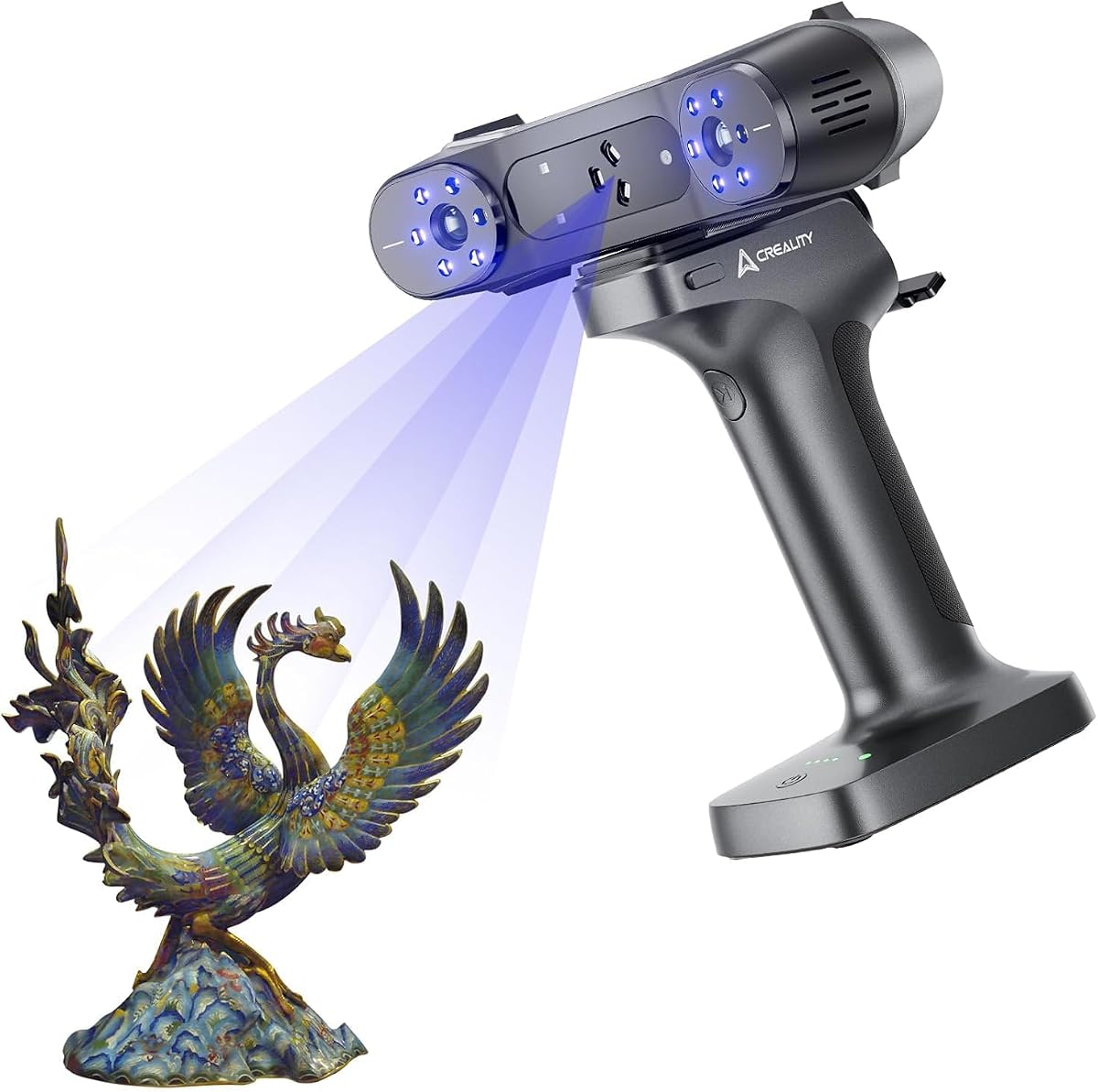
The Otter Lite Basic is an accessible entry point for those exploring reverse engineering. It offers 0.05mm precision which is sufficient for many hobbyist and small business applications.
We may earn a commission when you buy through this link, at no additional cost to you.
Dual range scanning modes allow capturing both small and larger objects effectively. The included turntable and markers ensure you can start immediately without buying extra accessories.
While it lacks the industrial accuracy of premium models it delivers consistent results for general use. It is ideal for visualizing shapes and basic prototyping steps.
Budget-conscious users and students will find this scanner a great starting tool. It provides core features needed for digital recreation without high cost.
Includes all necessary tools to begin scanning right out of the box.
Delivers useful accuracy for entry-level tasks at a low price.
We may earn a commission when you buy through this link, at no additional cost to you.
This standard version of the MetroX Pro maintains high accuracy with single-frame precision up to 0.01 mm. It shares core features with the advanced model but may have slight software differences.
We may earn a commission when you buy through this link, at no additional cost to you.
The auto turntable simplifies scanning complex objects by automating the rotation process. This reduces manual effort and improves consistency in data capture.
As a PC-dependent tool it requires a stable connection and Windows environment for best results. Users should plan their workspace accordingly to avoid interruptions.
Manufacturing and design teams needing reliable measurements will find this model robust. It provides industrial-grade performance in a stable desktop configuration.
One-click scanning simplifies complex geometry capture without manual rotation.
Wired stability ensures consistent high-precision data for critical parts.
We may earn a commission when you buy through this link, at no additional cost to you.
The Creality Raptor Pro brings metrology-grade accuracy to handheld scanning for industrial users. It achieves 0.02mm precision making it suitable for strict quality control needs.
We may earn a commission when you buy through this link, at no additional cost to you.
Its advanced laser configuration handles black and metallic surfaces without spray saving prep time. The software includes body and face modes for quick human scans in minutes.
Performance depends on having a capable PC to process the high data rate effectively. Those with older hardware might experience slower workflows during large scans.
Professionals seeking accurate, fast handheld solutions for complex projects will value this device. It delivers professional results in a portable package.
0.02mm accuracy supports quality control and precision engineering tasks.
Includes body and industrial modes for a wide range of use cases.
We may earn a commission when you buy through this link, at no additional cost to you.
The Raptor X is optimized for scanning large objects like vehicles with high efficiency. Its 34 cross laser lines enable rapid capture with 0.02mm single-frame accuracy.
We may earn a commission when you buy through this link, at no additional cost to you.
Wireless Wi-Fi 6 transmission reduces cable clutter during field work and supports fast data transfer. The anti-shake technology ensures smooth scans even during handheld movement.
The large battery provides ample power for extended sessions but adds weight to the unit. Users should consider ergonomics for long-duration scanning tasks.
Teams needing to scan cars or large machinery quickly will appreciate its speed and range. It is a strong choice for advanced reverse engineering projects.
Thirty-four laser lines cover big surfaces efficiently in one pass.
Wi-Fi 6 keeps data moving fast without tethering to a PC.
We may earn a commission when you buy through this link, at no additional cost to you.
This Raptor Pro model offers a robust set of features for engineering and automotive needs. It uses a mix of blue and infrared light to handle various materials reliably.
We may earn a commission when you buy through this link, at no additional cost to you.
Adjustable resolution settings allow users to balance speed and detail based on project needs. The software provides professional tools for stitching and post-processing large scans.
Users must ensure their computer meets the specified GPU and CPU requirements for smooth operation. This ensures the system can handle the data processing load efficiently.
For industrial professionals needing consistent results across different object types this scanner is reliable. It stands out for its accuracy and comprehensive workflow support.
Fine-tune detail and speed to match specific project requirements.
Blue and infrared light combination handles reflective and matte surfaces well.
We may earn a commission when you buy through this link, at no additional cost to you.
Selecting the right 3D scanner involves evaluating several technical and practical factors to ensure it meets your specific engineering needs.
Accuracy determines how closely the digital model matches the physical object. For reverse engineering tasks, look for scanners with precision under 0.05mm to capture fine details and ensure parts fit correctly during replication.
Higher precision is essential for industrial applications but may increase cost and processing time. Balance your tolerance needs with budget constraints.
Many materials like metal or plastic reflect light or absorb it, making scanning difficult. Advanced scanners use blue or infrared lasers to handle shiny or dark surfaces without needing spray powder.
Spray-free scanning saves time and prevents damage to delicate parts, streamlining your workflow significantly.
Wireless connectivity like Wi-Fi 6 offers mobility during field scans but may require robust battery support. Wired connections ensure stable high-speed data transfer for large projects without interruptions.
Choose a connectivity type that matches your working environment to avoid lag or data loss.
The software determines how easily you can process raw scan data into usable CAD models. Ensure the scanner supports your preferred platform and exports standard file formats like STL or OBJ.
Compatible software reduces post-processing effort and integrates smoothly with existing design tools.
Higher frame rates allow faster capture of large objects which is vital for reducing project turnaround. Speeds of 60 FPS or more are beneficial for real-time preview and efficient workflow.
Faster scanning means less time spent on data acquisition allowing more focus on analysis.
Handheld units with long battery life enable scanning in locations without power outlets. Lightweight designs reduce operator fatigue during extended sessions or field inspections.
Portable units are ideal for on-site industrial or automotive reverse engineering tasks.
Different scanners cover different object sizes from tiny components to large assemblies. Check the minimum and maximum scan dimensions to ensure it fits your typical project scale.
Versatility in size handling increases the utility of the scanner across diverse applications.
Consider not just the initial purchase price but also software licenses and accessories required for operation. Some models need separate paid software for full reverse engineering features.
Factor in these recurring costs to determine the true value and affordability of the scanner.
Calibrate the scanner regularly using the provided board to maintain accuracy over time. Ensure the environment is stable with consistent lighting to avoid artifacts in the scan data.
Clean the optical lenses gently with a soft cloth after each session to prevent dust from affecting performance. Store the device in its protective case when not in use to safeguard against physical damage.
Update the software and firmware periodically to access new features and performance improvements. Back up your scan files frequently to avoid data loss during critical projects.
Many modern scanners with blue or infrared lasers can capture shiny surfaces without spray. However, highly reflective metals might still benefit from minimal treatment depending on the model. Check the specific capabilities of your device for best results.
Some scanners support macOS but many professional-grade options require Windows for full functionality. Verify the software requirements before purchasing to ensure compatibility with your operating system.
Reverse engineering usually requires high resolution to capture fine details accurately. Aim for scanners offering resolution better than 0.05mm to ensure precise measurements and part reconstruction.
Session duration depends on the object size and desired detail. Small parts may take minutes while large assemblies could require longer. Higher frame rates help reduce this time significantly.
Most scanners export standard formats like STL, OBJ, PLY, and ASC. These are compatible with popular CAD and 3D design software making further processing straightforward.
Yes, processing large point clouds often requires a strong GPU and ample RAM. Review system requirements carefully to ensure your computer can handle the data load smoothly.
We have reviewed ten top options ranging from premium industrial models to budget-friendly units. Each scanner offers unique strengths suitable for different engineering needs and project scales.
Prioritize accuracy and surface handling capabilities based on the materials you frequently scan. Investing in the right tool early saves time and improves the quality of your reverse engineering outcomes.
Always check current pricing and availability as models and offers change frequently. Selecting the best fit for your specific workflow ensures maximum efficiency and value for your work.