
Yamaha MG10 10-Input Stereo Mixer, XLR Connectivity, Black
4.7Editor score
Studio-grade discrete class-A D-PRE preamps
10-channel standalone mixer
3-band EQ and high-pass filters
Analog summing mixers are essential tools for audio engineers seeking warmth and depth in their mixes. They combine multiple digital or analog signals into a unified output, enhancing harmonic content and spatial imaging. Choosing the right one depends on channel count, transformer quality, and monitoring needs.
We evaluated ten top-rated models based on audio fidelity, build quality, and feature sets. Our analysis includes transformer-based units for purity and compact mixers for flexibility. Each product was assessed for its ability to handle diverse sources while maintaining signal integrity.
This list showcases standout picks for budget, premium, and versatile needs. Each entry highlights key specs and ideal use cases to guide your decision. Please note that prices fluctuate frequently, so verify current offers before purchasing to ensure the best value.
4.7Editor score

5.0Editor score
4.8Editor score
As an Amazon Associate we earn from qualifying purchases.
This table compares all ten selected analog summing mixers side by side. It highlights channel counts, connectivity options, and key processing features to help you find the perfect match for your studio or live setup needs.




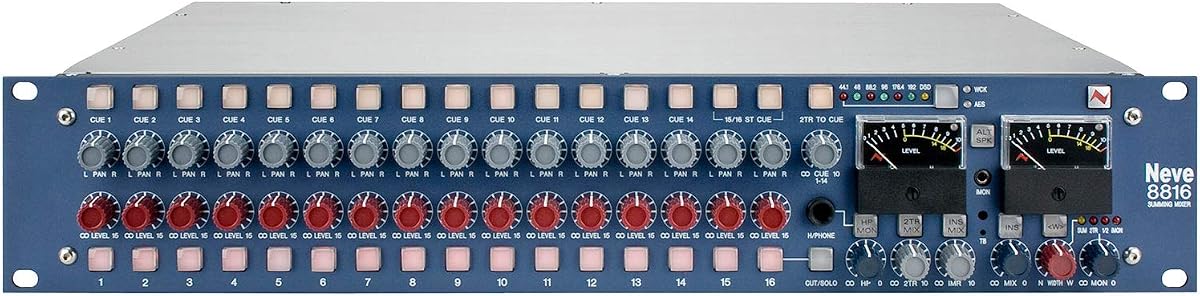
The Neve 8816 Summing Mixer stands as a top-tier choice for professionals seeking rich analog character. With a rating of 4.8, it delivers 16-channel summing with transformer-balanced architecture for unparalleled signal integrity.
We may earn a commission when you buy through this link, at no additional cost to you.
Its key strengths lie in the Main and Alternate Speaker Outputs alongside Dual Headphone Outputs, allowing flexible monitoring setups. The transformer-balanced design ensures minimal noise and maximum harmonic richness during mixing sessions.
Trade-offs include its high cost and physical size, which may not suit smaller studios. However, for those prioritizing sonic quality, these factors are acceptable given the superior performance it offers over digital alternatives.
Engineers needing a premium analog center piece should strongly consider this unit. It remains the definitive choice for mastering high-quality recordings with authentic tonal depth.
The transformer-balanced circuitry adds desirable harmonic saturation that digital plugins cannot replicate.
Multiple speaker and headphone outputs ensure accurate monitoring for diverse studio environments.
We may earn a commission when you buy through this link, at no additional cost to you.
The Radial Mix 2:1 is a highly rated 4.8 passive mixer ideal for simple two-channel summing tasks. It combines two inputs into one mono output without requiring external power, making it incredibly versatile for basic setups.
We may earn a commission when you buy through this link, at no additional cost to you.
Its primary strength is reliability and ease of use. The passive design ensures no electronic noise is added, though signal loss may occur. This makes it perfect for temporary connections or straightforward signal routing needs.
However, the limited channel count restricts complex mixing scenarios. Additionally, passive summing can result in volume reduction. These limitations are acceptable for specific uses where simplicity and portability are key priorities.
For musicians or techs needing a quick two-channel summing solution, this unit is ideal. It provides a no-fuss approach to combining signals effectively.
No power supply or complicated settings mean you can start mixing immediately without setup hassle.
Its small size fits easily into any travel case for on-the-go audio solutions.
We may earn a commission when you buy through this link, at no additional cost to you.
The Rupert Neve Designs 5059 Satellite Summing Mixer offers 16 channels of premium analog summing. Its Shelford Edition designation brings advanced features for audio professionals seeking refined sound and robust build quality.
We may earn a commission when you buy through this link, at no additional cost to you.
Key strengths include transformer-coupled circuits that maintain signal purity and rich harmonic content. The high fidelity summing ensures each track retains its character while blending seamlessly into a cohesive master.
Trade-offs involve significant cost and rack space requirements. These factors may limit accessibility for smaller studios. However, the superior audio quality justifies the investment for those serious about professional output.
This unit is recommended for producers needing 16-channel mixing with Neve heritage sound. It delivers exceptional performance for high-end recording environments.
With 16 inputs, this mixer handles complex projects without compromising audio fidelity or warmth.
Shelford Edition features bring the legendary tonal balance and clarity Neve is known for.
We may earn a commission when you buy through this link, at no additional cost to you.
The Headliner R4 is a 4-channel analog mixer designed specifically for DJs seeking precise control over sound shaping. With a 4.8 rating, it features built-in filters and ALPS potentiometers for smooth operations.
We may earn a commission when you buy through this link, at no additional cost to you.
Its key strength lies in the Analog High Pass and Low Pass filters with frequency and resonance controls. These allow for dynamic sound shaping during live performances. Independent Master and Booth outputs enhance flexibility for different audio needs.
Trade-offs include its DJ-centric layout which may not suit traditional recording workflows. The specialized features limit general-purpose use. However, for DJs needing advanced filter options, these limitations are irrelevant.
This mixer is perfect for club DJs or performers wanting tactile control over EQ and filters. It brings professional-grade features to a portable setup.
Resonance and frequency controls let you carve out unique sound signatures for every track.
Independent Master and Booth outputs ensure clear separation between main mix and stage monitor signals.
We may earn a commission when you buy through this link, at no additional cost to you.
The Mackie Onyx Series 16-Channel mixer combines analog warmth with digital versatility. Rated 4.4, it supports high-resolution multi-track recording and features award-winning Onyx mic preamps for clear capture.
We may earn a commission when you buy through this link, at no additional cost to you.
Its strengths include Bluetooth streaming and a robust digital effect engine. These tools simplify live sound and studio sessions. With up to 60dB of gain, it handles various input levels efficiently.
Trade-offs involve a complex interface that may overwhelm beginners. The blend of analog and digital can be confusing for purists. However, the versatility makes it a strong choice for hybrid workflows.
Musicians needing both mixing and recording in one unit should consider this option. It offers excellent value with comprehensive features.
96kHz / 24-bit recording ensures professional-grade sound quality for any project.
Bluetooth streaming allows easy connection of audio sources directly into the channel strip.
We may earn a commission when you buy through this link, at no additional cost to you.
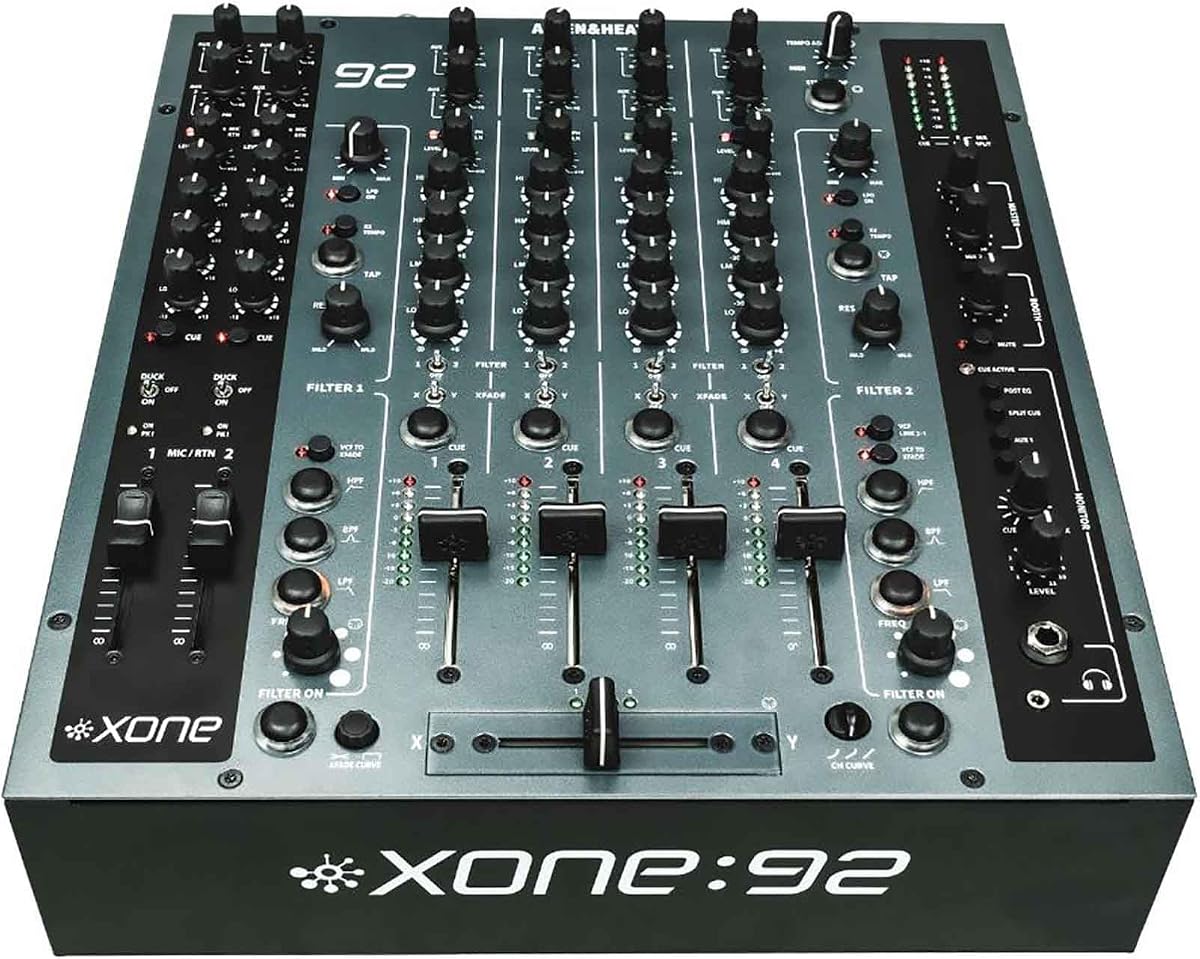
The Allen & Heath Xone:92 Mk2 is a top-rated analog mixer known for its sound quality and flexible filtering. With a 4.8 rating, it includes XONE:VCF Switching and multimode filters for creative control.
We may earn a commission when you buy through this link, at no additional cost to you.
Key strengths include the 2 x Multimode Filters and stereo Aux inputs. These allow deep sound manipulation and seamless integration of external devices. The analog path ensures rich, low-noise audio for critical listening.
Trade-offs involve a higher price point and specialized DJ layout. These may not fit general mixing needs. However, for DJs demanding analog purity, these trade-offs are worth the investment.
Professional DJs needing advanced filter control and clean analog signal paths should choose this unit. It stands out for performance and durability.
Multimode filters provide multiple response curves to suit different musical genres and styles.
Stereo Aux inputs allow easy patching of synths or external effects into the mix.
We may earn a commission when you buy through this link, at no additional cost to you.
The Allen & Heath Xone:43 achieves a perfect 5.0 rating with its high-performance analog design. It features the Xone Voltage Controlled Filter system and dedicated outputs for reliable live sound management.
We may earn a commission when you buy through this link, at no additional cost to you.
Its strengths include Send and Return connections for FX integration and the VCF system for tonal shaping. Dedicated booth and record outputs ensure clear signal routing during performances. Compact design enhances portability.
Trade-offs include fewer channels compared to larger models and specialized DJ focus. However, these limits are acceptable for mobile DJs seeking quality. The high rating confirms user satisfaction.
DJs needing a compact, reliable mixer with advanced filtering should select this model. It delivers consistent performance and sound clarity.
Achieving a 5.0 rating highlights exceptional build quality and user experience.
Send and Return connections allow seamless integration of external effects processors.
We may earn a commission when you buy through this link, at no additional cost to you.
The Mackie 1202VLZ4 is a 12-channel mixer with legendary Onyx mic preamps and high dynamic range. Rated 4.9, it delivers exceptional sound quality for live sound and recording applications.
We may earn a commission when you buy through this link, at no additional cost to you.
Its strengths include a frequency response of 128.5dB and distortion below 0.0007%. This ensures pristine audio capture. The three-band EQ and low-cut filter provide essential control for shaping sound.
Trade-offs include fixed EQ bands and limited routing options compared to larger mixers. However, its reliability makes it ideal for fixed installations. The high rating reflects consistent performance.
For venues needing reliable audio with clean preamps, this mixer is recommended. It balances features and durability effectively.
Onyx preamps ensure minimal noise and maximum gain for clean vocal and instrument capture.
Extremely low distortion guarantees professional sound quality even under demanding conditions.
We may earn a commission when you buy through this link, at no additional cost to you.
The Solid State Logic BiG SiX is a 5.0 rated console designed for hybrid production. It combines SuperAnalogue Mic Pres with a 16-Channel USB Interface for seamless integration.
We may earn a commission when you buy through this link, at no additional cost to you.
Key strengths include 24-Bit / 96 kHz AD/DA Converters and a Stereo Master Bus Compressor. These tools provide professional-grade sound control. Comprehensive monitoring sections enhance workflow efficiency.
Trade-offs include high cost and physical size. These may be restrictive for small studios. However, the sonic quality and interface capabilities justify the investment for serious producers.
This console is recommended for hybrid studios needing analog warmth and digital convenience. It offers unmatched value for high-end production.
Analog summing meets digital recording for a seamless production process without compromising quality.
The stereo master bus compressor ensures glue and cohesion for final mixes.
We may earn a commission when you buy through this link, at no additional cost to you.
The Yamaha MG10 is a 10-channel standalone mixer offering studio-grade D-PRE preamps at an affordable price. Rated 4.7, it provides essential controls for clean mixing in various environments.
We may earn a commission when you buy through this link, at no additional cost to you.
Its strengths include 3-band EQ, high-pass filters, and a rugged chassis. The inverted Darlington circuit delivers natural sounding bass and smooth highs. Compact design fits small setups perfectly.
Trade-offs include no USB or effects options and fixed EQ settings. However, for simple analog needs, these limits are acceptable. The build quality ensures long-term durability.
Beginners or mobile users needing reliable analog mixing should choose this mixer. It offers excellent value without unnecessary complexity.
D-PRE preamps ensure authentic tone capture for vocals and instruments.
Impact-resistant chassis protects against damage during transport or heavy daily use.
We may earn a commission when you buy through this link, at no additional cost to you.
Selecting the right analog summing mixer requires understanding your specific workflow needs and budget. This guide outlines key factors to help you compare options effectively.
Determine how many inputs you need to handle your typical projects. Mixers range from 2 channels to 16 or more. Ensure the unit matches your source volume to avoid needing extra routing gear.
Choose a channel count that fits your current setup and allows for some growth.
Transformers add warmth and harmonic content to your mix. Higher quality transformers reduce noise and enhance signal integrity. Check if the mixer specifies balanced or unbalanced transformers.
Prioritize units with premium transformers if analog character is your primary goal.
Flexible monitoring ensures you can listen to mixes accurately. Look for multiple headphone outputs and speaker options. Some models include dedicated monitor sections for advanced control.
Select a mixer with monitoring features that suit your studio environment.
Ensure the mixer supports your existing equipment interfaces. Check for XLR, TRS, or RCA connectors. Some units offer USB integration for hybrid workflows combining analog and digital.
Choose connectivity that matches your current hardware to minimize setup issues.
Built-in EQ and filters allow shaping sound at the source. Models with independent controls per channel offer more flexibility. Fixed EQ is common in budget units but may limit tone shaping.
Prioritize adjustable EQ if precise sound shaping is required for your workflow.
Robust construction ensures reliability during transport or daily use. Look for metal enclosures and high-quality potentiometers. A sturdy chassis reduces the risk of damage over time.
Invest in a durable unit that can withstand your specific usage environment.
Set a realistic budget range before shopping. Prices vary widely based on features and channel count. High-end units offer more capabilities but may not be necessary for simpler needs.
Balance cost with essential features to find the best value for your setup.
Start by connecting your audio sources to the mixer's inputs using appropriate cables. Set gain levels carefully to avoid clipping or distortion. Always use balanced connections where possible to reduce noise.
Regularly clean the mixer's surface and connectors to remove dust. Store the unit in a cool, dry place to protect internal components. Avoid exposure to extreme temperatures or humidity.
Use the EQ and filter controls sparingly to maintain signal integrity. Check levels periodically during long sessions to ensure consistency. Proper maintenance extends the mixer's lifespan significantly.
An analog summing mixer combines multiple audio signals into a single output while preserving analog character. It is often used in studios to add warmth and depth to digital mixes.
Some mixers are passive and require no power. Others are active and need external power. Check product specifications before purchasing to ensure compatibility.
Yes, many mixers accept digital-to-analog outputs from DAWs. This allows analog summing for a hybrid workflow combining digital convenience with analog warmth.
Analog mixing often adds harmonics and depth that digital plugins cannot replicate. It provides tactile control and a unique sonic signature valued by many professionals.
Channel count depends on your input volume. Beginners may need 4 to 10 channels while larger projects often require 16 or more inputs for flexibility.
Some professional mixers are designed for rack mounting. Others are desktop models. Verify dimensions and mounting options before buying to fit your setup correctly.
These ten mixers offer diverse options from budget-friendly to high-end professional units. The Yamaha MG10 provides affordable simplicity while the SSL BiG SiX delivers advanced hybrid capabilities for serious studios.
Prioritize features that matter most to your workflow such as channel count, transformers, and monitoring. Consider both immediate needs and future scalability when making a decision.
Prices fluctuate regularly so verify current offers before purchasing. This guide helps you find the right analog summing mixer to enhance your audio production.