
ADS1115 2Pcs
5.0Editor score
Affordable two pack deal
Sixteen bit ADC module
Wide voltage supply range
Easy I2C integration
This guide compares the top ten Arduino ADC boards for precision sensing. We evaluate resolution, channel count, and compatibility to help you choose the right
An Arduino ADC board transforms analog signals into digital data for microcontrollers. High quality boards offer precise readings for sensors like thermocouples or load cells. Selecting the right module ensures your project collects accurate measurements without signal loss or noise interference.
We evaluated ten real products based on resolution, channel count, and interface types. Our analysis focuses on boards that integrate seamlessly with Arduino and Raspberry Pi systems. We considered factors like programmable gain amplifiers and data rates to determine the most versatile options available today.
Each pick in this list highlights specific strengths for different use cases. From budget friendly kits to high precision modules, you will find options for every skill level. Please note that availability and pricing may change, so always verify details before purchasing your next component.
5.0Editor score

4.7Editor score

4.4Editor score
This table provides a side by side overview of the top ten Arduino ADC boards. It highlights key specifications like resolution, channel count, and interface types to help you compare features at a glance.


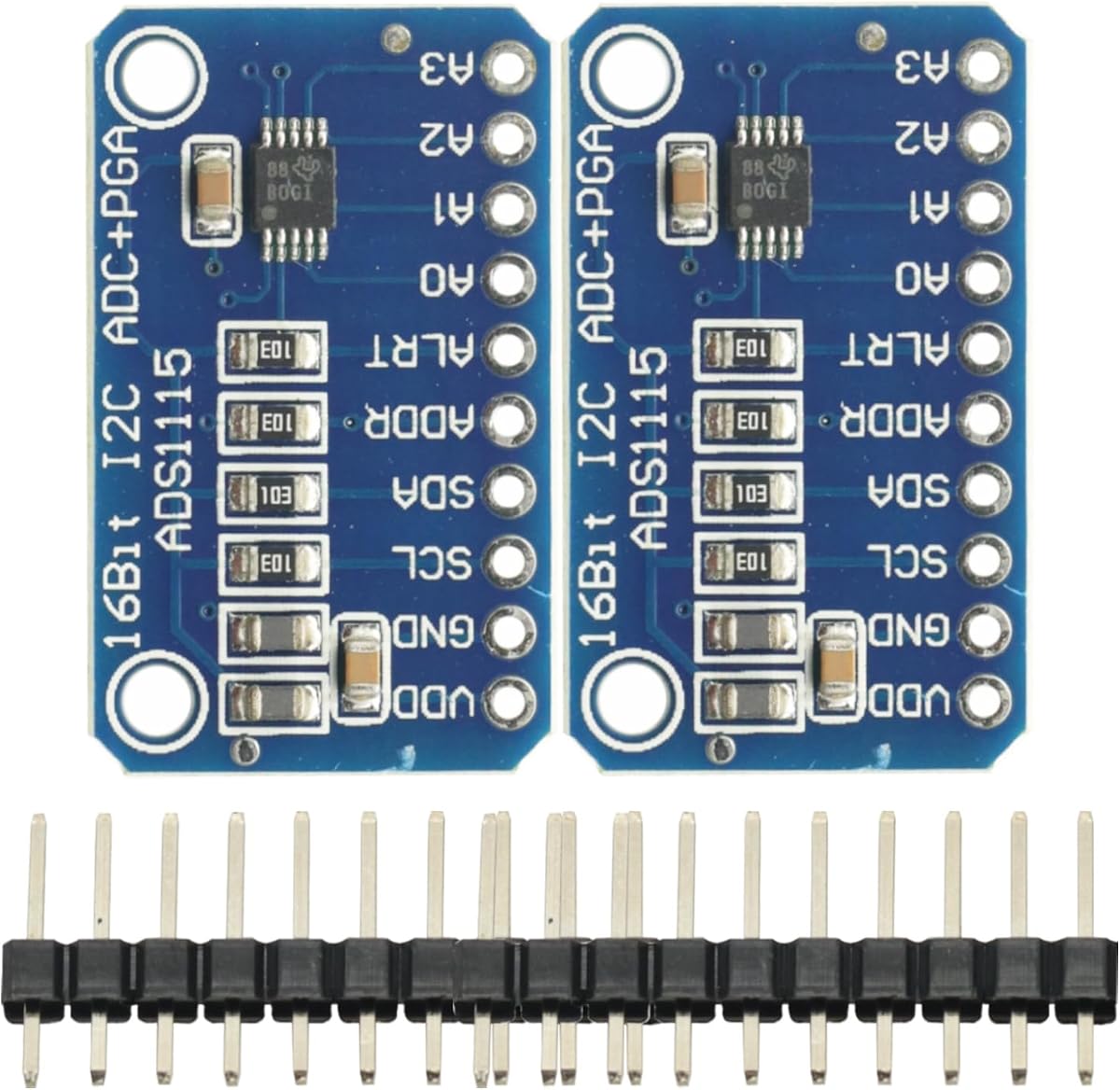


This board delivers reliable 16 bit conversion for accurate sensor data. It features a programmable gain amplifier to handle various signal levels effectively. Users appreciate the compact design and straightforward integration with microcontroller projects.
We may earn a commission when you buy through this link, at no additional cost to you.
The module supports up to 860 samples per second with adjustable rates. It allows for both single ended and differential inputs for flexible wiring options. The included PGA helps amplify small signals like those from strain gauges.
While it lacks high speed sampling, it is sufficient for most static measurements. The wide supply range ensures it works with different logic levels without extra components. You should note it requires external pull up resistors for I2C.
Buyers looking for a versatile tool for robotics or monitoring should consider this pick. It balances performance and ease of use well for general applications. It is a strong choice for anyone needing reliable analog to digital conversion.
The programmable gain amplifier allows this module to measure tiny voltage changes accurately.
Standard I2C interface means you only need two wires to connect to your microcontroller.
We may earn a commission when you buy through this link, at no additional cost to you.
This module stands out with its 24 bit resolution for ultra precise measurements. It is designed for applications where every microvolt counts in your data collection. The on board reference voltage ensures stable and repeatable readings over time.
We may earn a commission when you buy through this link, at no additional cost to you.
It features eight channels that can be configured as single ended or differential. The low nonlinearity makes it suitable for scientific instruments or calibration tasks. Data output rates reach up to 30ksps for moderate speed requirements.
The SPI interface requires more pins than I2C but offers faster throughput. You need to ensure your microcontroller supports SPI for proper communication. It is ideal for users who need higher precision than standard 16 bit boards.
If your project demands extreme accuracy like in lab equipment, this is a top choice. The extra resolution helps in detecting minute changes in sensor outputs. It is a powerful upgrade for serious data acquisition needs.
With 24 bit resolution, this board can detect voltage changes down to the microvolt level.
The on board 2.5V reference source eliminates the need for external voltage references.
We may earn a commission when you buy through this link, at no additional cost to you.
This two pack offers excellent value for makers who need multiple units. It provides the full 16 bit precision expected from the ADS1115 chip at a low cost. The perfect for projects where you need redundancy or spare parts.
We may earn a commission when you buy through this link, at no additional cost to you.
Each module supports seven input ranges to adapt to different sensor voltages. You can measure signals from very small to larger ranges with the gain amplifier. The I2C address allows you to stack multiple modules on one bus.
While it is budget friendly it does not compromise on core functionality. The build quality is solid enough for prototyping and classroom environments. You will need to solder your own headers if they are not pre installed.
Students or hobbyists starting out will find this package very helpful. It allows you to build several sensors without breaking the bank. It is the best choice for large scale projects with limited budgets.
Getting two modules in one purchase saves money and ensures you have a backup.
Seven input ranges let you tailor the board to your specific voltage requirements.
We may earn a commission when you buy through this link, at no additional cost to you.
This three pack provides plenty of units for a distributed sensor network. Each board includes the ADS1115 chip with all standard features like PGA and I2C. It is a practical solution for projects needing multiple input points.
We may earn a commission when you buy through this link, at no additional cost to you.
The single shot mode allows the chip to power down after conversion to save energy. This is useful for battery powered devices where power consumption matters. The comparator mode helps in setting thresholds without CPU intervention.
Quality can vary between batches so checking individual units is wise. The wide supply range ensures it works with 3.3V or 5V logic systems easily. It remains a solid option for bulk purchases.
Users planning to build several stations should find this cost effective. It simplifies inventory by providing enough boards for a full system. It is a reliable choice for educational labs or workshops.
Auto shut down in single shot mode extends battery life significantly for portable projects.
Built-in comparator lets you trigger interrupts when signals cross a set threshold.
We may earn a commission when you buy through this link, at no additional cost to you.
This kit offers four units for those needing extensive analog input capacity. It features the standard ADS1115 specifications with internal oscillator for stable timing. It is ideal for multi channel data logging systems.
We may earn a commission when you buy through this link, at no additional cost to you.
You can use channels in differential mode for noise rejection or single ended for simplicity. The board is compact enough to fit on breadboards without taking too much space. It supports programmable data rates for flexibility.
Documentation may be minimal so rely on community libraries for code examples. The build quality is functional for prototyping but may need reinforcement for permanent installs. It is a good value for the number of units provided.
Researchers or engineers needing many channels will appreciate this high quantity kit. It reduces the number of separate purchases needed to complete a project. It is a practical choice for large scale sensor arrays.
The internal oscillator removes the need for an external crystal on the module.
Differential input mode helps cancel out common mode noise in noisy environments.
We may earn a commission when you buy through this link, at no additional cost to you.
This two pack consistently receives high ratings from users for reliability. It delivers the expected performance for the ADS1115 chip with no surprises. The wide voltage range ensures compatibility with most microcontrollers on the market.
We may earn a commission when you buy through this link, at no additional cost to you.
The standard I2C interface makes it easy to integrate into existing circuits. You can chain two boards easily by adjusting the address pins appropriately. It supports all standard programming ranges for accurate measurements.
It is a straightforward product with no fancy features but solid execution. The board works well with both 3.3V and 5V systems without issues. It is a safe choice for general purpose applications.
Users who want a no fuss solution should consider this option. It is perfect for standard sensor reading tasks where extra bells and whistles are not needed. It is a trusted option for hobbyists and students.
The 2.0V to 5.5V supply range allows operation with various voltage standards.
Four address pins allow multiple modules to coexist on the same I2C bus.
We may earn a commission when you buy through this link, at no additional cost to you.
This premium pack stands out with its gold plated finish for durability. The ENIG plating ensures better oxidation resistance and solderability over time. It is ideal for projects that need long term reliability in harsh environments.
We may earn a commission when you buy through this link, at no additional cost to you.
Each module comes with pre-soldered headers ready for immediate use on breadboards. This saves time and effort compared to soldering your own pins. The design supports chainability up to four units for more channels.
The brand focuses on open source support with libraries for various languages. It works well with ESP32 and other modern platforms that require 3.3V logic. It is a thoughtful design for modern makers.
Professionals or educators who value build quality should choose this pick. The extra cost is justified by the attention to detail and ease of use. It is the best choice for high quality prototypes.
Gold plating provides excellent conductivity and resists corrosion better than standard solder.
Pre-soldered headers mean you can start your project without additional assembly tools.
We may earn a commission when you buy through this link, at no additional cost to you.
This module is designed for applications requiring high speed synchronized data capture. It supports up to 200KHz sampling which is much faster than standard I2C modules. It is suitable for dynamic signal analysis or audio applications.
We may earn a commission when you buy through this link, at no additional cost to you.
Eight channels can be sampled simultaneously to ensure timing accuracy across inputs. The parallel data output allows for rapid transfer of data to a processor. Oversampling modes help improve resolution by averaging samples.
The SPI interface and control signals add complexity to wiring compared to simpler boards. It requires more advanced programming to handle the data throughput effectively. You should check compatibility with your controller logic levels carefully.
If you need fast sampling for vibration or motion sensing this is a strong candidate. It offers a different set of capabilities compared to the standard ADS1115 boards. It is a specialized tool for demanding technical needs.
Simultaneous sampling ensures all channels are read at the exact same moment.
The 200KHz sampling rate allows for capturing fast changing signals accurately.
We may earn a commission when you buy through this link, at no additional cost to you.
This four pack provides a compact solution for multi channel data collection. It features a high rating from users who appreciate its straightforward design. It is perfect for IoT nodes where space is at a premium.
We may earn a commission when you buy through this link, at no additional cost to you.
The built-in PGA allows you to measure low voltage sensors effectively without external components. It integrates easily into existing systems using standard I2C protocols and libraries. You can use it with Arduino Raspberry Pi and ESP32 easily.
The small size makes it convenient for embedding into final products. It is lightweight and requires minimal mounting hardware to secure in place. You will need to wire it directly to headers or pins on your board.
Projects requiring distributed sensing points will benefit from having four units. It simplifies inventory for large scale deployments. It is a reliable choice for developers needing multiple ADC modules.
The compact footprint leaves more room for other components on your PCB or breadboard.
Standard pinouts and libraries make connecting this module a simple process.
We may earn a commission when you buy through this link, at no additional cost to you.
This classic module has been a staple in the maker community for years. It provides consistent performance with the ADS1115 chip for everyday tasks. The design is simple and proven with extensive online resources available.
We may earn a commission when you buy through this link, at no additional cost to you.
It offers comparator mode for simple threshold detection without CPU load. The wide voltage supply ensures it works with most logic levels in your setup. It is a dependable option for standard voltage measurement tasks.
While it lacks advanced features it covers all the basics very well. The single shot mode allows for power saving in low duty cycle applications. It is a no nonsense choice for straightforward projects.
Users who prioritize reliability and community support should consider this board. It is a standard reference for many tutorials and examples online. It is a safe option for getting started with ADC projects.
This board uses a well established chip that has millions of users worldwide.
Consistent performance ensures your sensor data remains reliable over long periods.
We may earn a commission when you buy through this link, at no additional cost to you.
Selecting the right ADC board depends on your project's specific precision and speed requirements. We break down the critical factors to help you make an informed decision for your next electronics build.
Resolution determines the smallest voltage change the board can detect. A 16 bit board can distinguish 65536 levels whereas a 24 bit board offers significantly finer detail. For most temperature or light sensors 16 bits is sufficient but precision instruments benefit from higher resolution.
Choose higher resolution only if your sensors output very small voltage signals that need to be amplified.
Most standard boards offer four input channels which is enough for many basic projects. However complex data loggers might require eight or more inputs to monitor multiple sensors simultaneously. Consider whether you need to chain multiple modules to achieve your desired channel count.
Calculate the total number of analog sensors you need to read before selecting a board with enough channels.
I2C interfaces use fewer pins and are easier to wire for simple setups. SPI interfaces offer faster data rates which is crucial for high speed sampling applications. Ensure your microcontroller has available pins for the interface type you choose.
Prioritize I2C for simplicity and SPI when speed is the top priority for your data acquisition.
ADC boards often operate within a specific supply range like 2.0V to 5.5V. Verify that the board supports the logic voltage of your microcontroller to avoid damage. Some boards include level shifting to work with both 3.3V and 5V systems.
Always match the board voltage supply to your microcontroller voltage to ensure safe operation.
A PGA allows you to amplify weak signals to utilize the full ADC range. This is essential for sensors like thermocouples that produce very low voltage outputs. Check if the board supports multiple gain settings to fit your specific sensor needs.
Look for boards with PGA if you are measuring microvolt level signals from specialized sensors.
Sampling rate indicates how quickly the board can convert analog signals to digital data. Low speeds are fine for static measurements like temperature but audio needs higher speeds. Check the maximum samples per second to ensure it fits your application.
Choose a board with a high sampling rate if your signals change rapidly over time.
Higher quality boards may feature gold plating or robust connectors for durability. This matters for permanent installations or projects exposed to environmental stress. Budget options work well for prototyping but might not survive heavy use.
Invest in better build quality for projects intended to last or be deployed in the field.
Ensure there are active libraries for your preferred programming language like C++ or Python. Popular boards have extensive community support which makes coding much easier. Check for compatibility with your development environment before buying.
Select boards with well documented libraries to reduce development time and debugging effort.
Connect the VCC and GND pins of the ADC board to the corresponding power pins on your microcontroller. Use 3.3V or 5V depending on your system voltage and ensure all connections are secure before powering up.
Wire the SDA and SCL pins to the I2C pins on your microcontroller. If you plan to use multiple boards connect the additional ADDR pins to different voltage levels to change addresses.
Handle the modules by the edges to avoid static discharge damage to the chip. Store unused boards in a dry place to prevent oxidation on the contacts over time.
Most standard Arduino boards lack analog inputs or have limited resolution. An external ADC board provides higher precision and more channels for complex sensor projects. It allows you to measure signals that exceed the built-in capabilities of the microcontroller.
Single ended inputs measure voltage relative to ground while differential inputs measure the difference between two signal wires. Differential inputs are better for noisy environments because they cancel out common mode noise. Use differential mode for precision sensor readings like strain gauges.
Yes most boards listed support a wide voltage range including 3.3V logic levels. Always verify the specific board specifications to ensure compatibility with your microcontroller. The Lonely Binary and ADS1115 models are explicitly known for this compatibility.
You can chain up to four ADS1115 boards on a single I2C bus by using their address pins. Each board will get a unique address so they do not conflict during communication. This allows you to expand to sixteen input channels easily.
Standard I2C boards like the ADS1115 have lower sampling rates suitable for static sensors. For high speed sampling look for SPI based boards like the ADS1256 or AD7606. These are designed for dynamic signals that change rapidly.
Some boards come with pre-soldered headers ready to plug into a breadboard. Others require you to solder headers yourself for a permanent connection. Check the product description to see if headers are included or not.
We have reviewed ten distinct options ranging from budget friendly kits to high precision modules. The Teyleten ADS1115 offers a balanced performance while the ADS1256 delivers superior resolution for scientific needs.
Prioritize resolution and sampling rate based on your specific sensor requirements before making a decision. A board with a programmable gain amplifier will save you extra components in many projects.
Always check current availability and compatibility details before purchasing your components. Prices and stock can change so ensure you have the right specs for your project build.