
ESP32-S3-Nano
5.0Editor score
8MB PSRAM Included
MicroPython Support
Arduino IoT Cloud
This guide compares the top Arduino Nano ESP32 boards for IoT and embedded projects, highlighting performance, connectivity, and features for makers and
The Arduino Nano ESP32 represents a significant leap in embedded development, combining the familiar Nano form factor with powerful ESP32-S3 capabilities. This modern microcontroller offers dual-core processing, built-in Wi-Fi and Bluetooth, and support for popular programming environments like MicroPython and the Arduino IDE. Whether you are building smart home devices, wearables, or industrial sensors, choosing the right board is crucial for project success.
We have carefully evaluated ten top-rated boards based on processor speed, memory capacity, wireless performance, and ease of use. Our analysis includes official Arduino products as well as third-party alternatives that offer unique features like enhanced power management, additional interfaces, or cost-effective multi-pack options. Each product was assessed against key criteria relevant to modern IoT and embedded engineering tasks.
Each pick in this list showcases specific strengths, from budget-friendly options to premium boards with advanced imaging capabilities. While prices may fluctuate due to market demand and availability, the core features remain consistent across these models. We recommend checking current listings for the most accurate pricing before making your final decision on which board to adopt for your next prototype.
5.0Editor score

4.6Editor score

4.8Editor score
This side-by-side comparison highlights the key specifications and capabilities of each board to help you identify the best fit for your specific application needs.


The Arduino Nano ESP32 stands out as the top choice for developers seeking a balance between official support and modern performance. Rated highly by users, this board integrates the powerful ESP32-S3 chip directly into the Nano form factor. It offers seamless connectivity through Wi-Fi and Bluetooth while supporting advanced features like HID profiles for custom input devices.
We may earn a commission when you buy through this link, at no additional cost to you.
Its standout quality lies in its compatibility with both C/C++ through the Arduino IDE and MicroPython for faster scripting. The USB-C port ensures reliable power and programming, making it easier to prototype without adapters. This board is engineered for IoT applications requiring secure, high-speed wireless data transfer and edge computing capabilities.
While it offers excellent performance, some users may find the price point higher than generic alternatives. Additionally, the memory configuration is standard compared to boards with expanded PSRAM. These trade-offs are generally acceptable given the robust official documentation and long-term software support provided by Arduino.
We recommend this board for makers, students, and professionals who value reliability and ecosystem integration. If you need a versatile platform for smart home or industrial IoT projects, this model delivers consistent results and simplifies development workflows significantly.
The board supports both Wi-Fi and Bluetooth 5.0, allowing for seamless communication with other devices and cloud platforms without extra modules.
Developers can choose between the Arduino IDE for C/C++ projects or MicroPython for rapid prototyping, offering flexibility based on skill level.
We may earn a commission when you buy through this link, at no additional cost to you.
This board offers exceptional value by providing high-end specifications at a budget-friendly price. It features the ESP32-S3R8 chip with substantial PSRAM and flash memory, which is rare for this price range. Users praise its performance for handling complex IoT tasks and its compatibility with both Arduino and MicroPython environments.
We may earn a commission when you buy through this link, at no additional cost to you.
Its key strength lies in the generous memory allocation, enabling larger applications and more efficient data buffering. The integration with Arduino IoT Cloud allows remote monitoring without custom server setups. It also supports HID emulation, making it versatile for human interface applications like virtual keyboards.
The main limitation is the lack of extensive official documentation compared to branded boards. You may need to rely more on community forums for specific pinout details or driver issues. However, the high user rating suggests these issues are minimal for most standard use cases.
Ideal for cost-conscious makers and developers experimenting with ESP32-S3 capabilities, this board delivers flagship features at an entry-level price. If you need maximum memory per dollar without sacrificing wireless performance, this is an excellent starting point for your projects.
With 8MB PSRAM and 16MB Flash, this board handles large data buffers and complex applications that would crash on standard microcontrollers.
The native support for Arduino IoT Cloud simplifies remote device management, allowing you to monitor projects from anywhere easily.
We may earn a commission when you buy through this link, at no additional cost to you.
The ESP32-P4-NANO represents a premium option for advanced users requiring specialized interfaces and high performance. It utilizes a RISC-V architecture instead of the standard Xtensa core, offering unique capabilities for image processing and edge computing. The board includes MIPI interfaces, which are typically found in much larger development kits.
We may earn a commission when you buy through this link, at no additional cost to you.
Its standout quality is the combination of high-speed processing with advanced imaging and voice processing interfaces. With 32MB PSRAM and extensive security features like secure boot, it is well-suited for commercial or industrial applications where reliability and data protection are paramount. The rich set of peripherals eliminates the need for breakout boards.
The higher price point reflects its professional-grade capabilities, which may be excessive for simple hobby projects. Additionally, the RISC-V architecture might require adapting existing codebases designed for ESP32-S3. These factors are acceptable trade-offs for developers building sophisticated devices like smart displays or security systems.
Recommend this board for engineers building products that require visual interfaces, high bandwidth, or strict security requirements. If you need a compact platform that can drive displays or process images without external controllers, this board provides the necessary power and connectivity.
Built-in MIPI-CSI and DSI interfaces allow direct connection to cameras and displays, enabling visual projects in a tiny footprint.
Hardware-based secure boot and encryption protect your firmware and data, making it ideal for sensitive IoT deployments.
We may earn a commission when you buy through this link, at no additional cost to you.
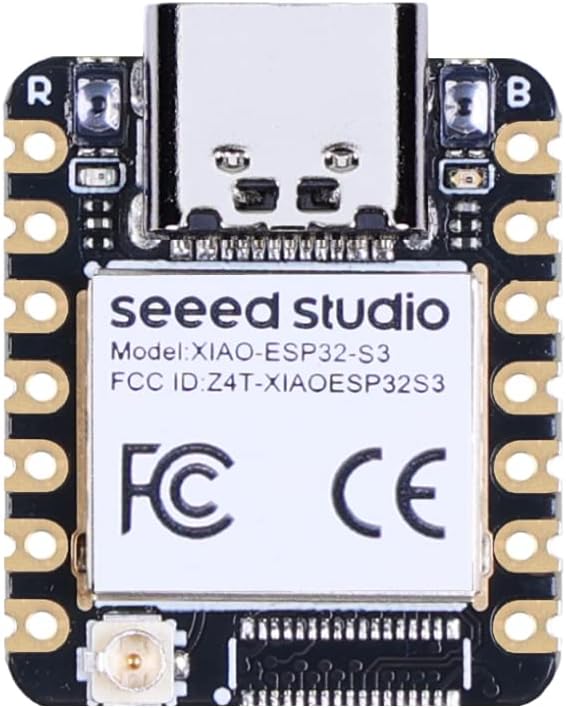
This board is designed for wearable and space-constrained projects, fitting a powerful ESP32-S3 into a thumbnail-sized package. It excels in power efficiency, offering deep sleep modes that drain minimal energy, which is critical for battery-powered devices. The onboard battery charging management simplifies the design of portable gadgets.
We may earn a commission when you buy through this link, at no additional cost to you.
Key strengths include its ability to support long-range communication via an external antenna and a variety of interfaces packed into a small size. The power consumption models allow developers to optimize for battery life without sacrificing responsiveness. This makes it perfect for smart clothing, health trackers, or remote sensors.
The compact design requires careful handling and soldering, which may be a barrier for beginners used to standard headers. Additionally, integrating external modules requires more precision than plugging into a breadboard. However, these challenges are manageable for intermediate to advanced users focused on portability.
Choose this board if you need a compact, low-power solution for battery-driven IoT applications. It offers a unique balance of performance and size that is hard to find elsewhere, making it a favorite for innovative wearable tech projects.
With deep sleep modes consuming as low as 14µA, this board ensures your projects last longer on battery power.
The thumb-sized form factor allows embedding electronics directly into fabric or small casings without bulk.
We may earn a commission when you buy through this link, at no additional cost to you.
This option provides three boards for the price of one, making it ideal for teams or projects requiring multiple nodes. The ESP32-S3FH4R2 chip ensures consistent performance across all units with dual-core processing and modern wireless standards. The ceramic antenna offers reliable connectivity without needing external attachments.
We may earn a commission when you buy through this link, at no additional cost to you.
Its standout quality is the cost-efficiency of purchasing in bulk while maintaining high standards of quality and performance. The boards can be soldered directly to custom carrier boards for permanent installations. Independent power supply settings allow for fine-tuning energy consumption for specific tasks.
While the multi-pack saves money, the lack of headers means you must solder them yourself or use the module directly. This might be a hurdle for users preferring plug-and-play solutions. However, the savings and performance justify the extra effort for production or larger prototypes.
We recommend this pack for developers building networks of sensors or testing multiple configurations. If you need reliable, affordable boards that can be integrated into custom hardware designs, this set offers exceptional value.
With three units in one package, you can deploy sensor networks or create distributed systems without buying multiple times.
Flexible power supply settings allow you to optimize energy use for different scenarios, extending battery life effectively.
We may earn a commission when you buy through this link, at no additional cost to you.
This kit is designed for beginners looking to learn electronics and coding with a comprehensive set of components. It includes the ESP-32 board along with over 35 different modules such as sensors, motors, and displays. Detailed tutorials guide you through projects that teach fundamental skills step by step.
We may earn a commission when you buy through this link, at no additional cost to you.
The key strength is the educational value provided by structured learning paths and clear circuit diagrams. You don't need to source individual parts, which simplifies the start of your journey. The kit encourages experimentation across various domains like weather stations and smart home controllers.
The included board is standard and may lack the latest Wi-Fi or Bluetooth improvements found in newer models. Additionally, the larger footprint might not suit space-constrained designs. However, for learning purposes, these trade-offs are minor compared to the convenience of having everything in one box.
If you are new to IoT or electronics, this kit offers a low-friction way to get started. It equips you with both the hardware and the knowledge to build functional projects, making it an ideal gift or classroom resource.
The step-by-step tutorials take you from basic circuits to advanced IoT, ensuring you understand the concepts thoroughly.
With over 35 components, you have everything needed for diverse projects without needing additional shopping trips.
We may earn a commission when you buy through this link, at no additional cost to you.
While it uses an ARM Cortex-M0+ instead of ESP32, this board remains a strong contender for secure IoT projects. Its built-in secure element provides hardware-level encryption, which is crucial for sensitive data applications. Users appreciate the stability and the reliable pre-soldered headers for quick prototyping.
We may earn a commission when you buy through this link, at no additional cost to you.
The standout quality is the integration of the u-blox NINA-W102 module for robust wireless connectivity. It also includes a built-in IMU sensor, reducing the need for external components in motion tracking projects. This makes it a complete solution for secure cloud-connected applications.
However, the processor is less powerful compared to the ESP32-S3, which may limit performance-heavy tasks. The price is also higher due to the premium security features. These factors are acceptable if your project prioritizes data security over raw computational speed.
We recommend this board for projects requiring strong encryption and reliable connectivity without extra modules. If you are building industrial or commercial IoT solutions where security is non-negotiable, this model provides the necessary trust and reliability.
The secure element ensures that your data and firmware remain protected against physical and remote attacks.
With pre-soldered headers, you can connect components immediately without worrying about fragile wires or loose pins.
We may earn a commission when you buy through this link, at no additional cost to you.
This set offers three classic ESP32 boards known for their reliability and extensive community support. They feature dual-mode Wi-Fi and Bluetooth 4.2, suitable for a wide range of wireless applications. The ultra-low power modes make them suitable for battery-operated devices that need to conserve energy.
We may earn a commission when you buy through this link, at no additional cost to you.
Its key strength is the proven track record of the original ESP32 platform, which has been refined over years of development. The boards support AP and STA modes for flexible networking, and they are fully compatible with popular Arduino libraries. This ensures you can find resources for almost any project.
Compared to newer chips, the Bluetooth version is older and memory might be lower for large apps. However, for many standard uses, this difference is negligible. The value of getting three boards at this price point makes up for these minor technical limitations.
If you are looking for a reliable and cost-effective way to experiment with IoT or deploy multiple nodes, this pack is an excellent choice. It provides the essential features needed for connectivity without unnecessary complexity.
Support for AP, STA, and both modes lets you set up hotspots or connect to existing networks easily.
Low power consumption modes ensure that your devices can run for longer periods on limited battery capacity.
We may earn a commission when you buy through this link, at no additional cost to you.
This option combines the reliability of the ESP32 with the convenience of a USB-C port for modern connections. The boards come in a pack of three, providing great value for testing different configurations or multiple devices. Over-the-air update support allows you to update firmware remotely via Wi-Fi.
We may earn a commission when you buy through this link, at no additional cost to you.
The standout feature is the inclusion of USB-C, which aligns with current standards and simplifies cabling for users. The CP2102 chip ensures stable serial communication, which is essential for debugging. High user ratings indicate consistent quality and minimal issues during programming.
Bluetooth 4.2 is slightly older than 5.0, which might limit some newer peripheral integrations. However, Wi-Fi performance remains strong for most applications. This minor limitation does not detract from the overall value and ease of use provided by the set.
Choose this pack if you need modern connectivity and reliable performance for prototyping. The convenience of USB-C combined with OTA updates makes development smoother, especially for projects that might require frequent firmware adjustments.
The USB-C port ensures compatibility with modern cables and chargers, making the board easier to use everywhere.
OTA support lets you fix bugs or add features over Wi-Fi without disconnecting the board physically.
We may earn a commission when you buy through this link, at no additional cost to you.
While technically an UNO variant, this board includes ESP32-S3 for wireless tasks and offers unique features like CAN bus and an LED matrix. The combination of Renesas RA4M1 and ESP32-S3 allows for powerful dual-core processing. It is designed for advanced IoT projects that need industrial standards and visual feedback.
We may earn a commission when you buy through this link, at no additional cost to you.
Its standout qualities include the built-in CAN bus, which is essential for automotive and industrial applications, and the Qwiic connector for easy sensor integration. The LED matrix allows for immediate visual status updates without external components. This versatility makes it a powerful alternative to the Nano form factor.
It is larger than a Nano and costs more, but the added features justify the size for complex projects. The extra pins and interfaces may require a shift in thinking for users used to standard headers. However, the benefits of industrial connectivity and visual feedback are significant.
If your project involves robotics or industrial controls, this board is highly recommended. It provides the connectivity and power needed for sophisticated systems while maintaining the ease of use associated with the Arduino ecosystem.
The CAN bus support allows you to integrate this board into vehicle or factory automation systems easily.
The 12×8 LED matrix provides a way to display messages or status directly on the board for user interaction.
We may earn a commission when you buy through this link, at no additional cost to you.
Selecting the right board requires evaluating several technical factors that impact performance, cost, and usability.
The processor speed determines how quickly your device can handle calculations and data processing. Look for dual-core processors running at 240MHz or higher for modern IoT applications. This ensures your device can manage complex tasks without lag.
Choose a board with a high-speed dual-core processor to ensure smooth operation for multitasking and data processing.
Memory is crucial for running code and storing data during operation. Boards with higher PSRAM and Flash storage can handle larger libraries and more data. This is especially important for applications involving images or audio.
Prioritize boards with 8MB or more of PSRAM if your project involves heavy data processing or complex libraries.
Wi-Fi and Bluetooth versions affect connectivity range and compatibility with other devices. Newer boards support Bluetooth 5.0 and Wi-Fi 6, offering better range and power efficiency. Check if your project needs dual-mode connectivity for versatile networking.
Ensure the board supports the latest Bluetooth 5.0 and Wi-Fi standards for optimal range and power efficiency.
The types of ports available dictate how easily you can connect peripherals. USB-C is becoming the standard for programming and power, offering a more durable connection. Additional interfaces like I2C or SPI are essential for sensors and displays.
Select a board with USB-C and a variety of input/output pins to simplify wiring and expand your project capabilities.
For battery-powered devices, power efficiency is critical. Look for boards with deep sleep modes and low power consumption specs. This extends battery life significantly for remote sensors or wearables.
Choose boards with low power sleep modes and efficient voltage regulation to maximize battery life for portable devices.
Compatibility with development environments like Arduino IDE or MicroPython affects how easy it is to program. Boards with strong community support and documentation reduce development time. Ensure the board supports your preferred language and libraries.
Verify that the board has robust software support and a strong community to help with troubleshooting and code examples.
The physical size and header configuration impact where you can place the board. Compact boards are better for wearables, while standard headers make prototyping easier on breadboards. Consider soldering requirements versus plug-and-play needs.
Choose a form factor that matches your project's size constraints and decide on headers versus bare boards based on your skill level.
For commercial or sensitive data applications, hardware security is important. Some boards offer secure boot and encryption features to protect your code and data. This prevents unauthorized access and tampering.
Look for boards with secure boot and encryption capabilities if your project involves sensitive data or public deployment.
Firstly, ensure you have the latest drivers installed for your operating system before attempting to connect the board. This avoids connection errors during the initial setup phase. Using the correct cables also prevents power delivery issues that could interrupt programming.
Secondly, avoid exposing the board to extreme temperatures or humidity which can damage the components. Use heat shrink or a protective case if the board is part of a permanent installation. This helps maintain longevity and performance over time.
Thirdly, always handle the board by the edges to prevent static discharge from damaging sensitive chips. Use a static-safe mat or touch a grounded metal surface before touching pins. Proper handling ensures your investment remains functional for multiple projects.
Yes, the Arduino Nano ESP32 is fully compatible with the Arduino IDE using the appropriate core package. You can install the necessary boards manager entry to upload sketches easily. This compatibility ensures you can use the vast library of existing Arduino tools.
Many of the boards listed in this guide support MicroPython natively. This allows you to script directly in Python, which is faster for prototyping than C++. Always check the product description for specific MicroPython support before purchasing.
The Seeed Studio XIAO ESP32S3 is designed specifically for low power with deep sleep modes. It consumes minimal energy, making it ideal for battery-powered projects. If battery life is a priority, this is the strongest option in our selection.
It depends on the model. Some like the Waveshare boards require soldering, while the official Arduino models come with headers. If you are new to electronics, choose a board with pre-soldered headers to avoid using a soldering iron immediately.
The S3 focuses on AI and connectivity with Xtensa cores, while the P4 uses RISC-V for advanced imaging and high speed. S3 is better for general IoT, while P4 excels in visual projects and complex data processing tasks.
Boards like the Arduino Nano 33 IoT and ESP32-P4-NANO include secure boot and hardware encryption. These features protect your firmware and data from tampering. Consider them essential for any commercial or sensitive personal data projects.
Most boards in this list support standard Wi-Fi, but some newer models offer Wi-Fi 6. This provides better performance in congested network environments. Check the specs carefully if you need the latest wireless standards.
You can update firmware using the Arduino IDE for most models, while some support Over-the-Air updates. OTA allows you to update via Wi-Fi without physical connections. This is useful for devices deployed in hard-to-reach locations.
In summary, the Arduino Nano ESP32 offers a powerful platform for modern IoT development with options ranging from budget-friendly to premium. Our top picks provide the best balance of performance, connectivity, and ease of use for most users. Whether you choose the official Arduino board or a third-party alternative, each offers distinct advantages for your project needs.
Prioritize features like memory size, wireless standards, and power consumption based on your specific use case. For portable devices, look at the XIAO ESP32S3, while those needing advanced features should consider the P4-NANO. Matching your technical requirements with the board's capabilities ensures a successful project outcome.
Remember to check current prices and availability before making a purchase as they can fluctuate. We hope this guide helps you make an informed decision for your next embedded system build. Good luck with your development journey and happy prototyping.