
Canon EF 100-400mm f/4.5-5.6L IS USM Lens
4.0Editor score
Professional L-series build
Fluorite optical elements
4 stop image stabilization
Compatible with teleconverters
This guide compares the top Camera Lens for Long Distance Wildlife options for 2026, helping photographers find the ideal telephoto zoom for sharp, distant
Finding the right Camera Lens for Long Distance Wildlife requires balancing reach, clarity, and handling. These tools let you capture distant animals without disturbing them while ensuring sharp, detailed images even in challenging outdoor light.
We evaluated ten top-rated lenses based on optical performance, stabilization, autofocus speed, and build quality. Each option supports different camera mounts and budgets, ensuring you can find the perfect fit for your specific wildlife photography needs.
Each pick below highlights key strengths, trade-offs, and ideal use cases to help you decide quickly. Prices and availability change often, so please check current listings before making your final purchase decision for your next outdoor adventure.
4.0Editor score
4.7Editor score
4.0Editor score
The following table provides a side-by-side comparison of all ten lenses reviewed in this guide. Each entry summarizes core specifications, optical design, and key features to help you identify the best match for your camera system and shooting style.



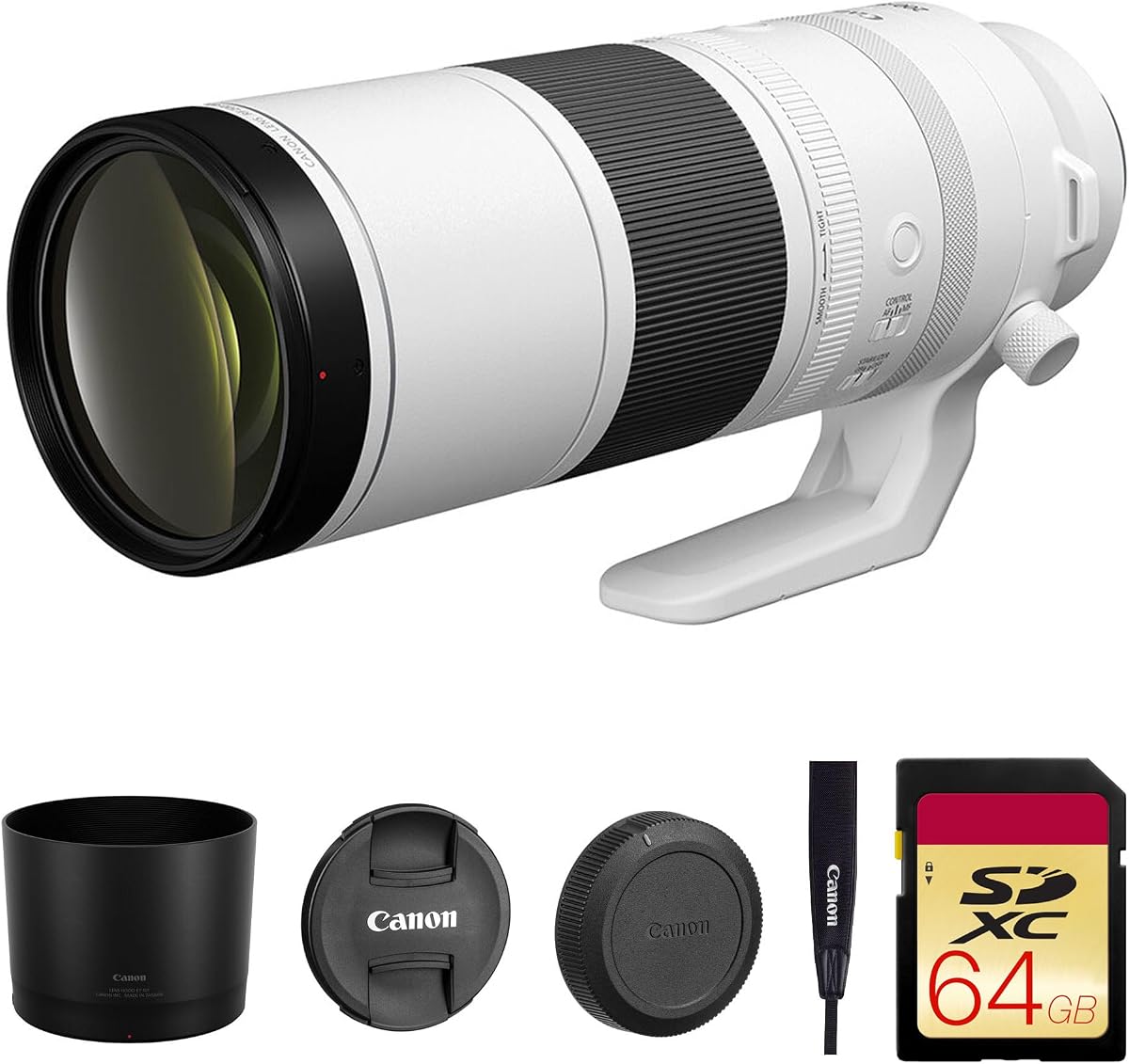
This RF mount lens offers an impressive 200 to 800mm range, making it ideal for capturing distant wildlife without intrusion. It holds a high rating and includes essential accessories like an SD card for immediate use.
We may earn a commission when you buy through this link, at no additional cost to you.
The built-in image stabilization ensures sharp handheld shots even at full zoom, while the USM autofocus locks onto fast-moving animals quietly. Its optical design maintains clarity across the entire zoom range, delivering professional results in the field.
While the aperture narrows at 800mm, the stabilization compensates for low light. The lens remains manageable in weight, allowing long shooting sessions without excessive fatigue compared to traditional super-telephoto options.
Photographers seeking the ultimate reach and quality for wildlife should prioritize this lens. It balances performance and portability better than most competitors, making it a top choice for serious nature enthusiasts and professionals.
The built-in stabilization system allows for sharp handheld images even at extreme focal lengths, reducing the need for a tripod in many situations.
From 200mm to 800mm, this lens provides unmatched flexibility to frame subjects tightly or include environmental context without changing equipment.
We may earn a commission when you buy through this link, at no additional cost to you.
As the world's first AF super-telephoto zoom reaching 800mm, this lens sets a new standard for wildlife photography. It delivers powerful capabilities with a comfortable design that encourages handheld shooting in the field.
We may earn a commission when you buy through this link, at no additional cost to you.
Its optimized optical design leverages the RF mount to maintain sharpness and color fidelity throughout the zoom range. The compact form factor makes it easier to carry on long hikes compared to heavier alternatives.
While it requires a compatible mirrorless body, the performance justifies the investment. The ability to use extenders adds even more reach for birds in flight or shy animals far away.
This lens is perfect for advanced users wanting professional-grade reach without bulk. It combines cutting-edge technology with practical handling, ensuring you capture fleeting moments with precision and confidence.
The autofocus system works seamlessly across the entire 200 to 800mm range, ensuring you never miss a shot due to focus lag.
Advanced glass elements reduce aberrations, providing crisp details and vibrant colors even in challenging lighting conditions.
We may earn a commission when you buy through this link, at no additional cost to you.
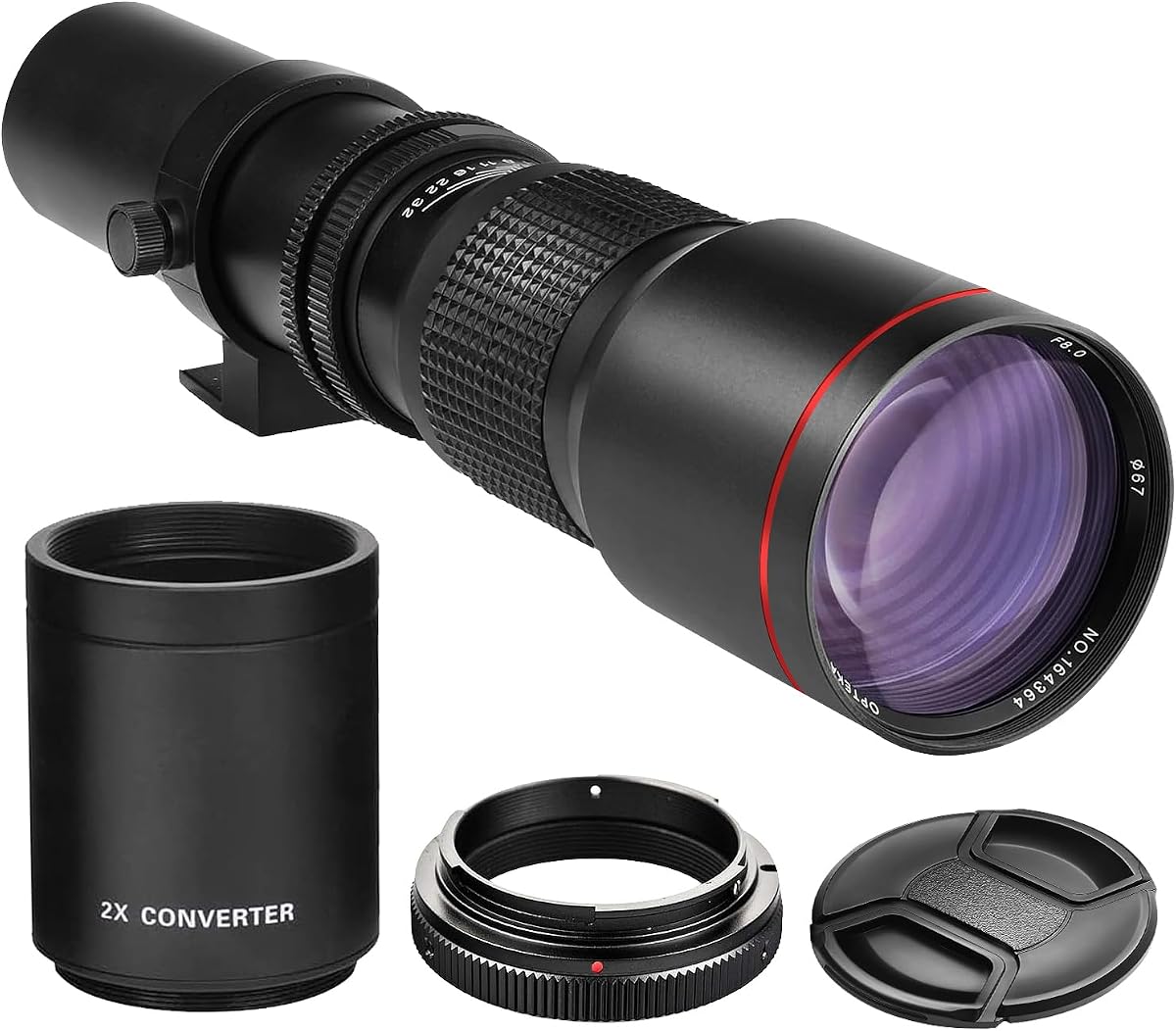
This lens offers incredible reach for its price, making it accessible for beginners or those on a tight budget. It provides a 500mm to 1000mm focal range ideal for capturing distant subjects like birds or mammals.
We may earn a commission when you buy through this link, at no additional cost to you.
Built with multi-coated optical glass, it delivers clear images despite being a manual lens. The EF-Mount compatibility ensures it works with a wide range of Canon DSLR cameras without needing adapters.
Manual focus requires patience and steady hands, but it grants full creative control. The 2X teleconverter doubles reach to 1000mm, offering unique opportunities for extreme close-ups of wildlife.
Ideal for hobbyists learning telephoto techniques, this lens proves you don't need to spend thousands to get started. It remains a reliable companion for outdoor adventures where budget is a primary concern.
For less than many entry lenses, you get access to serious focal lengths that would otherwise require a much larger investment.
The manual focus ring allows you to fine-tune your shots precisely, which can be advantageous for static wildlife subjects.
We may earn a commission when you buy through this link, at no additional cost to you.
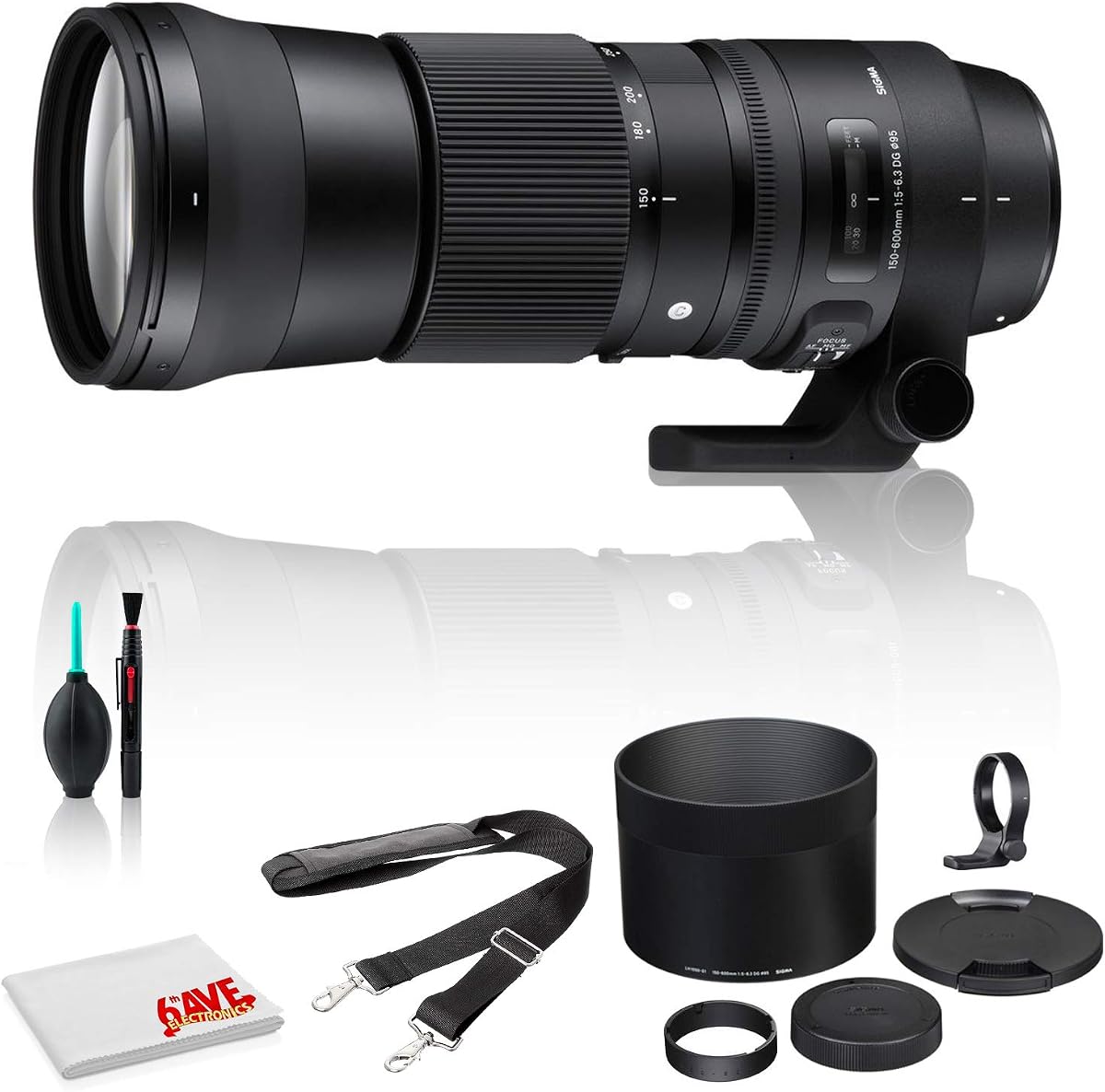
Sigma's Contemporary lens strikes a great balance between performance and price for Canon DSLR users. It covers a broad range from 150 to 600mm, making it versatile for various wildlife scenarios and distances.
We may earn a commission when you buy through this link, at no additional cost to you.
The Hyper Sonic Motor ensures quick and quiet focusing, essential for capturing moving animals without startling them. Optical stabilization helps reduce shake, improving success rates when shooting handheld in the field.
While heavier than some mirrorless alternatives, it remains manageable for most users. The included cleaning kit adds practical value, ensuring your gear stays protected and functional during outdoor trips.
This lens is a strong contender for those seeking a robust super-telephoto zoom without breaking the bank. It offers reliable performance and durability that stands up to regular outdoor use and changing environments.
The 150 to 600mm range provides flexibility to shoot both distant animals and closer nature scenes without changing lenses frequently.
Optical stabilization allows for sharper images in lower light or when using slower shutter speeds, enhancing overall image quality.
We may earn a commission when you buy through this link, at no additional cost to you.
This L-series lens is a classic choice for professionals who need reliable performance and rugged build. It offers a 100 to 400mm range with advanced optics that deliver sharp, high-contrast images for wildlife photography.
We may earn a commission when you buy through this link, at no additional cost to you.
Its fluorite and Super UD elements minimize aberrations, ensuring color accuracy and clarity. The optical stabilization reduces camera shake by up to two stops, improving handheld capability in various lighting conditions.
The lens supports optional teleconverters, extending its reach significantly when needed. A panning mode assists in tracking moving subjects, making it versatile for sports or active wildlife scenarios.
For users committed to the Canon DSLR system, this lens provides enduring quality. It remains a trusted tool for serious shooters who prioritize optical excellence and durability in their equipment choices.
High-end glass elements reduce chromatic and spherical aberrations, resulting in superior image quality even at extreme magnifications.
Built to withstand outdoor rigors, the lens features a rotating tripod collar and sealed elements for reliable performance in the field.
We may earn a commission when you buy through this link, at no additional cost to you.
This lens offers an extraordinary 420 to 1600mm zoom range, providing unmatched reach for distant wildlife on a budget. It is designed for Canon DSLR users seeking extreme magnification without professional costs.
We may earn a commission when you buy through this link, at no additional cost to you.
The HD optical coating enhances clarity and reduces flare, ensuring crisp photos even in bright sunlight. The built-in teleconverter doubles power to 1600mm, allowing you to capture subjects previously out of reach.
Manual control gives you full command over the shot, though it requires practice. Its lightweight design compared to prime super-telephotos makes it easier to carry during long outdoor excursions.
Ideal for casual nature photographers or those wanting to experiment with extreme focal lengths, this lens brings distant subjects closer. It is a practical tool for learning telephoto techniques and enjoying wildlife from afar.
With a range extending to 1600mm, you can capture details from a distance that most other lenses simply cannot achieve.
This lens proves that high reach does not always require a high price tag, making telephoto photography accessible to more people.
We may earn a commission when you buy through this link, at no additional cost to you.
Designed for mirrorless shooters, this lens offers a compact and lightweight option for wildlife photography. Its 100 to 400mm range is versatile for various subjects, from birds to mammals in natural habitats.
We may earn a commission when you buy through this link, at no additional cost to you.
Optical stabilization up to 5.5 stops ensures sharp images even in low light or when shooting handheld. The Nano USM autofocus delivers fast, smooth, and quiet performance, perfect for not spooking wildlife.
The small form factor makes it easy to carry during long hikes, reducing fatigue significantly. It pairs well with EOS R series cameras featuring IBIS, enhancing overall stabilization for steady shots in the field.
This lens is ideal for travelers or hikers who need quality without bulk. It balances portability with performance, making high-quality telephoto photography accessible to a wider audience of nature enthusiasts.
Its small size makes it easy to transport on outdoor adventures, allowing you to focus on photography rather than carrying heavy gear.
With up to 5.5 stops of shake correction, you can capture sharp images in challenging conditions without needing a tripod.
We may earn a commission when you buy through this link, at no additional cost to you.
This is a classic entry-level lens for Canon SLR users wanting to try telephoto photography. With a 75 to 300mm range, it provides basic reach for wildlife without the cost of higher-end optics.
We may earn a commission when you buy through this link, at no additional cost to you.
Its lightweight design makes it easy to carry around, perfect for casual shooters or beginners learning the basics of zooming. The improved zoom mechanism ensures smooth transitions between focal lengths.
While it lacks stabilization, the low price and portability make it a practical starter tool. It helps photographers understand framing and focus requirements before investing in more advanced equipment.
Ideal for those just starting out or needing a backup lens, this option delivers decent results for its price. It remains a popular choice for budget-conscious photographers exploring wildlife photography for the first time.
This lens offers an affordable entry point into telephoto photography, allowing beginners to learn without financial strain.
Weighing only 16.8 ounces, it is one of the lightest options available, reducing strain during long shooting sessions.
We may earn a commission when you buy through this link, at no additional cost to you.
Designed for Nikon users, this lens delivers a solid 200 to 500mm range with a constant f/5.6 aperture throughout. It is a favorite among wildlife photographers for its reliability and optical performance.
We may earn a commission when you buy through this link, at no additional cost to you.
The Silent Wave Motor ensures quick and quiet focusing, essential for active wildlife. Vibration Reduction provides up to 4.5 stops of stabilization, allowing for sharp handheld shots in varied conditions.
The bundle includes essential accessories like filters and cleaning kits, offering added value. A dedicated Sport Mode helps track fast-moving subjects, ensuring you don't miss action shots in dynamic environments.
This lens is excellent for serious Nikon shooters needing reach and stability. Its balanced design and strong optical quality make it a top choice for capturing wildlife with precision and clarity in natural settings.
Maintaining f/5.6 across the entire zoom range ensures consistent exposure and performance as you zoom in on distant subjects.
The VR system significantly reduces camera shake, enabling sharper images even at high magnifications without a tripod.
We may earn a commission when you buy through this link, at no additional cost to you.
This renewed version of the popular entry-level lens offers a budget-friendly way to access telephoto capabilities. It retains the 75 to 300mm range, ideal for beginners or those needing a secondary lens for travel.
We may earn a commission when you buy through this link, at no additional cost to you.
As a renewed item, it undergoes testing to ensure it functions like new, often at a significantly lower price than brand-new options. This makes high-quality optics accessible to more photographers on a strict budget.
The DC autofocus motor provides reliable focus speed for static subjects. Its lightweight build ensures it doesn't add much bulk to your camera bag, keeping you agile in outdoor environments.
Ideal for budget-conscious photographers, this lens delivers essential telephoto performance without extra costs. It is a smart choice for those wanting to explore wildlife photography while managing their financial resources effectively.
Buying renewed allows you to access trusted Canon optics at a fraction of the cost, ideal for testing the waters.
Verified to work like new, this lens offers consistent performance for casual shooters and beginners alike.
We may earn a commission when you buy through this link, at no additional cost to you.
Selecting the right lens involves balancing several critical factors to ensure you capture clear, detailed images without straining your budget or physical endurance.
Focal length determines how close distant subjects appear in your frame. For wildlife, lenses starting at 200mm and reaching 600mm or more are generally recommended to frame animals tightly without encroaching on their space.
Prioritize lenses that extend to 400mm or beyond to ensure you have enough reach for most wildlife scenarios. Longer ranges like 600mm to 800mm offer extra flexibility for birds or shy animals far away.
Image stabilization reduces camera shake, which is critical at long focal lengths where small movements blur images. Look for lenses offering at least 3 to 5 stops of stabilization to enable sharp handheld shooting.
Stabilization allows faster shutter speeds in low light and reduces fatigue during long sessions. It is an essential feature for wildlife photography where tripods are often impractical or slow to deploy.
Wildlife moves quickly, so a fast autofocus system is necessary to lock onto subjects instantly. Silent motors, like USM or SWM, prevent scaring animals, ensuring natural behavior during the shoot.
Choose lenses with responsive AF tracking to follow active subjects. Quiet operation preserves the peace of the environment, making it ideal for sensitive or easily startled species.
Larger apertures (lower f-numbers) let in more light, improving performance in shade or dawn/dusk conditions. However, super-telephoto lenses often have variable apertures that narrow as you zoom.
Consider if a constant aperture is vital for your needs. Variable apertures are lighter and cheaper but may limit shutter speeds at maximum zoom compared to fixed-aperture alternatives.
Outdoor shoots expose gear to moisture, dust, and temperature shifts. Weather-sealed construction protects internal elements, ensuring reliability in rain or dusty environments.
Invest in lenses with robust build quality to withstand frequent handling. A durable lens pays off over time, reducing repair needs and maintaining performance in rugged terrain.
Long lenses can be heavy, causing fatigue during extended hikes. Evaluate the weight against your physical capability and the type of shooting you do most often.
Lighter models encourage more spontaneous shooting and ease of transport. Balance optical power with manageable weight to ensure you carry your gear consistently without strain.
Ensure the lens matches your camera mount, such as EF, RF, or Nikon F. Adapters can bridge gaps but may limit autofocus or stabilization features.
Check system support for teleconverters if you plan to extend reach further. Compatibility guarantees full feature functionality, including autofocus speed and image stabilization integration.
Prices vary widely from budget manual options to professional optics. Define your spending limit before searching to narrow choices and avoid unnecessary overspending.
Consider renewed or older models if new gear exceeds your budget. Many pre-owned lenses maintain excellent quality at reduced prices, offering value without sacrificing performance.
Mount the lens securely on your camera and verify the autofocus mode is set appropriately for moving subjects. Practice using the zoom ring smoothly to avoid sudden movements that may scare wildlife or blur the image.
Clean the front and rear glass regularly using a microfiber cloth and lens fluid designed for optics. Keep the lens cap on when not in use to prevent scratches or dust accumulation in your camera bag.
Store the lens in a cool, dry place to prevent mold or internal damage. If shooting in wet conditions, wipe the exterior immediately afterward and allow it to dry fully before storing away.
For most wildlife scenarios, a focal length starting at 300mm and extending to 600mm provides a good balance between reach and manageability. For distant birds or shy animals, 800mm or more may be necessary to fill the frame effectively.
While a tripod stabilizes heavy lenses, many modern lenses with image stabilization allow for sharp handheld shots. If the lens weighs over five pounds, a monopod offers a lighter alternative for stability without full tripod weight.
Yes, many telephoto lenses support 1.4x or 2x teleconverters to extend reach. Check manufacturer compatibility first, as extenders may reduce light and autofocus performance, especially at wider apertures.
Autofocus is generally superior for fast-moving animals due to speed and accuracy. However, manual focus can be helpful for static subjects or low-light situations where autofocus struggles to lock on reliably.
Use weather-sealed lenses when possible and invest in rain covers or protective bags. Always cap the lens when not in use, and wipe off moisture or dirt immediately after exposure to prevent damage or mold growth.
Newer mirrorless lenses often offer lighter weight and advanced stabilization but may require compatible bodies. Older DSLR lenses provide excellent optical quality and affordability, especially if you still use DSLR systems.
Choosing the best Camera Lens for Long Distance Wildlife depends on your specific needs, budget, and camera system. The top picks offer a range of features from lightweight convenience to professional-grade reach and clarity.
Prioritize lenses with strong stabilization and fast autofocus to capture clear images of distant subjects. Consider weight and durability if you plan on hiking often or shooting in harsh outdoor environments regularly.
Prices and availability fluctuate frequently, so verify current listings before purchasing. Whether you select a premium option or a budget model, the right lens will enhance your ability to capture stunning wildlife moments.