
Canon RF24-70mm F2.8 L IS USM Lens
4.8Editor score
High image quality with f/2.8 aperture
Optical image stabilization up to 5 stops
Nano USM autofocus for smooth operation
Compatible with Canon EOS R series cameras
This comprehensive guide compares the top camera lenses for product photography, analyzing sharpness, aperture, and build quality to help you choose the best
Selecting the right camera lens for product photography is crucial for capturing crisp, detailed images that drive sales. A high-quality lens ensures your products look professional, with accurate colors and sharp edges that highlight textures and features effectively.
We evaluated ten top-rated lenses based on optical performance, autofocus speed, build quality, and versatility for various shooting scenarios. Our analysis covers everything from versatile zooms to specialized primes, ensuring you find the perfect tool for your specific photography setup.
Each pick in this list highlights key strengths and potential limitations to help you make an informed decision. Remember that prices and availability can change frequently, so always verify the latest details before purchasing your new photography gear.
4.8Editor score
4.7Editor score

4.8Editor score
This side-by-side comparison evaluates all ten lenses based on critical specifications like focal length, aperture, stabilization, and compatibility to help you quickly identify the best option for your product photography requirements.


The Canon RF24-70mm F2.8 L IS USM Lens stands out as a top-tier choice for product photography, earning an impressive 4.8 rating from users. Its high image quality and bright aperture make it ideal for capturing detailed product shots with clarity and depth.
We may earn a commission when you buy through this link, at no additional cost to you.
This lens excels in versatility, offering a zoom range that covers wide-angle to short telephoto perspectives. The optical image stabilization provides up to 5 stops of shake correction, which is invaluable for handheld shooting or when working in varying lighting conditions without a tripod.
While the price is a significant investment, the build quality and optical performance justify the cost for professionals. The main trade-off is the weight, which might be a consideration for extended handheld sessions, but the stabilization helps mitigate camera shake effectively.
Photographers seeking a reliable all-around lens for studio or on-location product shoots should strongly consider this model. Its compatibility with Canon mirrorless cameras ensures seamless integration into modern digital workflows.
The 24-70mm range allows you to capture everything from wide product arrangements to close-up details without changing lenses, saving time during shoots.
The f/2.8 aperture lets in ample light, enabling faster shutter speeds and lower ISO settings for cleaner images in dimmer environments.
We may earn a commission when you buy through this link, at no additional cost to you.
The Canon EF 50mm f/1.8 STM Lens is a fantastic entry-level option, widely praised for its optical quality despite its budget-friendly price. With a 4.8 rating, it delivers sharp images and a pleasing depth of field perfect for product photography.
We may earn a commission when you buy through this link, at no additional cost to you.
Its f/1.8 aperture allows for excellent light gathering and background blur, which helps isolate products from distracting backgrounds. The stepping motor ensures smooth and quiet autofocus, making it suitable for both stills and video content creation.
The main limitations are its fixed focal length and plastic construction, which may not withstand heavy professional use as well as higher-end lenses. However, for photographers on a budget or those wanting to learn prime lens techniques, it offers exceptional value.
This lens is ideal for beginners or anyone needing a lightweight, sharp prime for product shots. It pairs well with Canon EOS DSLR cameras and is a great addition to any entry-level kit.
Using a prime lens encourages creative composition and movement, helping photographers develop skills essential for professional product work.
Despite its low cost, the lens produces images that rival more expensive options, making professional results accessible to all.
We may earn a commission when you buy through this link, at no additional cost to you.
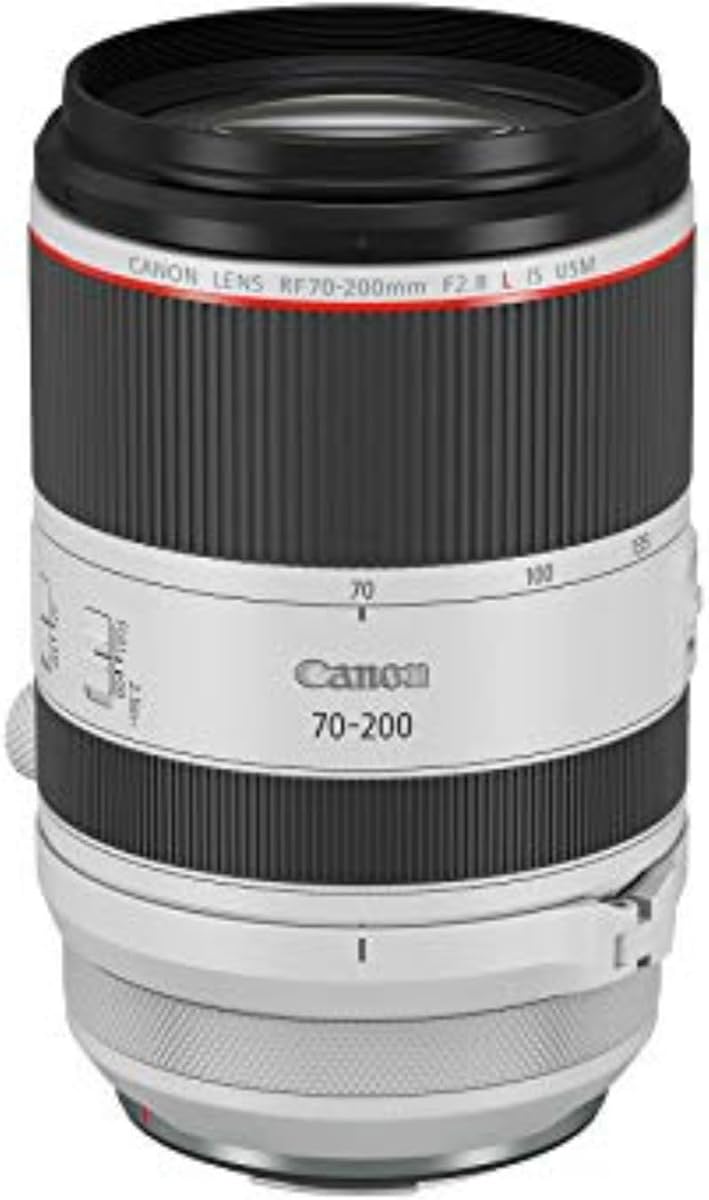
The Canon RF70-200mm F2.8 L IS USM Lens earns Editor's Choice for its balance of performance and portability. Rated 4.7 by users, it delivers high image quality with a bright aperture that shines in challenging lighting conditions.
We may earn a commission when you buy through this link, at no additional cost to you.
Its telephoto zoom range is perfect for capturing products from a distance or isolating details without being too close. The optical image stabilization provides up to 5 stops of shake correction, ensuring sharp images even at slower shutter speeds.
While the minimum focus distance of 2.3 feet may limit extreme close-up work, it remains highly versatile for general product photography. The dual Nano USM ensures quick and quiet autofocus, which is beneficial for video or rapid shooting sequences.
Photographers needing a professional telephoto zoom for product or event photography will find this lens indispensable. It is fully compatible with Canon full-frame mirrorless cameras, offering seamless integration into modern setups.
The 200mm end allows you to frame tight shots of specific product features while maintaining sharp focus and background separation.
The 5-stop stabilization system ensures crisp images even when shooting handheld in lower light without needing a tripod.
We may earn a commission when you buy through this link, at no additional cost to you.
The EF 85mm f1.8 Portrait Lens MF offers a unique manual focus experience for photographers who value precision and control. With a rating of 4.1, it provides superb image quality and charming bokeh suitable for artistic product shots.
We may earn a commission when you buy through this link, at no additional cost to you.
Its manual focus design allows for exact adjustments, which can be beneficial when photographing stationary products where autofocus might hunt. The 6 rounded aperture blades ensure smooth background blur, enhancing the subject's prominence in the frame.
However, the lack of autofocus means you must manually adjust focus for each shot, which can be time-consuming. Additionally, some camera models may require enabling a 'release shutter without lens' option to avoid error messages.
This lens is best suited for photographers who enjoy manual operation and seek a budget-friendly way to achieve professional-looking results. It works with a wide range of Canon DSLRs, making it a versatile addition for those with compatible gear.
Manual focusing allows you to pinpoint exact focus points on product details, ensuring critical areas are sharp.
The rounded aperture blades create soft, dreamy background blur that helps your products stand out professionally.
We may earn a commission when you buy through this link, at no additional cost to you.
The Canon RF50mm F1.8 STM Lens is designed specifically for EOS R series mirrorless cameras, delivering excellent performance in a compact package. Rated 4.7, it offers outstanding color balance and minimizes ghosting and flare effectively.
We may earn a commission when you buy through this link, at no additional cost to you.
Its f/1.8 aperture provides ample light for low-light shooting and allows for creative background blur. The stepping motor ensures smooth and quiet continuous autofocus during video recording, making it versatile for hybrid content creation.
The control ring allows for direct setting changes, enhancing workflow efficiency. However, the lack of image stabilization means you will need to use a tripod or higher shutter speeds in dim conditions to avoid camera shake.
This lens is perfect for photographers seeking a lightweight, sharp prime for daily product photography. Its compatibility with the EOS R system makes it an excellent choice for mirrorless shooters looking to expand their lens collection.
Tailored for Canon EOS R cameras, this lens leverages the latest technology for enhanced performance and seamless integration.
The customizable control ring allows you to adjust aperture or exposure directly, speeding up your workflow during shoots.
We may earn a commission when you buy through this link, at no additional cost to you.
The Sigma 135mm F1.8 DG HSM ART is a masterpiece of optical engineering, handcrafted for photographers who demand the highest quality. While specific ratings vary, it is renowned for its exceptional sharpness and stunning compression effects.
We may earn a commission when you buy through this link, at no additional cost to you.
Its large 1.8 aperture allows for significant creative control over imagery, making it ideal for isolating product details. The dust and splash-proof mount ensures durability and performance even in challenging shooting environments.
The 135mm focal length provides a unique perspective that flattens features and compresses background elements beautifully. However, its size and weight make it less ideal for travel or extended handheld use compared to lighter options.
Professional photographers seeking unparalleled image quality for product or event work will appreciate this lens. It is best suited for studio settings or situations where a tripod is available to support its weight.
Each lens is individually evaluated and crafted in Japan, ensuring consistent top-tier performance and build quality.
The 135mm focal length offers a distinct view that compresses the scene, creating a professional and polished look.
We may earn a commission when you buy through this link, at no additional cost to you.
The Canon EF 75-300mm f/4-5.6 III Telephoto Zoom Lens offers a versatile range for photographers needing reach without a high price tag. Available as a renewed option, it provides a cost-effective way to access telephoto capabilities.
We may earn a commission when you buy through this link, at no additional cost to you.
Its 75-300mm range allows you to capture distant subjects or zoom in on specific product details from afar. The DC autofocus motor ensures decent performance, though it may be slower than newer USM alternatives in low light.
The variable aperture means less light enters the lens at the telephoto end, which may require higher ISO or slower shutter speeds. Without stabilization, using a tripod is recommended for sharp images, especially at longer focal lengths.
This lens is suitable for beginners or those needing a secondary telephoto lens for occasional use. Its lightweight design and reasonable cost make it a practical choice for hobbyists and budget-conscious photographers.
Up to 300mm allows you to frame shots from a distance, minimizing disturbance to the product or setting.
Choosing a renewed model provides significant savings while still delivering reliable performance for everyday photography.
We may earn a commission when you buy through this link, at no additional cost to you.
The Xenvo Pro Lens Kit provides an accessible entry point for smartphone product photography. Rated 4.1, it includes macro and wide angle lenses along with an LED light to enhance your mobile shooting capabilities.
We may earn a commission when you buy through this link, at no additional cost to you.
The TruView 0.45x wide angle lens captures 45% more of the scene, while the Clarus 15x macro lens reveals intricate details. The rechargeable LED light helps overcome poor lighting conditions often found in casual shooting environments.
While this kit lacks the optical power of dedicated camera lenses, it offers immense convenience and portability. The lens clip is designed for strong grip, though you should ensure it is secure before shooting to avoid movement.
This kit is ideal for social media content creators, hobbyists, or anyone needing quick product shots on the go. Its compact nature and included case make it a practical tool for everyday mobile photography.
With both macro and wide angle options, you can capture everything from full product setups to intricate details using your phone.
The GlowClip LED light provides warm, continuous illumination that significantly improves image quality in dim settings.
We may earn a commission when you buy through this link, at no additional cost to you.
The Canon EOS Rebel T7 DSLR Camera kit offers a complete package for beginners looking to start product photography. With a 4.7 rating, it delivers solid performance with a 24.1 megapixel CMOS sensor for sharp images.
We may earn a commission when you buy through this link, at no additional cost to you.
The included EF-S 18-55mm and EF 75-300mm lenses cover a wide range of focal lengths, allowing flexibility for various product shots. Built-in Wi-Fi and NFC make it easy to transfer images to your phone for quick sharing or editing.
While the kit lenses are designed for general use, they can produce good results for standard product photography with proper technique. However, upgrading to dedicated lenses may be necessary for professional-grade detail or low-light work.
This kit is perfect for aspiring photographers who want an all-in-one solution without a large investment. Its intuitive controls and connectivity features make it a user-friendly choice for learning the basics of photography.
Getting both a camera and two lenses in one box saves time and money, providing everything needed to start shooting immediately.
Built-in Wi-Fi allows you to instantly transfer photos to your mobile device for faster workflow and sharing.
We may earn a commission when you buy through this link, at no additional cost to you.
The Canon EF 200mm f/2.8L II USM Telephoto Fixed Lens is a classic choice for photographers seeking a sharp, reliable telephoto. Rated 4.6, it continues to deliver high-quality images for product and portrait work.
We may earn a commission when you buy through this link, at no additional cost to you.
Its 200mm focal length provides excellent compression and isolation, making it ideal for detailed product photography. The f/2.8 aperture ensures good light gathering and depth of field control, even in indoor studio settings.
The L-series build guarantees durability and optical excellence, though the fixed focal length may limit versatility compared to zooms. It is also larger and heavier than newer alternatives, so planning for a tripod or steady surface is wise.
Photographers valuing optical sharpness and durability will find this lens a reliable workhorse. It is particularly suitable for studio environments where a fixed focal length can be advantageous for consistent framing.
As an L-series lens, it offers superior construction and optics designed to withstand professional use over time.
The 200mm focal length provides a clean, compressed look that highlights products beautifully against clean backgrounds.
We may earn a commission when you buy through this link, at no additional cost to you.
Selecting the right lens involves considering focal length, aperture, stabilization, and compatibility to ensure your product photos meet quality standards.
Focal length determines the angle of view and magnification, which directly impacts how your product appears in the frame. For product photography, standard primes like 50mm or 85mm are ideal for natural proportions, while macro lenses allow for extreme close-ups of textures. Telephoto lenses such as 70-200mm offer compression to isolate details without distortion.
Choose a focal length that matches your typical shooting distance and the level of detail you need to capture. Consider both prime and zoom options based on your need for flexibility versus optical quality.
Aperture controls the amount of light entering the lens and the depth of field. A wide aperture like f/1.8 or f/2.8 allows for better performance in low light and creates a pleasing background blur to isolate your product. Narrower apertures like f/8 or f/11 increase sharpness across the product if the entire item needs to be in focus.
Look for lenses with versatile aperture ranges that suit your shooting environment. A constant aperture zoom is beneficial if you often zoom in and out while maintaining consistent exposure.
Image stabilization minimizes camera shake, which is critical for maintaining sharpness in handheld shots or lower light conditions. This feature allows for slower shutter speeds without introducing blur, enhancing your ability to shoot without a tripod. However, in controlled studio environments with a tripod, stabilization may be less critical.
Prioritize stabilized lenses if you frequently shoot handheld or in varying lighting conditions. Check if your camera body also includes stabilization, as some systems combine both for even better results.
Build quality affects durability and weather resistance, which is important if you shoot in different environments. Lenses with metal mounts and sealed bodies protect against dust and moisture, ensuring longevity and reliable performance. The ergonomics of the focus and zoom rings also impact ease of use during extended sessions.
Invest in a lens with robust construction if you plan to use it frequently or travel with it. A well-built lens may cost more but will likely last longer and maintain performance over time.
Fast and accurate autofocus ensures you can quickly focus on your product without missing moments, especially for video content. Modern motor technologies like STM or USM provide smooth, silent focusing that is less distracting during recording. Manual focus options exist but require more time to achieve perfect sharpness.
Choose a lens with a reliable autofocus system if you shoot quickly or capture video. For stationary product shoots, manual focus might offer more precision, but speed remains advantageous.
Ensuring your lens matches your camera mount is essential for functionality and performance. DSLR lenses can often adapt to mirrorless bodies, but native mirrorless lenses generally offer better compatibility and features. Check if your camera system supports the lens features like electronic contacts or stabilization.
Verify compatibility before purchasing to avoid needing additional adapters or facing limitations. Using a native lens ensures full access to autofocus and communication features your camera supports.
Budget influences the quality and features available, but you don't always need the most expensive lens. Entry-level lenses can produce excellent results for learning and casual work, while professional options offer superior optics and durability. Weigh the cost against your needs to find the best value.
Look for renewed options or older models that may offer great value without sacrificing much performance. Remember that the best lens is the one that fits your workflow and budget effectively.
Proper handling begins with attaching the lens securely to your camera body to prevent damage to electrical contacts. Always use both hands when mounting or dismounting, and ensure caps are in place when not in use to protect glass elements from dust and scratches.
Regular cleaning maintains optical clarity, using a microfiber cloth and lens-safe cleaning solution for smudges. Avoid touching the glass with your fingers, and use a blower to remove dust before wiping to prevent scratching the surface during cleaning.
Store your lenses in a cool, dry place away from direct sunlight to prevent internal damage or condensation. Investing in a padded case or protective bag helps safeguard your investment during transport and storage, ensuring longevity.
For product photography, focal lengths between 50mm and 100mm are generally ideal as they provide natural proportions with minimal distortion. Macro lenses in this range allow for detailed close-ups. Telephoto options like 70-200mm work well for isolating details without getting too close to the subject.
A wide aperture such as f/1.8 or f/2.8 lets in more light, which is crucial for shooting in dim environments. It also enables a shallow depth of field to create background blur that helps your product stand out as the main focus of the image.
If you shoot entirely on a tripod in controlled studio lighting, image stabilization is less critical since the camera remains steady. However, it is helpful for handheld setups or when working in varied lighting conditions where stability might vary.
Many DSLR lenses can be adapted to mirrorless cameras using appropriate mount adapters, but performance may vary. Native mirrorless lenses usually offer better autofocus and optical performance specifically optimized for the shorter flange distance of mirrorless bodies.
Start by using a blower to remove dust particles gently without touching the glass. Then, use a soft microfiber cloth to wipe away smudges with minimal pressure. Only use specialized lens cleaning solution if necessary, and avoid household cleaners that may damage coatings.
Prime lenses have a fixed focal length and often offer better optical quality and wider apertures at a lower price. Zoom lenses provide flexibility to change focal lengths without switching lenses, which is convenient for varying composition but may compromise speed and aperture range.
Weather sealing protects your lens from dust and moisture, making it more durable in challenging environments. While not essential for studio work, it is valuable if you shoot outdoors or in conditions where humidity or dust might be present.
To minimize lens flare, use a lens hood to block stray light from hitting the front element. Adjust your shooting angle so light sources are not directly in front of the lens, and keep your lenses clean to prevent internal reflections.
Choosing the right lens depends on your specific needs, budget, and equipment. The Canon RF24-70mm F2.8 L IS USM offers premium versatility, while the Canon EF 50mm f/1.8 STM provides an affordable entry point. The Canon RF70-200mm F2.8 L IS USM stands out for its telephoto capabilities.
Prioritize lenses that offer sharpness, appropriate aperture, and reliable autofocus for your workflow. Consider whether you need zoom flexibility or prime quality, and always match the lens to your camera system for optimal performance.
Prices and availability can change, so verify current details before purchasing. Investing in a quality lens will enhance your product photography significantly, helping you create images that attract customers and improve sales.