
DZOFILM Pictor 50-125mm T2.8
5.0Editor score
Maintains Focus Across Zoom Range
Minimal Breathing for Smooth Operation
16-Slat Iris for Smooth Bokeh
This guide compares the top 10 Cine Lens options for filmmakers, covering optical quality, build, and performance to help you choose the right lens.
Choosing the right Cine Lens can transform your visual storytelling and elevate your production quality significantly. Professional filmmakers rely on these lenses for their consistent optical performance, precise manual controls, and cinematic aesthetic qualities that standard lenses cannot match.
We have analyzed ten top-rated Cine Lens options available in the market today. Our comparison focuses on optical construction, aperture range, build quality, mount compatibility, and overall value to help you make an informed decision for your specific camera setup.
Each pick below highlights key features, pros, and cons based on expert analysis and user feedback. Please note that prices and availability can change frequently, so verify the current details before making your final purchase decision online.
5.0Editor score
5.0Editor score

4.5Editor score
The following table provides a side-by-side comparison of all ten Cine Lens options evaluated in this guide. Use this overview to quickly identify key specifications and choose the best fit for your needs.


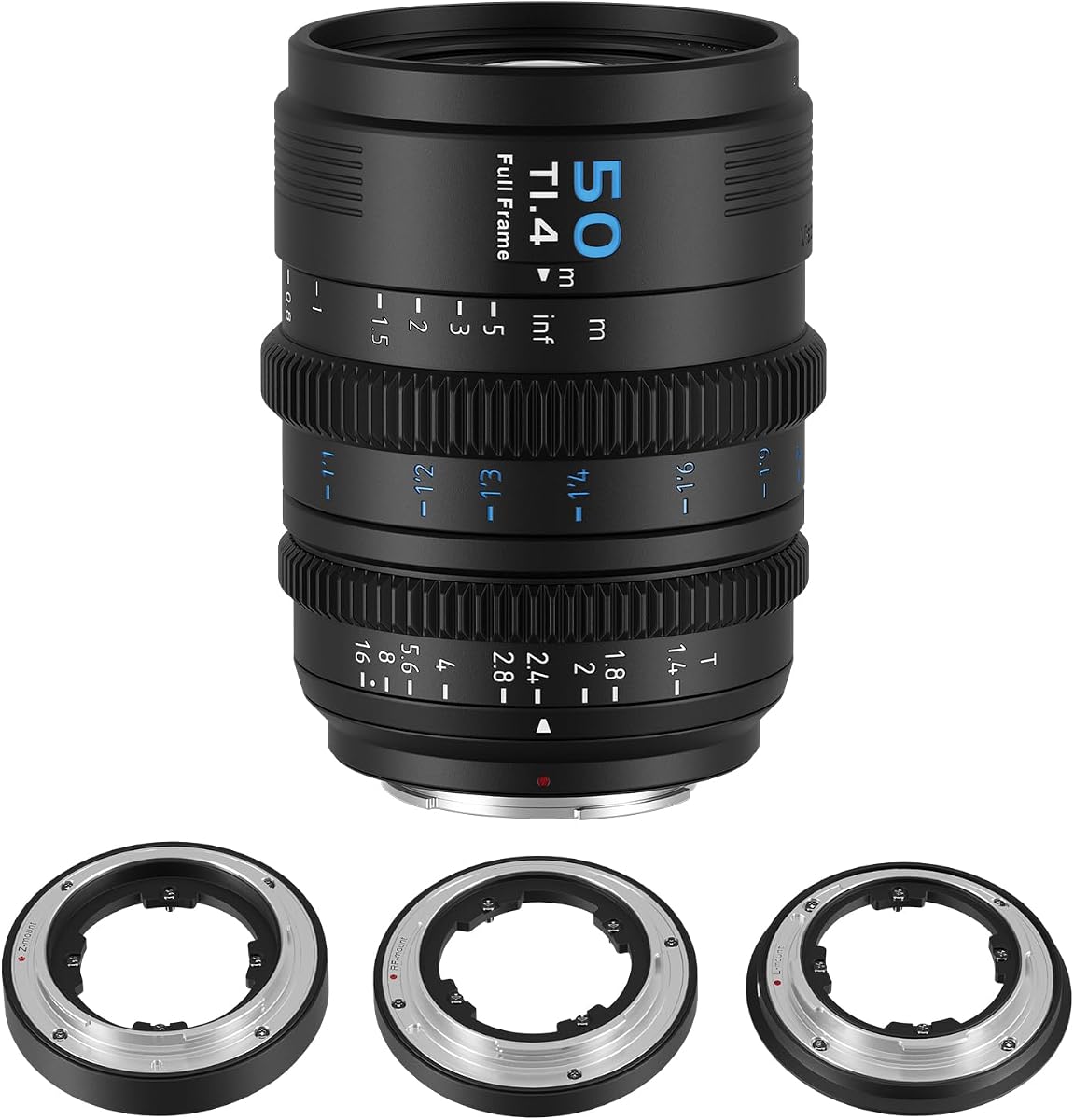


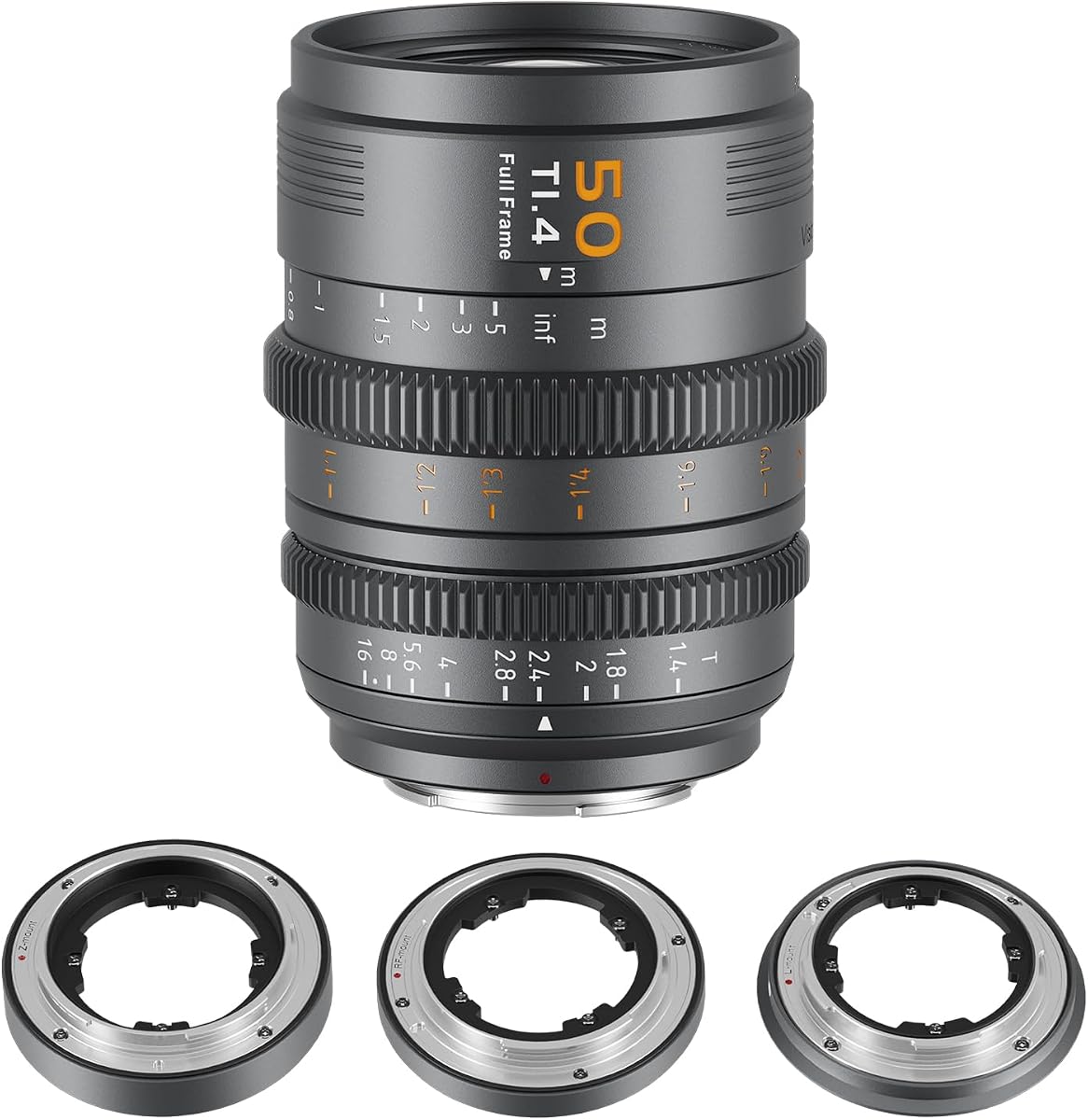
The SIRUI VP-1 Vision Prime 1 50mm T1.4 stands out as the top choice for filmmakers seeking versatility and optical excellence. With a perfect 5.0 rating, this lens delivers edge-to-edge sharpness and minimal aberrations, making it ideal for high-resolution projects. Its interchangeable mount system allows seamless switching between camera systems without compromising performance.
We may earn a commission when you buy through this link, at no additional cost to you.
Key strengths include its fast T1.4 aperture, which enables stunning low-light shooting and beautiful bokeh. The lens is engineered for 8K storytelling, utilizing aspherical elements and advanced glass to ensure pristine image quality. Its uniform design across the lineup ensures consistency when swapping lenses during production.
While it offers exceptional performance, the lens is limited to prime focal lengths and requires manual focusing. These trade-offs are acceptable given the weight savings and optical benefits. The compact aluminum alloy body makes it easy to stabilize for handheld or gimbal work.
This lens is perfect for independent filmmakers, documentarians, and travel videographers who need a reliable, high-quality prime. Its balance of optical performance, build quality, and mount flexibility makes it the best overall Cine Lens currently available.
The pre-installed E mount with user-interchangeable RF/Z/L mounts provides unmatched flexibility for multi-camera setups.
Advanced ED and HRI glass elements minimize distortion and chromatic aberrations for high-resolution filming.
We may earn a commission when you buy through this link, at no additional cost to you.
The DZOFILM Pictor 50-125mm T2.8 represents the pinnacle of premium cine zoom performance. Rated 5.0 by users, this lens maintains focus across its entire zoom range, which is critical for professional video production. Its parfocal design ensures that you can zoom in and out without needing to refocus, saving time on set.
We may earn a commission when you buy through this link, at no additional cost to you.
Its key strengths include minimal breathing, which keeps framing stable during zoom operations, and a 16-slat iris that produces smooth, circular bokeh. The build quality is robust, designed to withstand the rigors of professional use while remaining compatible with standard cine accessories. This makes it a reliable tool for high-end productions.
The higher price and additional weight are considerations for those on a budget or needing lightweight gear. However, the optical consistency and operational smoothness justify the investment for serious filmmakers. It bridges the gap between still photography zooms and true cinema lenses.
Ideal for commercial shoots, documentaries, and narrative filmmaking where zoom versatility is essential. This lens delivers professional results with the reliability and performance expected from premium cine equipment.
Maintains focus across the entire zoom range for uninterrupted shooting and efficient workflow on set.
Minimal breathing and consistent aperture ensure stable framing and exposure during dynamic shots.
We may earn a commission when you buy through this link, at no additional cost to you.
The Rokinon Cine DS DS85M-C 85mm T1.5 offers exceptional value for filmmakers on a budget. With a solid 4.5 rating, it provides full frame coverage and a bright T1.5 aperture, making it accessible for those new to cine lenses. The unified gear and aperture positions allow easy integration with other Rokinon DS lenses in a kit.
We may earn a commission when you buy through this link, at no additional cost to you.
Its strengths lie in its optical performance relative to price, featuring an 8-blade iris for attractive bokeh and a minimum focusing distance of 3.6 feet. The color matching across the DS line ensures consistent look across multiple lenses. This makes it a practical choice for building a versatile lens kit without overspending.
The build utilizes more plastic components compared to higher-end models, and it is designed for manual focus only. These trade-offs are acceptable given the significant cost savings. It is lightweight enough for most setups but may feel less premium than metal-bodied options.
This lens is perfect for entry-level filmmakers, students, or hobbyists looking to upgrade from kit lenses. It delivers professional results at a fraction of the cost of competing options, making it the best budget Cine Lens on the market.
Unified gear and aperture positions ensure seamless workflow when using multiple Rokinon DS lenses together.
An 8-blade iris creates smooth, pleasing out-of-focus backgrounds for cinematic portraits and close-ups.
We may earn a commission when you buy through this link, at no additional cost to you.
The ROKINON CINE DS T1.5 Cinema Lens Kit offers a comprehensive solution for filmmakers needing a range of focal lengths. With a high 4.9 rating, this kit includes 24mm, 35mm, 50mm, and 85mm lenses, all color matched and designed for Canon EF mounts. The de-clicked aperture ring allows for smooth exposure adjustments during shooting.
We may earn a commission when you buy through this link, at no additional cost to you.
Key strengths include the dual side focus and T-stop scales, which enhance usability and precision. The unified gear positions across the kit make it easy to switch lenses quickly without adjusting rigging. This kit is designed to support professional workflows while maintaining affordability for independent creators.
The kit is limited to Canon EF mounts and lacks weather sealing, which may be a concern for outdoor shoots. However, the optical quality and consistency across the lenses make up for these limitations. It is a practical investment for anyone needing multiple primes without buying separately.
Best for filmmakers building a complete cine setup on a budget. This kit provides all the essential focal lengths and professional features needed for high-quality video production with minimal hassle.
Consistent color performance across all four lenses ensures seamless transitions and uniform image tone.
T-Stop scales and de-clicked aperture rings provide precise control for cinematic exposure adjustments.
We may earn a commission when you buy through this link, at no additional cost to you.
The SIRUI Night Walker 35mm S35 is engineered for low-light filming with its impressive T1.2 aperture. Rated 4.4, this lens captures more light in challenging conditions, reducing the need for high ISO settings and resulting in cleaner footage. The fast aperture also creates a shallow depth of field for expressive subject separation.
We may earn a commission when you buy through this link, at no additional cost to you.
Its strengths include a compact 500g aluminum body that is sturdy yet portable, making it ideal for handheld or gimbal work. The optical performance is outstanding, with sharpness even at maximum aperture and well-controlled aberrations. The premium design adds a professional aesthetic to your setup.
The lens is limited to S35 coverage, meaning it does not cover full-frame sensors without cropping. It is also manual focus only, which requires practice but offers creative control. These limitations are acceptable for users prioritizing low-light performance and portability.
Perfect for documentary filmmakers, travel vloggers, and anyone shooting in low-light environments. This lens combines speed, lightness, and optical quality to deliver cinematic results in any setting.
The T1.2 aperture allows for pure low noise night scenes without needing excessive ISO or additional lighting.
At just 500g, the aluminum housing ensures stability and ease of use during handheld filming.
We may earn a commission when you buy through this link, at no additional cost to you.
The SIRUI Night Walker 24mm S35 RF offers a versatile perspective for environmental storytelling and dynamic shots. With a 4.3 rating, its wide 24mm focal length is ideal for landscapes, interiors, and street scenes. The T1.2 aperture ensures it performs well in low-light conditions while maintaining beautiful background separation.
We may earn a commission when you buy through this link, at no additional cost to you.
Its key strengths include a 0.3m close focus, enabling immersive detail shots and creative compositions. The 270-degree focus rotation allows for smooth, precise manual focusing, which is crucial for video production. The RF mount compatibility makes it a practical choice for modern mirrorless setups.
This lens is designed for S35 sensors, which may limit use with full-frame cameras. It also requires manual focusing, which may not suit all shooting styles. However, the optical quality and flexibility make it a strong contender for wide-angle needs.
Ideal for videographers needing a wide prime for travel, documentary, or street photography. This lens balances focal versatility with bright aperture performance for compelling cinematic storytelling.
Focus as close as 0.3m to capture subjects with greater depth and visual impact.
The 270-degree rotation enables repeatable and smooth manual focusing for professional video production.
We may earn a commission when you buy through this link, at no additional cost to you.
The SIRUI VP-1 Vision Prime 1 50mm T1.4 is a versatile option for filmmakers needing a standard prime across multiple mounts. With a 4.0 rating, it delivers edge-to-edge sharpness and excellent low-light performance thanks to its T1.4 aperture. The interchangeable mount system adds significant value for those switching between camera brands.
We may earn a commission when you buy through this link, at no additional cost to you.
Key strengths include its 8K-optimized optics and uniform design, which ensures consistency when building a kit. The compact 600g weight makes it easy to stabilize for handheld work or gimbal use. It is designed for seamless professional filmmaking workflows without compromising image quality.
The lower user rating may indicate some variability in manufacturing or user experience compared to other primes. Manual focus is required, which limits use for those needing autofocus. However, the optical and mechanical features remain compelling for manual shooters.
Best for multi-system filmmakers looking for a reliable standard prime. This lens provides the flexibility to switch mounts while maintaining high optical standards.
Seamlessly switch between camera systems with user-interchangeable RF/Z/L mounts alongside the E mount.
Optical design minimizes distortion and chromatic aberrations for high-resolution filmmaking.
We may earn a commission when you buy through this link, at no additional cost to you.
The SIRUI Night Walker 24mm S35 M43 is a top-rated choice for Micro Four Thirds camera users. With a 4.9 rating, it delivers exceptional optical performance with a T1.2 aperture that excels in low-light situations. The lens is optimized for S35 coverage, making it a strong match for MFT and similar sensors.
We may earn a commission when you buy through this link, at no additional cost to you.
Its strengths include a lightweight 500g aluminum body that maintains sturdiness and portability. The optical design achieves perfect sharpness at maximum aperture and controlled aberrations, ensuring professional image quality. The aesthetic design adds a premium feel to any camera rig.
The lens is limited to the M4/3 mount and requires manual focusing, which may limit its use with other systems. However, the high user satisfaction and optical quality make it a reliable option for MFT shooters. It balances performance and portability effectively.
Ideal for BMPCC and GH series users seeking a fast wide-angle prime. This lens brings cinema-level optics and build quality to smaller sensor cameras.
T1.2 aperture delivers pure low noise night scenes and expressive shallow depth of field.
Strong aluminum housing protects internal elements while keeping weight low for handheld use.
We may earn a commission when you buy through this link, at no additional cost to you.
The Rokinon DSX85 DSX 85mm T1.5 offers a compelling telephoto option for portrait and detail work. Rated 4.7, it combines optical excellence with affordability, featuring a T1.5 aperture and 9-blade iris for beautiful bokeh. The lens is designed for full-frame coverage on Canon EF mounts.
We may earn a commission when you buy through this link, at no additional cost to you.
Its key strengths include ultra multi-coated glass that reduces flare and ghosting, ensuring clear images in various lighting. The aperture range of T1.5 to T34 provides flexibility for different creative needs. This lens is a practical addition to any cine kit seeking a dedicated portrait length.
The build is functional rather than premium, and it lacks autofocus capabilities. These trade-offs are acceptable given the optical performance and price point. It is best suited for controlled environments where manual focusing is manageable.
Perfect for filmmakers needing a dedicated 85mm prime for portraits or tight shots. This lens delivers professional results without the high cost of competing options.
Ultra multi-coated glass reduces flare and ensures consistent color and contrast across shots.
T1.5 to T34 range gives flexibility for creative depth of field and exposure adjustments.
We may earn a commission when you buy through this link, at no additional cost to you.
The Rokinon 35mm T1.5 Cine DS is a versatile standard prime suitable for a wide range of subjects. With a 4.6 rating, it provides full-frame coverage and a bright T1.5 aperture, making it ideal for street, documentary, and environmental storytelling. Its unified gear positions match other Rokinon DS lenses for consistent kit use.
We may earn a commission when you buy through this link, at no additional cost to you.
Its strengths include a minimum focusing distance of 12 inches, allowing for detailed close-ups. The color matching ensures consistent look across multiple lenses. It is an affordable way to access professional cine features without breaking the bank.
The lens lacks autofocus and uses more plastic components than higher-end models. These limitations are acceptable given the optical quality and value. It is best for users who prioritize manual control and cost-effectiveness.
Ideal for independent filmmakers needing a versatile standard prime. This lens provides reliable performance and consistent design within the Rokinon DS lineup.
Unified gear positions ensure seamless integration with other Rokinon Cine DS lenses for a consistent workflow.
Minimum focusing distance of 12 inches allows for detailed close-ups and creative compositions.
We may earn a commission when you buy through this link, at no additional cost to you.
Selecting the right Cine Lens requires understanding several key factors that affect image quality, usability, and compatibility. This guide breaks down the most important considerations to help you make an informed decision.
The first thing to check is whether the lens matches your camera's mount. Common mounts include EF, RF, E, L, M4/3, and PL. Ensure the lens supports your camera model and full-frame or crop sensor requirements to avoid compatibility issues or unintended cropping of your image circle.
Always verify the specific mount type before purchasing to ensure full functionality and optimal coverage for your sensor size.
Aperture values like T1.2 or T1.5 determine how much light the lens can gather. Lower T-stops are better for low-light shooting and creating shallow depth of field for cinematic bokeh. Consider your typical shooting conditions when choosing between fast apertures and more affordable slower options.
Faster apertures provide more flexibility in challenging light but may come with higher costs and larger physical sizes.
Different focal lengths serve different storytelling purposes. A 24mm or 35mm lens is great for landscapes and environmental shots, while 50mm or 85mm excels at portraits and close-ups. Consider what subjects you shoot most often to select the right focal length or kit.
Invest in focal lengths that align with your primary shooting needs to maximize the utility of your lens investment.
Cine lenses often feature metal construction for durability and heat resistance. Some use aluminum for lighter weight without sacrificing strength. Check the housing material and finish to ensure it can withstand professional use and travel. Premium materials also contribute to better balance and handling.
Prioritize lenses with robust construction if you plan to use them frequently in demanding environments.
Look for lenses with de-clicked aperture rings and T-stop scales for precise exposure control. Smooth focus rings with long throw are essential for manual focusing in video. Some models offer dual-side focus markings to assist with pull focus from different angles during production.
Ensure the control layout suits your shooting style and offers the precision needed for professional results.
High-quality optical elements like aspherical glass and ED coatings help reduce aberrations and improve sharpness. Look for lenses designed to minimize focus breathing and maintain consistent color temperature across the set. These factors are critical for achieving professional-looking footage.
Review optical specs and user feedback to confirm the lens meets your resolution and contrast requirements.
Cine lenses range from affordable options under $300 to premium zooms exceeding $1,000. Consider the overall value a lens provides relative to its price. Sometimes buying a kit or lens bundle offers better value than purchasing individual lenses separately.
Set a realistic budget and compare features to find the best balance of quality and affordability.
Buying a kit ensures color matching and consistent mechanical specs across lenses, which is crucial for professional shoots. However, individual lenses offer flexibility if you only need specific focal lengths. Evaluate your current setup and future needs before deciding between kits and singles.
Consider a kit if you need multiple primes and want to save money and ensure consistency.
Always mount your lens securely on a stable camera rig with the appropriate adapters if needed. Ensure the mount is aligned correctly to prevent damage to the camera or lens contacts during attachment or detachment.
Clean the lens glass and mount area regularly using a microfiber cloth and proper cleaning solution. Avoid touching the glass with bare hands to prevent oil and dust buildup that can affect image quality.
Store your lenses in a dry, dust-free environment with protective caps on both front and rear elements. Use silica gel packs in your camera bag to control humidity and prevent fungus growth on optical surfaces.
A Cine Lens is specifically designed for video production with features like manual focus gears, T-stop markings, and consistent color performance. Unlike still lenses, cine lenses minimize focus breathing and have smoother focusing mechanisms for precise video work. They often offer interchangeable mount options and more durable build quality.
Compatibility depends on the mount system of both the lens and camera. Many cine lenses come with specific mounts like Canon EF or Sony E, while others offer interchangeable systems. Always check the mount compatibility before purchasing to ensure proper fit and functionality.
T-stops measure the actual light transmission through the lens rather than theoretical aperture size. Lower T-stops allow more light to reach the sensor, which is crucial for low-light filming and consistent exposure. This precision helps filmmakers maintain uniform lighting across different lenses.
Most cine lenses are designed for manual focus to provide filmmakers precise control over focus pulls. This allows for smooth and intentional focus transitions that are essential in cinematic storytelling. Some modern options may offer autofocus but manual control remains the industry standard.
Choose focal lengths based on your typical shooting subjects and environment. Wide angles like 24mm or 35mm are great for landscapes and interiors, while 50mm and 85mm excel at portraits and close-ups. Consider building a kit with multiple lenses for maximum flexibility in varied scenarios.
Yes, many cine lenses can be used for photography but lack some still features like autofocus and electronic aperture control. They are excellent for portrait and landscape photography where manual focus is acceptable. However, they may be heavier than dedicated photo lenses.
Essential accessories include matte boxes, follow focuses, lens support systems, and proper mounting adapters. These tools help manage light, stabilize the lens, and improve manual focus control. Ensure all accessories match your lens's diameter and gear positions for seamless integration.
Buying a kit ensures consistent color matching and mechanical specs across multiple lenses which is beneficial for professional workflows. Kits often cost less than buying individual lenses separately making them a smart investment. Consider the focal lengths included to match your primary shooting needs.
We have explored ten top-rated Cine Lens options that cover a wide range of budgets and shooting styles. Whether you need a versatile prime like the SIRUI VP-1 or a premium zoom like the DZOFILM Pictor, there is a suitable option for your project needs.
When selecting your lens, prioritize optical quality, mount compatibility, and build durability. Balancing these factors with your specific shooting requirements will ensure you get reliable performance and consistent results across different projects.
Remember to check current availability and pricing before purchasing since deals and stock can change regularly. With the right Cine Lens, you can elevate your video production quality and bring your creative vision to life effectively.