
Intel Core Ultra 9 285K
4.6Editor score
24 cores with hybrid design
Up to 5.7 GHz speed
PCIe 5.0 support
This guide compares the top ten processors for Excel and data analysis tasks to help you choose the right CPU for your specific workload and budget needs.
Choosing the right processor is critical for handling large spreadsheets and complex data models efficiently without experiencing lag or system freezes during critical analysis work.
We evaluated ten top processors based on core counts, clock speeds, cache sizes, and architecture to determine which offer the best performance for spreadsheet and data tasks.
Each pick highlights key strengths and ideal use cases so you can match a CPU to your needs while keeping in mind that prices fluctuate over time.
4.6Editor score

4.8Editor score
4.7Editor score
The table below provides a side-by-side comparison of all ten processors including core counts, thread counts, boost speeds, and cache sizes to help you decide quickly.


The AMD Ryzen 9 9950X stands out as the top choice for professionals handling massive datasets and complex Excel models requiring heavy multi threading.
We may earn a commission when you buy through this link, at no additional cost to you.
With 16 cores and 32 threads this processor delivers unmatched parallel processing capabilities that accelerate data transformations and large scale calculations.
While the price is high the performance gains in productivity justify the cost for users who rely on their systems for critical daily analysis tasks.
Anyone needing peak performance for data science or financial modeling will find this CPU provides the reliability and speed required for efficient workflows.
The 32 thread count allows simultaneous handling of background tasks and heavy Excel computations without slowdowns.
80 MB of cache reduces latency when accessing frequently used data sets within large workbook files.
We may earn a commission when you buy through this link, at no additional cost to you.
Intel Core Ultra 9 285K offers a powerful hybrid architecture with P and E cores that distribute workloads efficiently for demanding Excel tasks.
We may earn a commission when you buy through this link, at no additional cost to you.
The high boost clocks ensure rapid calculation speeds while the core count handles parallel data processing effectively for large workbooks.
Its efficiency improvements help manage thermal output compared to previous generations making it viable for sustained heavy analysis sessions.
Professionals seeking cutting edge performance and modern platform features will appreciate the flexibility and speed this processor provides.
The architecture automatically assigns heavy calculations to P cores and background tasks to E cores.
PCIe 5.0 support ensures fast data transfer rates for large storage drives and peripherals.
We may earn a commission when you buy through this link, at no additional cost to you.
The Intel Core i9-14900K pushes clock speeds to 6.0 GHz which benefits tasks that rely heavily on single core performance like some Excel formulas.
We may earn a commission when you buy through this link, at no additional cost to you.
With 24 cores and 32 threads it provides robust multi threading capability for running complex models alongside other applications.
Its compatibility with both DDR4 and DDR5 memory allows flexibility in building a system based on budget or existing components.
Users prioritizing raw speed and responsiveness in calculations will find this processor delivers impressive results despite thermal challenges.
High boost clocks reduce wait times for single threaded calculations and formula evaluations.
Support for both DDR4 and DDR5 offers cost effective upgrade paths for existing systems.
We may earn a commission when you buy through this link, at no additional cost to you.
The AMD Ryzen 5 9600X brings Zen 5 architecture to a mid range price point making it attractive for general data analysis tasks.
We may earn a commission when you buy through this link, at no additional cost to you.
With six cores and twelve threads it handles typical spreadsheet workloads well while maintaining excellent power efficiency during daily use.
The AM5 platform ensures long term upgrade paths allowing users to future proof their systems without replacing the motherboard soon.
Casual analysts and small business users will find this CPU offers the right balance of performance and cost for their needs.
The new architecture delivers higher instructions per cycle for faster calculation times.
AM5 socket support means you can upgrade to newer CPUs without changing your motherboard.
We may earn a commission when you buy through this link, at no additional cost to you.
Intel Core Ultra 7 270K features a similar hybrid design to the 9 285K with more affordable price offering 24 cores for heavy tasks.
We may earn a commission when you buy through this link, at no additional cost to you.
Its balanced performance profile makes it suitable for users who need multi threading for data processing but want to save on costs.
Unlockability allows enthusiasts to tune performance for specific workloads improving throughput for intensive calculations and analysis work.
Teams needing consistent performance for daily reporting and modeling will find this processor delivers reliability without the highest price tag.
The mix of performance and efficiency cores optimizes power use during mixed workload scenarios.
Requires 800 series chipsets ensuring modern features and connectivity options for new builds.
We may earn a commission when you buy through this link, at no additional cost to you.
The AMD Ryzen 9 9950X stands out as the top choice for professionals handling massive datasets and complex Excel models requiring heavy multi threading.
We may earn a commission when you buy through this link, at no additional cost to you.
With 16 cores and 32 threads this processor delivers unmatched parallel processing capabilities that accelerate data transformations and large scale calculations.
While the price is high the performance gains in productivity justify the cost for users who rely on their systems for critical daily analysis tasks.
Anyone needing peak performance for data science or financial modeling will find this CPU provides the reliability and speed required for efficient workflows.
The 32 thread count allows simultaneous handling of background tasks and heavy Excel computations without slowdowns.
80 MB of cache reduces latency when accessing frequently used data sets within large workbook files.
We may earn a commission when you buy through this link, at no additional cost to you.
Intel Core i7-12700KF offers a mix of performance and efficiency cores at a price point that makes it accessible for budget conscious analysts.
We may earn a commission when you buy through this link, at no additional cost to you.
Its hybrid design ensures efficient workload distribution allowing Excel tasks to run smoothly alongside other office applications or browsers.
While it is an older generation chip it remains highly capable for most data analysis needs and provides solid value in the market.
Users building a cost effective workstation who need reliable performance will find this processor meets daily productivity requirements well.
Lower price combined with strong multi core performance makes it ideal for entry to mid level builds.
The P and E core mix manages different workload types effectively without needing manual intervention.
We may earn a commission when you buy through this link, at no additional cost to you.
Intel Core i5-14400F brings hybrid architecture to the mid range market delivering ten cores for solid multi tasking during Excel work.
We may earn a commission when you buy through this link, at no additional cost to you.
Its affordability makes it an excellent choice for small businesses or freelancers needing reliable performance without a large investment.
Support for both DDR4 and DDR5 memory offers flexibility in system builds allowing users to choose based on current component availability.
Basic to intermediate analysts will find this processor provides sufficient speed for standard spreadsheets and common calculation tasks.
The balance of performance and price makes it ideal for entry level professional setups.
Support for older DDR4 or new DDR5 memory allows budget friendly upgrades or new builds.
We may earn a commission when you buy through this link, at no additional cost to you.
AMD Ryzen 9 9900X delivers twelve cores and twenty four threads providing ample headroom for handling multiple spreadsheets or large datasets.
We may earn a commission when you buy through this link, at no additional cost to you.
Its high cache size helps reduce latency when processing large files ensuring smooth performance during intensive data manipulation sessions.
Being based on the AM5 platform it offers long term compatibility and future upgrade paths for users planning to keep their system for years.
Professionals needing a balance of power and efficiency will appreciate how this CPU manages heavy workloads without excessive power consumption.
24 threads allow efficient processing of background calculations and other applications simultaneously.
High cache levels help maintain quick access to frequently used data in active workbooks.
We may earn a commission when you buy through this link, at no additional cost to you.
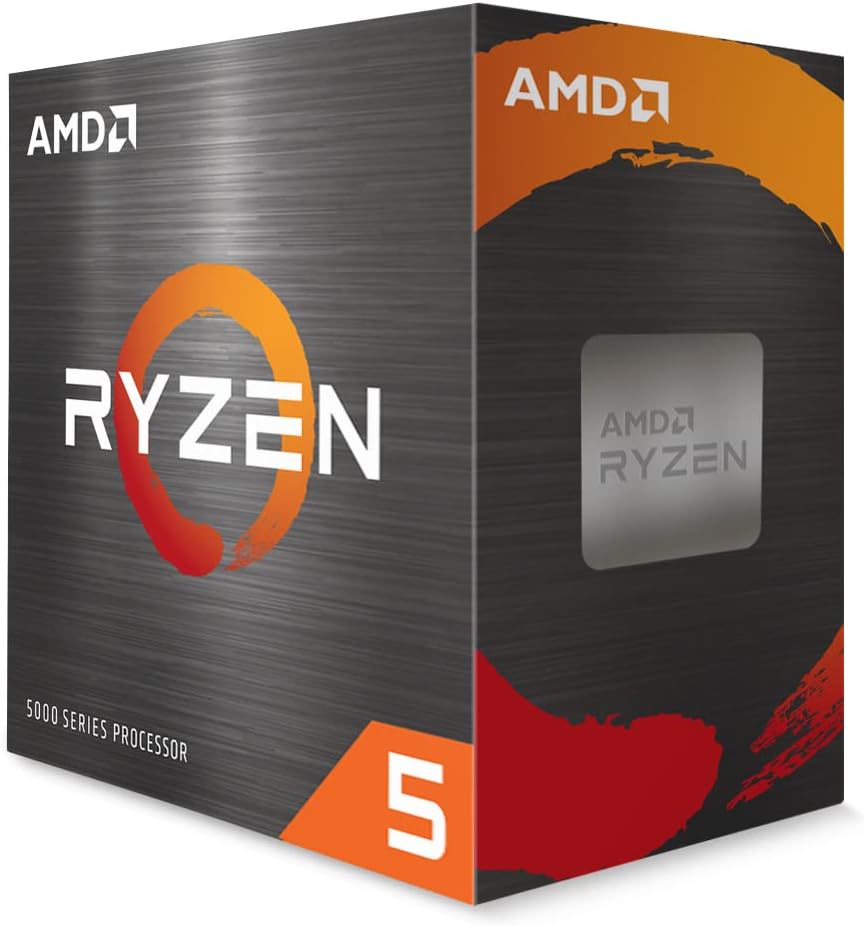
AMD Ryzen 5 5500 offers the lowest price point while still providing six cores and twelve threads capable of handling standard Excel spreadsheets.
We may earn a commission when you buy through this link, at no additional cost to you.
Its value is further enhanced by including a Wraith Stealth cooler removing the need for an additional purchase and simplifying system setup.
While it lacks the power of newer generations it remains highly suitable for users managing moderate workloads and typical business spreadsheets.
Students or those on tight budgets will find this processor delivers solid performance for essential data tasks without financial strain.
The bundled Wraith Stealth cooler simplifies the build process and reduces overall system cost.
AM4 socket allows use with affordable motherboard options keeping system costs low overall.
We may earn a commission when you buy through this link, at no additional cost to you.
Selecting the right CPU requires understanding core counts, thread counts, cache, clock speeds, platform compatibility, power usage, budget, and future needs.
Core count refers to the number of processing units on the CPU which directly affects how many tasks can run simultaneously without performance loss.
For Excel and data analysis a higher core count allows more efficient handling of large datasets and parallel calculations within complex models.
Threads represent the number of virtual cores that allow the processor to handle multiple instructions at once improving multitasking capability.
More threads help when running multiple sheets or background processes alongside your primary analysis work for smoother operation.
Cache acts as high speed memory that stores frequently accessed data to reduce latency during calculations and data retrieval.
Larger cache sizes improve responsiveness when working with large spreadsheets by minimizing wait times for data access.
Clock speeds measured in GHz indicate how many cycles a processor can complete per second directly impacting calculation speed.
Higher boost clocks are vital for single threaded tasks common in Excel formulas and macros ensuring faster results.
Platform compatibility refers to the motherboard socket and chipset that match the CPU allowing proper functionality and future upgrades.
Ensuring your CPU fits current motherboard standards prevents installation issues and enables easier upgrades as technology evolves.
Power efficiency determines how much energy the CPU consumes during operation which affects heat generation and electricity costs.
Energy efficient processors are preferable for systems running long analysis sessions to maintain cooler temperatures and reduce noise.
Budget constraints influence the balance between performance and cost allowing you to allocate funds to other components like RAM.
Finding a CPU within your price range that meets essential needs prevents overspending while ensuring sufficient power for tasks.
Future proofing involves choosing hardware that remains relevant for several years to delay the need for expensive replacements.
Selecting newer architecture and platforms with upgrade paths ensures your system can handle future software requirements easily.
Install the CPU carefully into the motherboard socket using proper alignment and secure the retention arm firmly to ensure stable electrical connection.
Apply thermal paste evenly on the CPU surface before mounting a compatible cooler to maintain optimal operating temperatures during heavy analysis tasks.
Keep your system clean and ventilated by regularly removing dust and ensuring adequate airflow to prevent overheating and hardware degradation.
While Excel mostly relies on single core speed having more cores helps when running multiple calculations or macros at once. Modern CPUs with hybrid cores manage this well without needing extreme core counts.
More cache is beneficial for large datasets as it reduces latency when accessing data during calculations. Aim for at least 16MB for moderate work and over 32MB for heavy analysis.
Both matter significantly as RAM determines how much data fits in memory while CPU determines how fast it is processed. Ensure you have enough RAM to avoid swapping before upgrading CPU.
Excel mostly uses integrated graphics but dedicated GPUs can accelerate specific visualizations. For standard calculations a modern CPU with integrated graphics is sufficient for most users.
Upgrading the CPU can improve calculation speeds but also check RAM and disk type. Slow performance often stems from insufficient RAM rather than CPU speed alone.
Both brands offer excellent processors capable of handling heavy Excel workloads. Choose based on platform availability and specific benchmark results matching your software needs.
Overclocking can offer slight performance boosts but often risks stability. For professional work reliable stock speeds are preferable to ensure accurate and consistent calculation results.
Air coolers work well for most CPUs but high end models benefit from liquid cooling to maintain stable speeds during long analysis sessions without thermal throttling.
The AMD Ryzen 9 9950X stands out as the top performer for heavy workloads while the Intel Core Ultra 9 285K offers premium hybrid efficiency for professionals.
For balanced needs the Ryzen 5 9600X provides excellent value and future proofing without compromising daily performance for standard data tasks and reports.
Remember that processor prices fluctuate regularly so check current listings before purchasing to ensure you get the best value for your specific analysis requirements.